

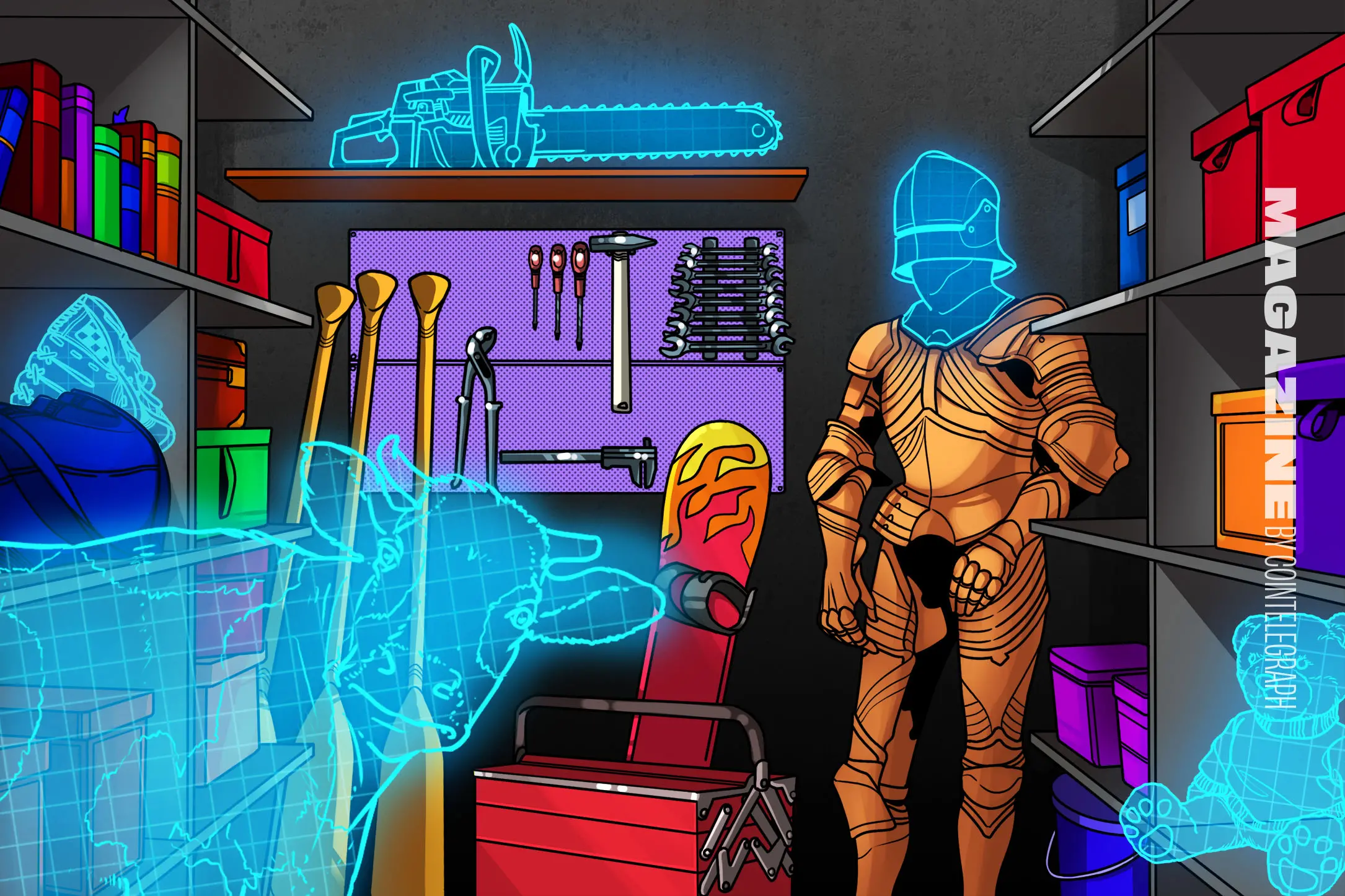
Blockchain tokenization has been hailed as a revolutionary way to turn real-world assets into digital tokens, making them easier to trade, fractionalize, and use as collateral. While most discussions focus on real estate, treasury bills, or private credit, the technology has also found its way into far more unusual corners. From dairy cows to a year's worth of farts, the tokenization wave has produced some genuinely bizarre offerings that prove almost anything can be put onchain.
The concept is simple: an asset, whether physical or intangible, is represented by a digital token on a blockchain, allowing for verifiable ownership and transfer. As BlackRock CEO Larry Fink once suggested, every asset will eventually be tokenized. But even he probably didn't expect flatulence to be among the first movers. Here are 10 of the strangest things ever tokenized, in no particular order.
1. A year's worth of farts
During the pandemic, while many people took up baking or language learning, filmmaker Alex Ramírez-Mallis recorded his own farts and minted each one as a nonfungible token (NFT). Each token represented a single recorded fart, and he offered them for sale at 0.05 ETH apiece, roughly $85 at the time. The novelty factor was enough to attract buyers, proving that even bodily functions can find a market in the crypto world.
The project was widely mocked, but it also highlighted the absurdity that can emerge when a technology designed for serious financial applications meets internet culture. For collectors, owning a tokenized fart was likely more about humor than investment, yet it became one of the most talked-about examples of how metadata and provenance can turn anything into a tradable asset.
2. Cows
In Brazil, tokenized cows made headlines when a farmer in the southern part of the country used 10 cattle as collateral for a loan worth 100,000 Brazilian real, about $19,600. The deal was structured by investment fund Target FIDC, which gave each cow a unique digital token linked to an encrypted digital identity. The cows were effectively herded into a blockchain-based holding pen, showcasing how livestock can be used to access credit.
While the initial loan was modest, it was a proof of concept. The same platform is expected to support around $80 million in livestock-backed financing across its farms in the future. With the global agriculture industry generating trillions of dollars in value each year, tokenized sheep, goats, and chickens could become the next asset class for farmers seeking liquidity without selling their herds.
3. Whiskey barrels
Scotch whisky has long been considered a store of value, with barrels maturing for years before being bottled. Several projects now put whisky casks onchain, allowing investors to buy whole units or fractional shares of tokenized barrels stored in bonded warehouses. As the whisky matures, its value typically increases, offering a tangible upside for investors who don't mind waiting.
This form of tokenization brings a new level of liquidity to a traditionally illiquid asset. Instead of buying an entire cask, which can cost tens of thousands of dollars, investors can purchase a fraction and trade it on secondary markets. Of course, if the market sours, a digital token cannot be drunk, but it still represents a claim on the physical barrel.
4. Racehorses
Racehorse ownership has traditionally been reserved for the ultra-wealthy, with costs for breeding, training, and upkeep running into hundreds of thousands of dollars. Tokenization is democratizing this exclusive world by dividing ownership of real thoroughbreds into digital shares. Investors can buy a stake in a horse and share in prize money, breeding income, or future sale proceeds.
Several platforms now offer fractional ownership of racehorses, allowing ordinary fans to claim a piece of an animal they might otherwise never afford. However, as Chris Turner, co-founder of impact investment firm KULA, notes, putting a collectible on a blockchain does not automatically make it more liquid or valuable if the underlying legal rights and market structure remain unchanged. The token is only as good as the contract that supports it.
5. Uranium
Uranium might seem an unlikely candidate for tokenization, but Tezos-backed metals.io has made it a reality. The platform allows investors to trade tokenized uranium, a commodity essential to nuclear power. Tezos co-founder Arthur Breitman says blockchain is particularly well-suited to technology-flavored commodities like uranium because it provides reliable, auditable, and cost-efficient financial rails.
Between November 2024 and July 2026, trading volume on the platform reached $21.5 million across approximately 18,200 trades and 7,400 unique wallets. While institutional interest remains cautious, Breitman says the technology is proving itself in practice. Uranium tokenization offers a way for investors to gain exposure to the nuclear energy sector without dealing with physical storage or complex supply chain issues.
6. Fishy revenue
One of the most unusual tokenization proposals came from a Chilean fish-processing company that wanted to issue tokenized debt with returns tied to the value of fish it sold. The token represented a lender's contractual claim, while interest payments adjusted according to the company's verified sales performance. It was essentially a revenue-linked debt instrument, blockchain style.
Edwin Mata, CEO of tokenization platform Brickken, explains that the idea demonstrates how almost any cash flow can support a tokenized financial instrument, provided the underlying rights and data can be independently verified. Ultimately, the fish deal never made it onchain because the underlying sales still relied on audits and legal agreements that couldn't be automated. It proved that sometimes the biggest obstacle to tokenization is not the blockchain, but the messy realities of the physical world.
7. Music royalties
Music royalties have found a natural home onchain, giving fans and investors a way to own a slice of their favorite songs. In 2021, DJ and producer 3LAU sold 50% of the streaming rights to his single "Worst Case" through his blockchain platform Royal. A year later, rapper Nas used the same platform to sell streaming rights to two songs, "Ultra Black" and "Rare."
While these early experiments caught attention during the NFT boom, tokenized music royalties have yet to become a mainstream asset class. The economics remain challenging, as streaming platforms pay relatively small amounts per play. An investor might need millions of streams to earn a meaningful return, but the concept of fractional ownership still offers a new way to support artists and share in their success.
8. Human skin
Croatian tennis player Oleksandra Oliynykova took tokenization to a personal level in 2021 by auctioning the advertising rights to a 15-by-18-centimeter patch of skin on her right arm. The winning bidder paid 3 Ether, around $5,400 at the time, for the right to choose which tattoo she would wear during tournaments for a year.
This unusual NFT gave a whole new meaning to having skin in the game. While athletes have long sold sponsorship space on clothing and equipment, Oliynykova turned her body into a living billboard, with blockchain-recorded ownership. It was a striking example of how tokenization can extend beyond traditional assets to encompass personal spaces and identities.
9. A burned Banksy
In 2021, a group calling itself Burnt Banksy bought a Banksy print titled "Morons (White)" for about $95,000, livestreamed themselves burning it, and then minted the destruction as an NFT. The idea was that while the physical artwork was destroyed, its digital representation would live forever on the blockchain. The NFT subsequently sold for around $382,000, sparking debates about whether the group had vandalized a masterpiece or created a new one.
The stunt was a commentary on the nature of ownership and value in the digital age. It also turned out to be a profitable fire sale, with the group earning a roughly 300% return. Whether the burned Banksy token is a work of art or just a footnote in crypto history remains a matter of opinion.
10. The first tweet
Twitter co-founder Jack Dorsey tokenized his first-ever tweet, "just setting up my twttr," and sold it as an NFT in 2021. Crypto entrepreneur Sina Estavi paid $2.9 million for the token, which quickly became a symbol of the NFT boom. A year later, Estavi tried to resell it for $48 million, but the highest offer reportedly came in at just $6,800.
While anyone can still read the tweet on X, only one person owns the blockchain certificate tied to it. The massive valuation drop highlights the speculative nature of such assets and the difference between digital ownership and intrinsic value. As Edwin Mata puts it, tokenization can improve access and transferability, but it cannot transform a poor investment into a good one. These strange examples prove that while blockchain technology can tokenize nearly anything, the true value of an asset still depends on its real-world utility and demand.
Source:Cointelegraph News