

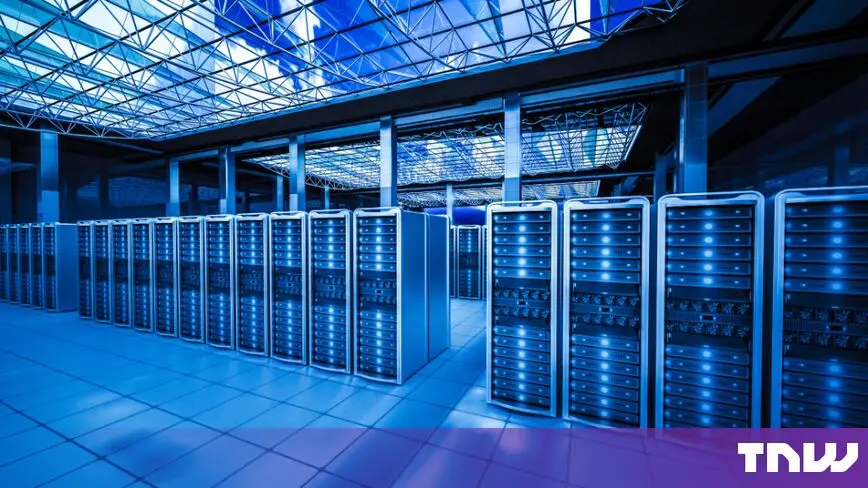
Nvidia said on Monday it would partner with six of the largest names in private capital to finance AI infrastructure through vehicles worth more than $500 billion. Apollo, BlackRock, Blackstone, Brookfield, Goldman Sachs and KKR are all in. The company has spent recent months lending its own balance sheet to customers so they could buy its products, most visibly OpenAI. Bringing in outside lenders is an admission that there is a limit to how much the world's most valuable company will underwrite by itself.
What Nvidia gets out of it
Jensen Huang said in comments reported by Semafor that these financing platforms will help customers access scarce compute at scale and build the DSX AI factories that will power every industry and country in the age of AI. The structure spreads risk while keeping capital tethered to Nvidia's ecosystem and away from competitors. That is the reasonable objection, and Nvidia shares dipped on the news, which was first reported by the Financial Times.
It is a variation on a familiar pattern. Nvidia has committed more than $40 billion to AI equity positions in 2026, and critics have called the arrangement circular for as long as it has existed. The logic is straightforward: Nvidia invests in AI startups, those startups buy Nvidia chips, and the value of Nvidia's equity rises as AI adoption grows. But the circularity also creates concentration risk. If one part of the loop fails, the rest can quickly unravel. By bringing in outside lenders, Nvidia is trying to shift some of that risk off its own balance sheet while still keeping customers locked into its ecosystem.
Private capital firms are not doing this out of charity. They expect steady returns from long-term infrastructure assets. Data centers, power plants, and the fiber networks that connect them are the new toll roads of the digital economy. Investors are betting that demand for compute will remain robust for decades, even if the current AI boom experiences cyclical downturns. The involvement of Apollo, BlackRock, Blackstone, Brookfield, Goldman Sachs and KKR signals that these assets are becoming mainstream institutional investments rather than speculative technology bets.
The Gulf has the same problem, without the balance sheet
Saudi Arabia's data center capacity is forecast to reach one gigawatt by 2030, the fastest growth in the Gulf. The announced pipeline is far larger, with PIF-owned HUMAIN alone targeting more than six gigawatts over the coming decade. Financing even half of that would require up to $32 billion in debt, more than the kingdom's banks are likely to assemble on their own, according to consultancy Alvarez & Marsal.
The report's author, Kurt Davis Jr., told Semafor that digital infrastructure is now one of the largest single sources of new project debt in their pipeline. The drivers are government demand, data sovereignty rules keeping data in-country, hyperscalers preferring to lease rather than build, plus cheap power and land. The Gulf has all the natural resources needed for energy-intensive AI data centers, including vast solar fields and natural gas reserves. But it lacks deep local debt markets, and its banks are not large enough to absorb hundreds of billions of dollars in project finance without crowding out other lending.
This is why international investors are being courted. Sovereign wealth funds in the region have enormous pools of capital, but they are not banks. They cannot easily underwrite project debt. Instead, they are likely to partner with global asset managers, infrastructure funds, and development banks. The Nvidia consortium could become a model for Gulf projects as well, with the same private equity firms appearing in multiple deals across different regions.
The same lenders, everywhere
Note who turns up in both stories. KKR earmarked part of a $192 billion infrastructure fund for Gulf technology buildouts last week, and is also among Nvidia's six. Private capital is becoming the connective tissue of the AI buildout, which is what happens when the numbers exceed what any single corporate or national balance sheet can absorb.
Much of the resulting obligation is not where you would look for it. Big Tech's off-balance-sheet AI commitments have been estimated at around $1.65 trillion. This includes equipment leases, capacity purchase agreements, take-or-pay contracts, and joint ventures that keep debt off corporate balance sheets. For investors, this creates a hidden layer of risk. If demand for AI services slows or if a major customer defaults, the obligations become visible in the form of writedowns and impairments.
The same lenders appear everywhere because they have the scale to manage these risks. A single infrastructure fund can spread its exposure across hundreds of projects. An individual company cannot. That is why Nvidia, despite its massive cash reserves, chose to bring in six outside partners. The scale of AI investment is simply too large for any one institution to absorb.
Memory is short
Gulf enthusiasm arrives five months after Iranian drones struck AWS sites in the UAE and Bahrain, which at the time raised real questions about regional exposure. Semafor's dry observation is that investors forget faster than data centres depreciate. That is the pattern across all of this. Capital is being committed on decade-long horizons against risks nobody has yet had to price properly.
Geopolitical risk is not the only uncertainty. Data center construction timelines often stretch for years, and technological change can render a facility obsolete before its debt is repaid. The rapid shift from one GPU generation to the next means that even the most advanced facility may need major retrofits within a few years. Yet project finance models typically assume a stable revenue stream over a 20-year period. The mismatch between the pace of innovation and the pace of depreciation is one of the biggest risks in the AI infrastructure boom.
There is also the question of power. AI data centers require enormous amounts of electricity, and grid connections are becoming a bottleneck in many regions. Natural gas plants are being built to supply new data centers, and utilities are planning massive upgrades to transmission networks. These projects take years to complete and require regulatory approval, which is another form of consent that cannot be bought.
Meanwhile, the towns are saying no
The third constraint is consent, and it is moving fastest. Local data centre bans across the US jumped from around 300 in late June to more than 500 in July, with New York banning construction outright. Americans are, in the words of a Republican senator talking to Semafor, on fire against data centres. This makes consent a bipartisan problem rather than a partisan one.
Community opposition is driven by concrete grievances. Data centers are noisy, consume massive amounts of water for cooling, and often require new high-voltage transmission lines. They do not create many permanent jobs, despite their size. Residents worry about property values, noise pollution, and the burden on local infrastructure. In rural areas, data centers can consume the entire capacity of a local substation, forcing utility upgrades that are financed through higher rates for everyone.
The rise in local bans is not just a rural phenomenon. Suburban communities and even urban neighborhoods are resisting new projects. Some have imposed moratoriums while they study the impacts. Others have required data centers to provide their own power and water. A few have banned them outright, as New York did. The patchwork of local regulations is making it harder for companies to plan large-scale deployments.
The charm offensive
Industry has noticed. Mark Zuckerberg published a 6,500-word essay on Monday announcing a $1 billion fund for communities hosting Meta data centres, and OpenAI wrote an open letter to Texas's governor pledging responsible infrastructure development. The White House has largely stayed out of it, with the president referring to data centres as money machines. That leaves companies negotiating with counties directly.
The $1 billion community fund, while large by most standards, is small relative to the scale of the investment. Meta and other hyperscalers are planning to spend hundreds of billions on AI infrastructure. A $1 billion fund represents less than one percent of that total. The industry is trying to buy goodwill, but it remains unclear whether any amount of money can overcome the perception that data centers are extractive rather than generative for local communities.
Some companies are exploring alternative models. They are building data centers in remote locations with few residents, using modular designs that can be assembled quickly, and investing in co-generation and on-site renewable power. They are also offering to pay for local schools, hospitals, and broadband networks as part of community benefits agreements. But these measures have not stopped the wave of bans, and the trend is likely to continue.
Why the three connect
Chips stopped being the bottleneck some time ago. What binds now is whether the capital exists, and whether anyone will let you build. Both constraints push in the same direction: bigger projects, further from where people live, financed by institutions rather than corporate cash. The gas-plant boom accompanying the buildout is a symptom of exactly that.
A $1 billion community fund against a $500 billion financing platform gives you the ratio. If demand disappoints, the debt does not, and the towns that said no will not be the ones holding it. The ultimate burden falls on the investors who have poured money into AI infrastructure and on the ratepayers who are forced to pay for the electricity infrastructure that supports it. The era of frictionless AI expansion is over, and the next phase will be defined by negotiations over capital and consent.