

Amazon has drawn roughly $126 billion in peak demand for its latest bond sale, marking one of the largest corporate debt offerings on record. The strong investor appetite underscores continued confidence in big tech companies even as broader economic uncertainties persist. The funds will primarily finance Amazon's ambitious artificial intelligence (AI) infrastructure buildout, which is projected to cost $200 billion in capital expenditures this year alone.
Bond Sale Details
Amazon is offering as many as 11 tranches on the U.S. high-grade debt market, with maturities ranging from two to 50 years. In addition, the company is marketing an eight-part euro-denominated bond sale this week, tapping international investors. The structure allows Amazon to lock in low borrowing costs across multiple durations, a strategy that provides financial flexibility for long-term AI projects. This marks Amazon's second U.S. bond sale in three years; it raised $15 billion in November 2024 in its first such offering since 2021.
Amazon's debt issuance follows similar moves by other tech leaders. In February, Oracle drew $129 billion in orders for its bond sale, while Meta attracted $125 billion in demand for a bond sale last October. Google parent Alphabet raised more than $30 billion in March through a multi-currency offering spanning dollars, sterling, and Swiss francs. These deals highlight a broader trend: technology companies are increasingly relying on debt markets to fund capital-intensive AI initiatives, rather than tapping cash reserves or issuing equity.
The $200 Billion AI Bet
Amazon's capital expenditure plans have drawn scrutiny from investors, contributing to a decline in its stock price following the announcement in February 2025. The $200 billion spending target is significantly higher than the AI infrastructure budgets of key rivals Google and Microsoft. Amazon plans to allocate these funds across custom AI chips, robotics, and low Earth orbit satellites, positioning itself as a leader in both cloud computing and physical logistics automation.
CEO Andy Jassy reassured investors during an earnings call, stating, "We're going to invest to be the leader in this space." He emphasized that Amazon's AI infrastructure investments are foundational to its long-term competitive advantage, including its AWS cloud business, which provides AI services to enterprises. The custom chips, such as Trainium and Inferentia, are designed to reduce reliance on external suppliers like Nvidia and lower overall AI processing costs.
Investor Concerns and Market Conditions
Despite strong demand for Amazon's bonds, the broader market has shown unease about the returns on AI spending. Many large tech companies are pouring billions into data centers and hardware without clear near-term profitability. This has led to increased investor skepticism, particularly as interest rates remain elevated and economic growth shows signs of slowing. The bond sale's success, however, suggests that institutional investors view Amazon's AI strategy as a safe long-term bet, given the company's robust cash flow and diversified revenue streams.
Amazon's debt offering also reflects the current state of the corporate bond market. Investment-grade debt has remained attractive to yield-seeking investors amid volatile equities. The record order books for Amazon, Oracle, and Meta indicate that tech companies enjoy privileged access to capital, even as other sectors face tighter credit conditions. Analysts note that Amazon's AAA credit rating (the highest possible) allows it to borrow at very favorable rates, making debt financing an efficient way to fund massive capital expenditure without diluting shareholders.
Historical Context and Competitive Dynamics
The race to dominate AI infrastructure has become the defining investment theme of the decade. Amazon's $200 billion spending plan builds on years of steady growth in its capital expenditures. In 2024, the company spent approximately $100 billion on property, equipment, and software, much of it for AWS data centers and logistics automation. The new spending doubles that pace, reflecting the urgency of scaling AI capabilities.
Competitors are similarly aggressive. Microsoft has committed over $100 billion to AI data centers and has partnered with OpenAI to deploy cutting-edge models. Google's parent Alphabet is investing heavily in its own AI chips (TPUs) and expanding cloud capacity. However, Amazon's spending is notably larger, partly due to its broader ambitions beyond cloud computing. The company's investment in low Earth orbit satellites through Project Kuiper aims to provide global broadband connectivity, which will also support AI services in remote areas.
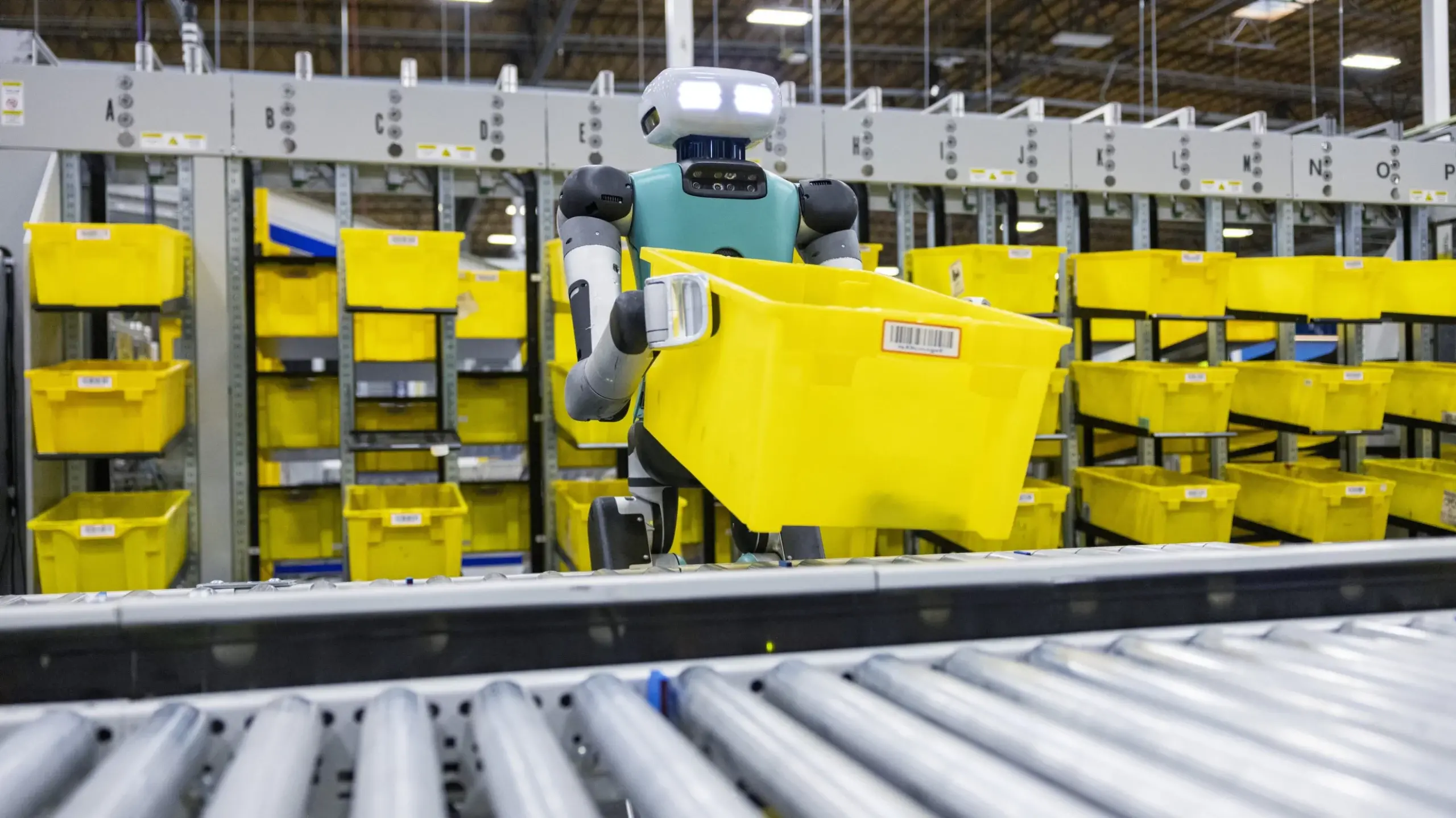
Robotics is another key area. Amazon already deploys over 750,000 robots in its fulfillment centers, and new AI-powered robots are expected to further enhance warehouse efficiency. The company is also developing autonomous delivery vehicles and drone systems, all of which rely on advanced AI algorithms and real-time data processing. These initiatives require massive computational resources, driving the need for more data centers and specialized hardware.
Custom AI Chips and Supply Chain Strategy
A central element of Amazon's AI investment is its in-house chip development. The Trainium chip, designed for training large AI models, and the Inferentia chip, optimized for inference, are produced by Amazon's Annapurna Labs subsidiary. By using custom silicon, Amazon can reduce its dependence on Nvidia, which currently dominates the AI chip market. This also allows Amazon to offer lower-cost AI services on AWS, attracting price-sensitive customers.
The company has already deployed Trainium chips in its data centers and plans to upgrade them in 2025 to handle next-generation AI workloads. Analysts estimate that Amazon's chip investments could save the company billions of dollars annually in computing costs, while also creating a new revenue stream through AWS. The bond sale proceeds will help accelerate production and expand capacity for these chips, ensuring Amazon remains competitive in the rapidly evolving AI hardware landscape.
Amazon's debt financing strategy is also a response to its declining free cash flow, which has been squeezed by the steep increase in capital expenditures. By issuing long-term bonds, Amazon locks in low interest rates for decades, reducing pressure on its operating cash flow. This approach is particularly prudent given the uncertain macroeconomic environment, where interest rate cuts may be delayed. The eight-part euro-denominated bond sale further diversifies Amazon's investor base and hedges against currency risks.
Economic and Political Implications
The massive debt offerings from Amazon and other tech giants have broader implications for financial markets. They absorb significant liquidity, potentially crowding out smaller borrowers, but also signal confidence in the long-term growth of AI. Regulators and policymakers are watching closely, as the concentration of AI infrastructure in a few companies raises antitrust and national security concerns. The U.S. government has encouraged domestic tech investments to counter China's AI ambitions, and Amazon's spending aligns with that priority.
Amazon's bond sale also reflects changing investor attitudes toward debt. In the low-interest-rate environment of the 2010s, tech companies preferred equity or internal cash for funding. Now, with rates higher but still manageable for AAA-rated firms, debt has become a strategic tool to finance growth without diluting existing shareholders. The bond sale's enormous demand—$126 billion in orders for a deal expected to be around $15 billion—demonstrates that investors are eager to lend to Amazon, confident that its AI investments will eventually yield strong returns.
As Amazon moves forward with its $200 billion plan, the company faces the challenge of executing at scale. Building data centers, developing chips, and deploying robotics require not only capital but also skilled talent and supply chain resilience. The debt raised this week provides the financial foundation, but operational excellence will determine whether Amazon maintains its leadership in AI. The next few years will reveal whether this massive bet pays off or whether investors' caution about AI returns was warranted. For now, the bond market's vote of confidence gives Amazon the runway it needs to compete in the most transformative technology sector of the era.
Source:Silicon UK News