

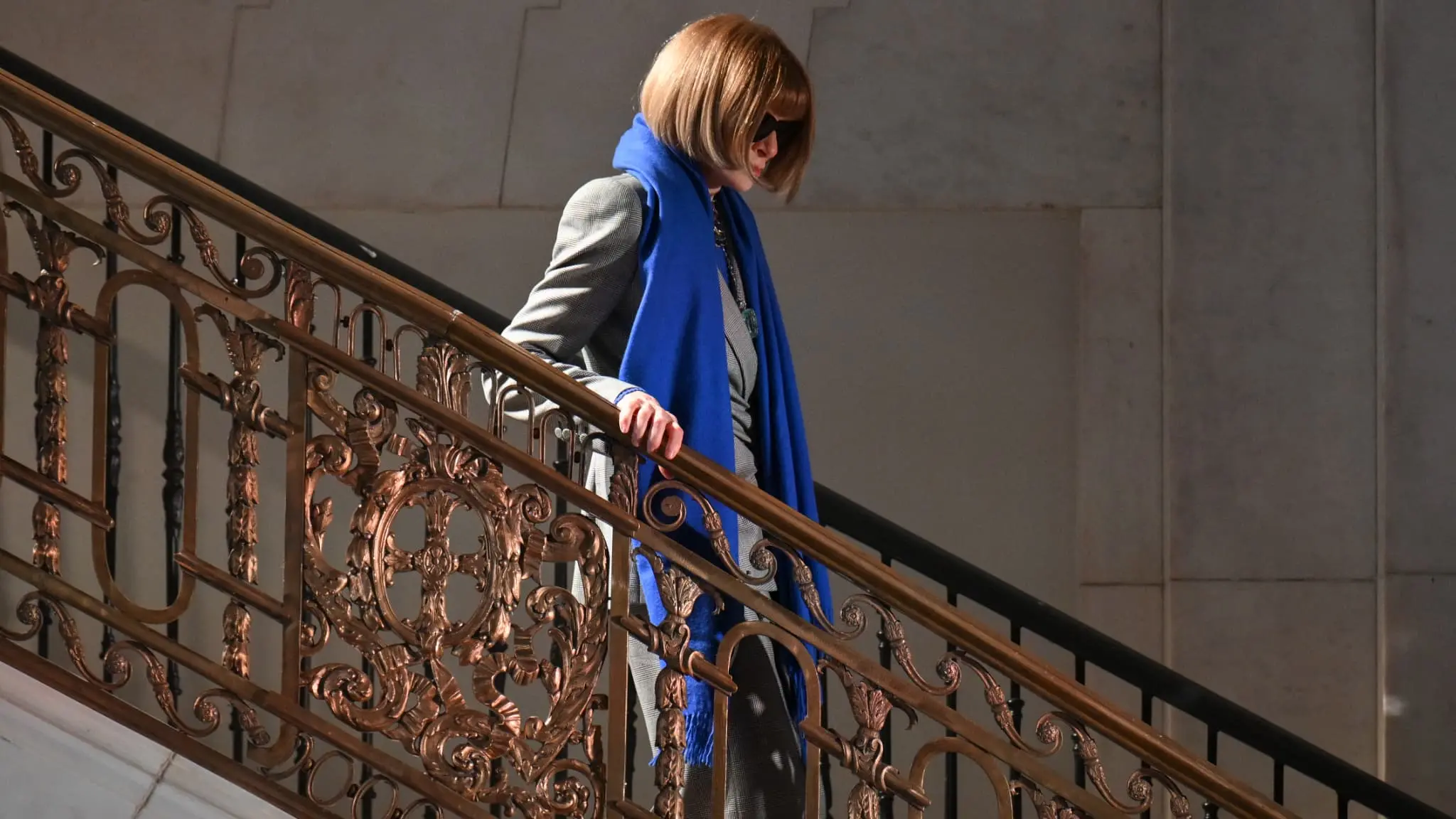
For more than three decades, Anna Wintour has been the most recognizable figure in fashion, shaping the industry's tastes and trends from her perch at the helm of American Vogue. Now, at 75, she is stepping back from the daily editorial grind—but not disappearing. In a carefully orchestrated transition, Wintour announced she will relinquish the title of editor-in-chief of Vogue US while retaining her role as global chief content officer at Condé Nast, the publishing conglomerate that owns Vogue, Vanity Fair, GQ, Glamour, Tatler, and other iconic titles.
The announcement, made in a memo to staff and later reported by The New York Times, immediately raised questions: Is this a genuine changing of the guard, or merely a reshuffling of titles that leaves the empress of fashion still firmly on her throne? Wintour herself framed it as an opportunity to nurture the next generation. "Today, my greatest pleasure is helping the next generation take the field with their own ideas, supported by a new and exciting vision of what a great media company can be," she wrote.
Yet the fine print reveals that little will change operationally. The new editor of Vogue US will report directly to Wintour, as will all editorial heads of Vogue editions worldwide. She will continue to oversee the Met Gala, fashion's biggest night, and the global Vogue World events. Her office will remain the same, and as she joked, not a single one of her Clarice Cliff pottery pieces will be moved.
The Architect of Modern Fashion Media
To understand the significance of this shift, one must look at Wintour's reign. She took over American Vogue in 1988, a time when the magazine was seen as staid and out of touch. Her first cover, featuring model Michaela Bercu in a crystal-embroidered Christian Lacroix jacket and a pair of jeans, was a deliberate shock to the system. It signaled a new era: fashion could be both high and low, accessible and aspirational. Wintour's vision turned Vogue into a cultural juggernaut, a place where celebrities, designers, and advertisers converged under her exacting gaze.
Under her leadership, Vogue US became the most profitable and influential fashion magazine in the world. She cultivated relationships with designers like John Galliano, Alexander McQueen, and Marc Jacobs, often launching their careers with a single editorial. Her ability to spot talent was legendary. But she was also known for a ruthless, almost dictatorial approach. Insiders dubbed her "Nuclear Wintour" for her icy demeanor and swift firings. The 2006 film "The Devil Wears Prada" was widely believed to be based on her, though she later attended its premiere dressed in Prada, a move that simultaneously acknowledged and deflected the criticism.
Centralization and Homogenization
Wintour's influence extended far beyond the pages of Vogue US. In 2013, she was named artistic director of Condé Nast, giving her oversight of all the company's titles. In 2020, she became chief content officer, charged with unifying the brand's global voice. This centralization had real consequences: Vogue Paris was rebranded as Vogue France, losing its distinctive Gallic flair. Critics argued that the move erased the magazine's unique identity, replacing it with a standardized, Americanized vision of fashion.
Sophie Fontanel, a fashion journalist and former editor, told Le Nouvel Obs that Wintour's aesthetic was "a beauty without chic, a standardization from across the Atlantic" that smothered local quirks. "Anna Wintour had her vision of fashion. And that vision was that of a business. In a world of enthusiasts, she was passionate about power. It changed a lot in our profession," Fontanel said. Matthieu Morge Zucconi, fashion editor at Le Figaro, agreed: "She is an icon for people who don't really know fashion. She represents a very American, globalized vision."
This tension between global uniformity and local creativity has been a hallmark of the Wintour years. Under her watch, magazine content became increasingly promotional, with glowing profiles of advertisers and a reluctance to publish critical reviews. The once-sharp voice of fashion journalism gave way to a softer, more commercial tone. Many believe that this, more than any aesthetic choice, is Wintour's lasting legacy.
Iconic Covers and Cultural Moments
Despite the criticism, Wintour's impact on popular culture is undeniable. She orchestrated memorable covers that reflected and shaped societal shifts. In 2018, she placed Serena Williams on the cover, celebrating athleticism and inclusivity in an industry often fixated on thinness. She also championed diversity, putting Beyoncé, Rihanna, and Michelle Obama on the cover, and using the magazine as a platform for political statements. The September issue of Vogue, which she built into a blockbuster event, set the agenda for the entire season.
Wintour also transformed the Met Gala from a sleepy charity dinner into a global spectacle. Under her co-chairmanship, the event became a red-carpet extravaganza, with themes that inspired creativity and controversy alike. The gala raises millions for the Costume Institute, but it also serves as a testament to Wintour's ability to blend commerce, celebrity, and art.
What Comes Next?
Wintour's partial retirement comes at a time of deep uncertainty for print media. Condé Nast has faced layoffs, digital disruption, and a declining advertising market. The company has been centralizing editorial operations to cut costs and streamline content across regions. Wintour's role as global chief content officer fits this strategy perfectly: she ensures that the brand's voice remains consistent even as local editions lose autonomy.
Who will replace her as editor of Vogue US remains unknown. Names like Edward Enninful (British Vogue), Anna Dello Russo, and even outsiders have been floated. But whoever takes the helm will do so under the watchful eye of Wintour, who has made clear that she has no intention of fading away. "I am not changing my office, and I won't move a single one of my Clarice Cliff pots," she told staff. "I will be dedicating my full attention to global direction."
For now, the fashion world watches with a mix of anticipation and skepticism. Will a new editor bring fresh energy and a return to risk-taking? Or will Wintour's continued presence ensure a slow, careful evolution rather than a revolution? One thing is certain: Anna Wintour's influence on fashion is far from over. Whether that is a boon or a burden depends on whom you ask.
Source:BFM BUSINESS News