

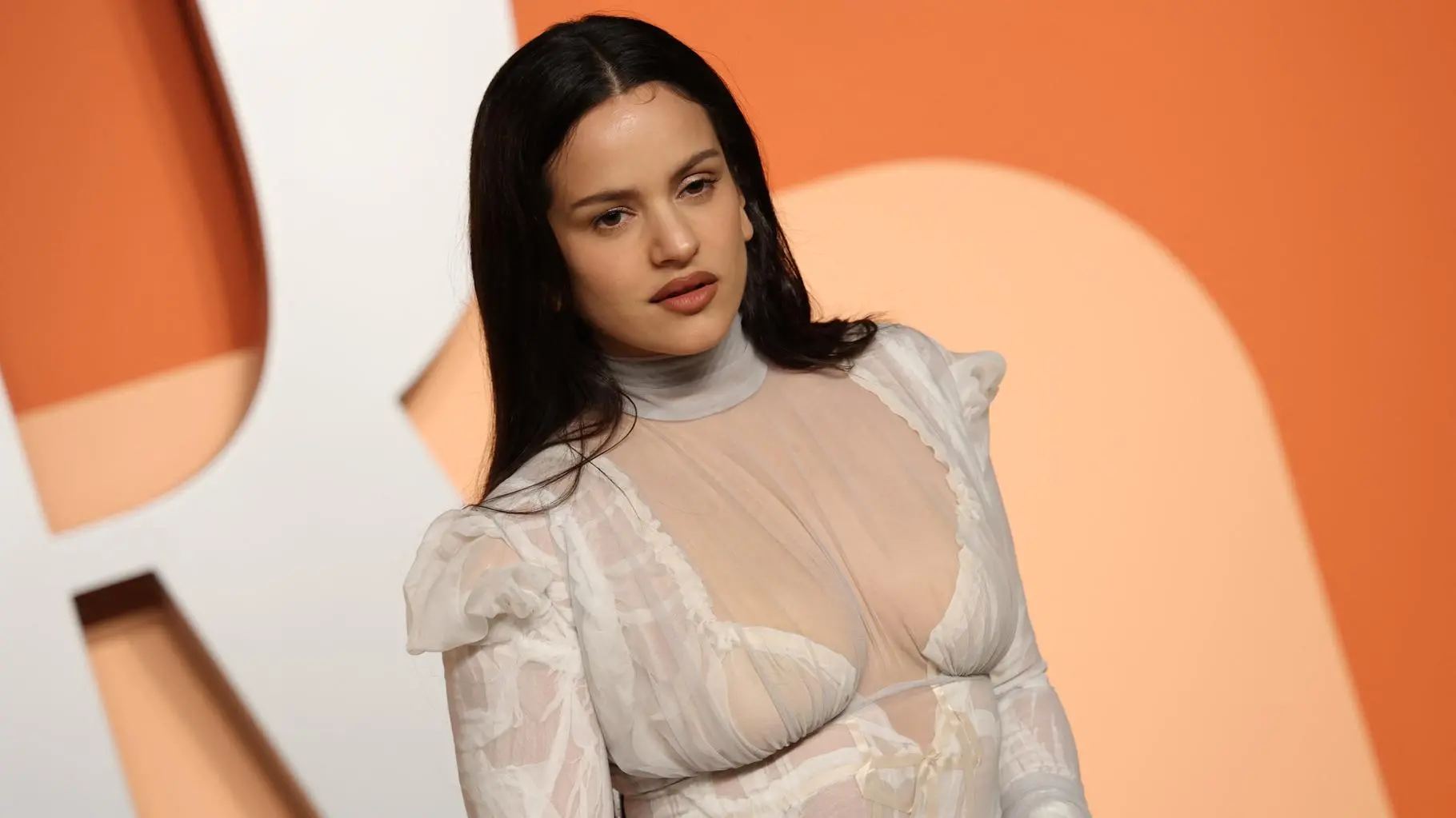
Spanish pop sensation Rosalia has found herself at the center of a diplomatic firestorm in Argentina after a seemingly innocuous social media post about the 2026 World Cup final erupted into a full-blown boycott movement. The controversy, which began when Rosalia liked and shared a TikTok video featuring actress Mia Khalifa, has pitted the artist against some of her most devoted fans in the South American nation, just days before she is scheduled to perform four sold-out shows in Buenos Aires as part of her Lux Tour.
The catalyst: A video and a like
The trouble started on July 19, when Spain defeated Argentina in the final of the 2026 FIFA World Cup. As millions of Spanish fans celebrated, Rosalia—a proud Catalan-born singer who has often referenced her Spanish roots in her music—joined in the revelry by sharing a video posted by Lebanese-American actress Mia Khalifa. The clip, which features Khalifa mouthing the words “Como la vida resuena ahora que las 'perlas' han sido vencidas” (How life resonates now that the 'perlas' have been defeated) was set to Rosalia’s own song “La Perla” from her critically acclaimed album Motomami.
In Spanish slang, the word “perla” can refer to a prickly or troublesome person, and many Argentine fans interpreted the post as a direct insult to their national team, which had just suffered a painful defeat. The implication was that Argentine players—including Lionel Messi, who had led the team to glory in previous tournaments—were being labeled as difficult or annoying. The post quickly went viral, with thousands of Argentine users tagging Rosalia in angry comments accusing her of disrespecting their country and its footballing heroes.
Rosalia’s apology and the backlash intensifies
Within 48 hours, Rosalia deleted the post and issued a public apology on Instagram. In a statement posted on Wednesday, July 22, she wrote: “I shared that video without really knowing what it said. I have nothing but love for Argentina and its people. I never meant to offend anyone.” She added that she respects Messi and the entire Argentine team, whom she has praised in the past. But for many fans, the apology rang hollow. Critics pointed out that Rosalia, as a fluent Spanish speaker, could not have misunderstood the caption, and that her decision to like the video before deleting it suggested deliberate intent.
The backlash grew louder. On social media platforms like X (formerly Twitter) and Instagram, hashtags like RosaliaBoycott and NoVayasARosalia trended in Argentina. Fans who had purchased tickets for her upcoming concerts at the Movistar Arena in Buenos Aires began posting screenshots of refund requests. One user wrote: “I returned the tickets I bought for my nieces. They decided on their own not to go see you… You have hugely disappointed your Argentine audience.” Another comment read: “In the process of returning the tickets.” Some even questioned whether Rosalia should be allowed to perform in Argentina at all, given the perceived slight against the national team.
Historical context: A rivalry renewed
The incident taps into a deep-seated sports rivalry between Argentina and Spain, two nations with strong footballing traditions. Argentina, the reigning champion from 2022, had entered the 2026 World Cup as favorites, but Spain’s tactical brilliance under coach Luis de la Fuente saw them lift the trophy in a dramatic penalty shootout. For Argentine fans, the loss was particularly stinging because it ended Messi’s international career on a heartbreak note. The “perla” meme thus struck a nerve, reviving memories of the intense Maradona era and the historic 1986 match when Argentina defeated Spain 3-1.
Rosalia, who has a massive fan base in Latin America, including Argentina, has often celebrated her Spanish identity in her work. Her album El Mal Querer was heavily influenced by flamenco and Spanish folk traditions, while Motomami fused reggaeton, bachata, and experimental pop. She has collaborated extensively with Latin American artists, including J Balvin, Bad Bunny, and Argentine rapper Trueno. Yet this controversy has exposed a fracture between her and a segment of her Argentine audience, who feel betrayed by what they see as a partisan celebration of their team’s defeat.
The concert fallout: Minimal refunds, one cancellation
Despite the outcry, the mammoth scale of the Buenos Aires shows has limited the financial impact. According to sources quoted by the Associated Press, the number of refund requests “is insignificant compared to the 50,000 tickets sold.” All four dates at the Movistar Arena had been sold out within hours of going on sale, reflecting Rosalia’s massive draw in Argentina. Organizers said that less than 0.5% of ticket holders have asked for their money back, suggesting the boycott is more noise than substance.
However, one event has been affected: a symphony concert paying tribute to Rosalia, scheduled for August 12 at the Museum of the Province of Córdoba, has been canceled. In a statement, the organizers cited “numerous hate messages” they received after the controversy erupted. The museum noted that the decision was made to protect attendees and staff from potential harassment. “We did not want the event to become a target for online aggression,” a spokesperson said.
Rosalia’s previous brush with controversy
This is not the first time Rosalia has faced backlash over political or cultural sensitive topics. In 2022, she was criticized for wearing a dress with Chinese characters that were poorly translated, and for using imagery from the film Memoria without permission. She has also been accused of cultural appropriation by some flamenco purists, though she defended her innovations as respectful homage. More recently, in early 2025, she sparked debate when she appeared at the Vanity Fair Oscar party wearing a dress made entirely of recycled plastic from the Mediterranean Sea—a statement that drew both praise and skepticism from environmental activists.
Nevertheless, her career has continued to ascend. She won four Latin Grammys in 2023 and is widely considered one of the most influential pop stars of her generation. Her Lux Tour, which kicked off in Madrid in March 2025, has been lauded for its innovative staging, blending immersive visuals with live instrumentation. The Argentine leg was originally set to include stops in Córdoba, Rosario, and Mendoza, but only the Buenos Aires dates went on sale. The canceled tribute concert would have been separate—a collaborative performance with the Córdoba Symphony Orchestra—and its cancellation does not affect the main tour schedule.
Expert analysis: Social media and the new celebrity diplomacy
Cultural critics have weighed in on the incident, noting that it reflects the increasingly volatile intersection of sports fandom, celebrity influence, and digital content. “When an artist with 25 million followers shares a meme about a national loss, it’s not just a fun moment,” says Dr. Ana Martinez, a professor of media studies at the University of Barcelona. “It becomes a political act, whether the artist intends it or not.” She argues that Rosalia’s apology was necessary but insufficient because it failed to address the deeper hurt—the feeling that she was laughing at Argentina’s pain.
Others have pointed out that the “perla” meme, while innocuous in isolation, gained potency due to the context of Spain’s victory and Argentina’s passionate football culture. “In Argentina, football is more than a sport; it’s a fundamental part of national identity,” says Buenos Aires-based journalist Carlos Mendez. “When a beloved artist like Rosalia seems to side with the rival, it feels like a betrayal.” He adds that the speed of online boycotts often outweighs their actual impact, as seen in the low refund rate.
Rosalia herself has not commented further since the apology. Her publicist declined to give additional statements, but a source close to the singer told reporters that she is “genuinely remorseful” and hopes the concerts can go forward as a gesture of reconciliation. Meanwhile, some Argentine fans have started a counter-campaign using the hashtag RosaliaTePerdonamos (RosaliaWeForgiveYou), though it has gained less traction than the boycott movement.
The road ahead for Rosalia in Argentina
As of now, the four Buenos Aires shows remain on track for August 1 and August 6. Movistar Arena representatives have confirmed that security will be increased at the venues, and no additional cancellations are anticipated. The question remains whether Rosalia will address the controversy directly onstage, perhaps by dedicating a song to Argentine fans or inviting a local artist to perform with her. Historically, she has used concerts to bridge cultural divides, such as when she invited a Mexican mariachi band to join her in Mexico City after similarly contentious remarks about regional music.
For the time being, the Argentine capital is bracing for a polarized atmosphere. Some fans who kept their tickets insist that they want to see Rosalia live because of her artistry, not her politics. “I’m not going to let a silly TikTok ruin my experience of her voice,” said university student Lucia Fernandez, who bought her ticket six months ago. Others remain adamant: “She disrespected the entire country. I’d rather give my ticket to someone who hates her music,” said Pedro Vargas, a financial analyst. The tension underscores how, in the age of viral content, a single like can reverberate far beyond a screen—and change the relationship between an artist and their audience forever.
Source:Le HuffPost News