

A Tragic Loss for Indian Wrestling
The Indian wrestling community woke up on the morning of 18 March 2021 to heartbreaking news. Seventeen-year-old Ritika Phogat, a cousin of international wrestling stars Geeta Phogat, Babita Phogat, and Vinesh Phogat, had allegedly died by suicide. The young athlete, who had been training for five years at the Mahavir Phogat Sports Academy in Charkhi Dadri, Haryana, reportedly took her own life on 17 March, just days after suffering a narrow defeat at a state-level wrestling tournament in Bharatpur, Rajasthan. The news sent shockwaves not only through the Phogat family but also through the wider Indian sporting community, where the Phogat name has become synonymous with women's wrestling excellence.
The Tournament and the Narrow Defeat
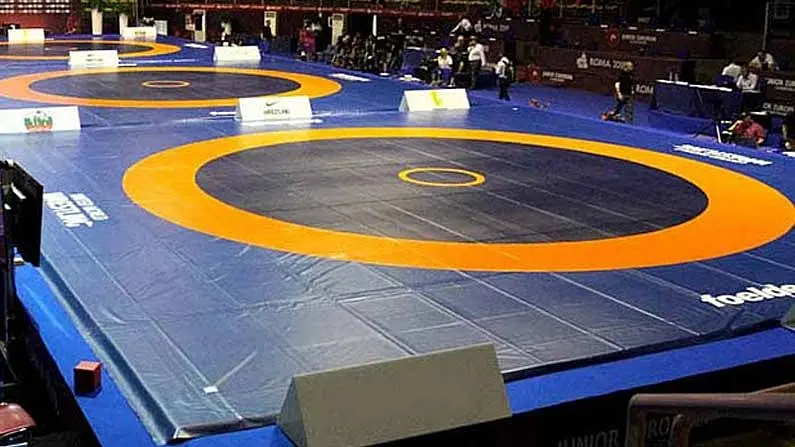
Ritika was participating in the state-level sub-junior, junior women, and men wrestling tournament, a multi-category event held in Bharatpur. She competed in the sub-junior section and reached the final, a remarkable achievement in itself. On 14 March, she lost the gold medal bout by a single point. For any athlete, losing a close final is painful, but for Ritika, the loss appears to have had a devastating emotional impact. According to an official present at the tournament, Ritika had dreamed of winning an international medal, just like her more famous cousins. The official said that she went into depression after losing the gold medal bout in the state meet. Those who knew her described her as a hardworking and dedicated wrestler with a bright future ahead of her.
The tournament where Ritika lost was one of many state-level events that serve as stepping stones for young wrestlers hoping to progress to national and international competitions. Such events are intensely competitive, and the margin between victory and defeat is often razor thin. For Ritika, the one-point difference became a burden that she could apparently not overcome. At just 17, she had spent years in rigorous training, often living away from her immediate family and facing the physical and psychological demands of a grueling sport.
Family and Friends in Shock
The news of Ritika's death first spread through social media, where her cousins expressed their grief and disbelief. Geeta Phogat, the first Indian female wrestler to win a Commonwealth Games gold medal, wrote a moving post in Hindi on Twitter. She referred to Ritika as her 'choti behen' (younger sister) and her maternal uncle's daughter. Geeta said that Ritika was a very successful wrestler and that she did not understand why she had taken such a step. She urged people to remember that victory and defeat are part of an athlete's life, and that no one should end their life over a loss. The post was accompanied by folded-hand and crying emojis, reflecting the pain felt by the family.
Ritu Phogat, the mixed martial artist who also rose through the wrestling ranks, shared her own tribute on Twitter. She wrote, 'Rest in Peace choti behen Ritika. I still cannot believe what just happened with you. Will miss you forever. Om Shanti.' Ritu, who has enjoyed success in ONE Championship, later thanked fans for their love and support. The collective outpouring from the Phogat family showed how deeply Ritika was loved and how her death left a void that would not easily be filled.
Police also confirmed the incident. Ram Singh Bishnoi, Deputy Superintendent of Police in Charkhi Dadri, told ANI that Ritika had died allegedly by suicide on 17 March. He added that the reason behind it might have been her defeat at the recent wrestling tournament in Rajasthan and that an investigation was underway. After the post-mortem, Ritika's body was handed over to her parents, and her last rites were performed at the family village near Jhunjhunu in Rajasthan. The quiet funeral, attended by close family members, was an agonizing end to a life that had once been full of promise.
Ritika's Background and Training
Ritika Phogat was the daughter of Mahavir Singh Phogat's brother-in-law, which made her a maternal first cousin to Geeta, Babita, and Ritu Phogat. Since she was around 12 years old, she had trained at the Mahavir Phogat Sports Academy, run by her uncle, Dronacharya Awardee Mahavir Singh Phogat. Mahavir, himself an amateur wrestler, became famous for defying convention and training his daughters in wrestling at a time when female participation in the sport was rare in many parts of rural Haryana. Ritika was among the many young girls at his academy who were guided by the same disciplined coaching methods that produced several international medallists. Her commitment to the sport was evident in the years she spent at the academy, far from the comforts of home, pursuing a dream of representing India on the podium.
Mahavir was reportedly present at the tournament where Ritika suffered the final loss. The weight of expectation, both from her family and from herself, may have been immense. In a family where almost every prominent member has won a medal or set a record, the pressure on younger relatives can be enormous. Ritika's desire to win an international medal like her cousins was not merely an ambition; it was part of a family legacy. That legacy, while a source of pride and inspiration, also brought expectations that could be difficult to carry.
The Legendary Phogat Legacy
The Phogat family has been at the heart of India's women's wrestling revolution. Geeta Phogat won gold at the 2010 Commonwealth Games in New Delhi, becoming the first Indian woman wrestler to win a gold medal at the event. Babita Phogat claimed silver at the same edition of the Games and later went on to win gold at the 2014 Commonwealth Games in Glasgow. Their cousin Vinesh Phogat, who also trained under Mahavir at various points in her career, is widely regarded as one of the best female wrestlers in the world. She was the top-ranked 53kg wrestler globally and an Asian Games gold medallist, and she was expected to be one of India's strongest medal hopes at the Tokyo Olympics. Ritu Phogat, the youngest of the three sisters in the immediate family, won gold at the 2016 Commonwealth Wrestling Championship before moving into mixed martial arts, where she maintained a 4-0 record in the ONE Championship.
The family's achievements were brought to the wider public's attention with the release of the 2016 film 'Dangal', starring Aamir Khan as Mahavir Singh Phogat. The movie, which became one of the highest-grossing Indian films of all time, portrayed the struggles and triumphs of training Geeta and Babita in the face of social resistance. It inspired a generation of young girls across India to take up wrestling and other sports. Ritika, who was already training at the academy at the time of the film's release, was part of that new generation. She was a visible reminder of how one family's determination changed the landscape of Indian sports.
A Stark Reminder of Mental Health Pressures
Ritika's tragic death has reignited conversations about the intense psychological pressure facing young athletes in India. Competitive sports are inherently stressful, and the stakes can feel overwhelmingly high, particularly for athletes from families with illustrious records. A single defeat, especially in an important match, can trigger feelings of failure, shame, and hopelessness. In a country that celebrates winners but often neglects the emotional wellbeing of athletes, the need for comprehensive mental health support has become more urgent than ever. Sports psychologists point out that junior athletes, who are still in their formative years, are especially vulnerable. They may not have the emotional maturity to process a major loss, or the confidence to speak openly about their distress.
In wrestling, where discipline and toughness are valued, mental health struggles are often hidden. Coaches and family members may focus on technique, strength, and strategy while overlooking the athlete's inner state. Programs that provide counseling, stress management, and mental toughness training are essential, not only for performance but also for the overall wellbeing of competitors. Tournaments and academies need to create environments in which athletes feel comfortable asking for help. Parents and mentors should be taught to recognize warning signs such as persistent sadness, withdrawal from social activities, changes in eating or sleeping habits, and expressions of hopelessness.
Ritika's death is a painful reminder that no medal, however bright, is worth the life of a young person. A one-point loss in a state-level tournament may end a match, but it should never end a life. The Indian sporting community has a collective responsibility to protect its athletes, not just physically but emotionally. As tributes continue to pour in for Ritika Phogat, her story must also serve as a lesson: the health of an athlete, in every sense, must always come first. Those who are feeling suicidal or who know someone in distress should reach out with kindness and compassion, and contact local emergency services, helplines, or mental health organisations for immediate support.
Source:TheQuint News