

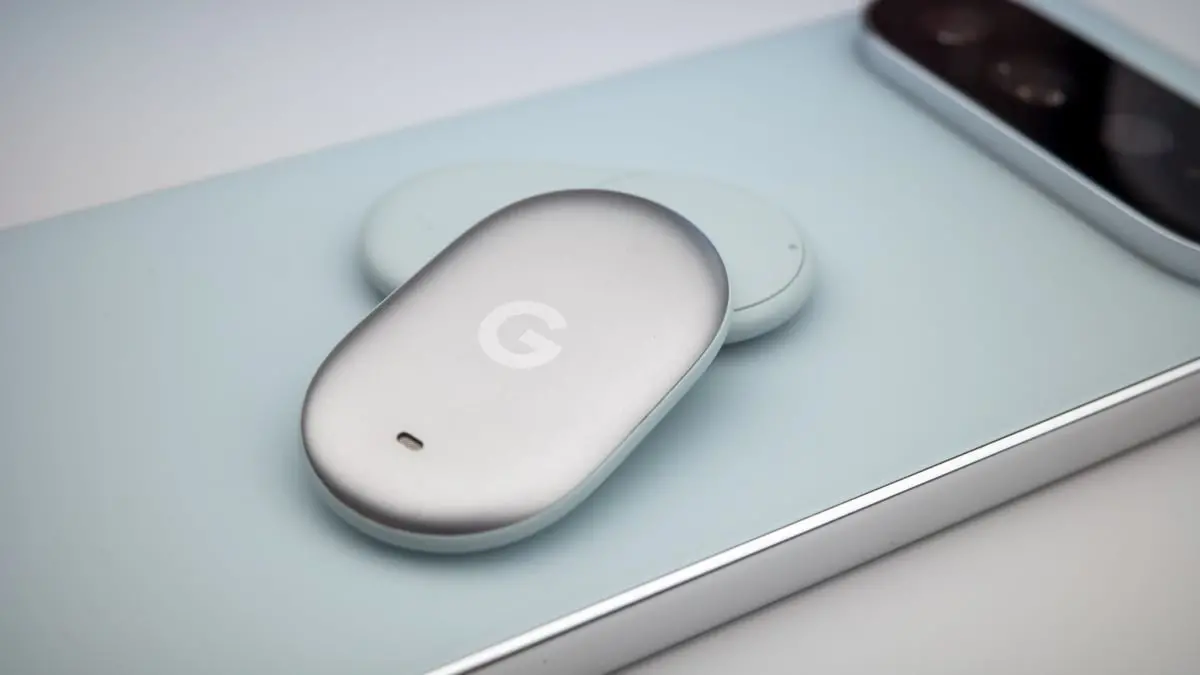
The Google Pixel Tag is finally here, marking the tech giant's entry into the world of Bluetooth trackers. Arriving just ahead of the Made by Google hardware event, this small but versatile accessory gives Android users a sleek new way to keep track of their belongings. With a design that mirrors the premium feel of Pixel devices, the Pixel Tag is set to compete directly with Apple's AirTag and other popular trackers on the market.
What is the Google Pixel Tag?
The Pixel Tag is Google's first-ever Bluetooth tracker. It is a thin, elliptical disc made from stainless steel, measuring roughly two inches in length. It is designed to attach to keyrings, bags, luggage, or any item you might want to locate later. The device uses Bluetooth technology to communicate with your smartphone and the broader Google Find Hub app, allowing you to see the last known location of your tagged items on a map.
One of the standout design elements is the 'Fog' colorway, which features a silvery face and a light blueish back panel. This color perfectly matches the newly announced Pixel 11, Pixel 11 Pro, and Pixel Watch 5, creating a cohesive look for the Google ecosystem. The Pixel Tag is also built to withstand the elements with an IP67 rating, meaning it is protected against dust and can survive immersion in water up to one meter for 30 minutes.
Pricing and availability
Google has priced the Pixel Tag competitively. The single unit retails for $29.99, while a four-pack costs $99.99. This pricing strategy puts it squarely in line with Apple's AirTag, which sells for the same price per item and $99 for a four-pack. At the time of writing, Google was not taking preorders, but the company has announced an official release date of Wednesday, Nov. 11. Interested buyers can visit the Google Store product page and sign up for in-stock alerts to be notified when the device becomes available for purchase.
Given the popularity of Pixel devices, the Pixel Tag is expected to sell quickly. Signing up for alerts is recommended for those who want to be among the first to own one. Google has not yet disclosed whether third-party retailers will carry the Pixel Tag on launch day, but it is likely that major electronics stores will stock it shortly after release.
Key features of the Pixel Tag
The Pixel Tag is packed with features that make it more than just a simple locator. Here are the highlights:
- Built-in speaker: The tag plays a sound when you ping its location from your phone, making it easy to find items hiding under a couch or in a bag.
- Precision finding: With distance and directional pointers, you can walk straight to your lost item using a compatible smartphone.
- Left Behind alerts: You will receive a notification if you accidentally leave a tagged item at a location, helping you avoid losing important belongings.
- Unknown tag alerts: The Pixel Tag alerts you if an unknown tag is traveling with you, addressing privacy and safety concerns.
- Phone finder: Pressing the button on the back panel will make a paired Android phone ring, even if it is on silent.
- Multi-user sharing: The tag can be shared with up to 10 different Google users, making it easy for family members or roommates to find shared items.
How precision finding works
Precision finding is one of the most talked-about features of the Pixel Tag. By leveraging ultra-wideband technology in newer Pixel phones, the tag can provide a more precise location compared to standard Bluetooth tracking. Instead of just showing a map with a general area, you get a directional arrow and distance indicator that guides you directly to the tag. This is similar to Apple's AirTag precision finding with U1 chip, but Google has optimized it for its own hardware.
It is important to note that precision finding may not be available on all Android devices. While the Pixel Tag works with Android 9 and newer, the full precision finding experience is likely reserved for Pixel devices with ultra-wideband support. This is something to consider when deciding whether to purchase the tag for an older or non-Pixel phone.
Compatibility and ecosystem integration
The Pixel Tag is designed to work seamlessly within Google's ecosystem. It can be managed through the Find Hub app, which is Google's central hub for locating lost devices. You can also ring the tag from other Google devices, including Pixel Watches and Pixel Buds. This cross-device integration is a major advantage for users who already own multiple Google products.
The tag supports a wide range of smartphones running Android 9 or later. This covers a massive number of devices, from budget phones to flagship models. However, for the best experience, Google recommends using a recent Pixel phone, particularly one that supports ultra-wideband.
Privacy and security features
Privacy has become a major concern with Bluetooth trackers, as there have been incidents of malicious tracking using devices like AirTags. Google has implemented several safety features to mitigate these risks. The Pixel Tag includes unknown tag alerts, which notify you if an unfamiliar tag is detected moving with you. This is a critical safeguard that helps prevent stalking and unauthorized tracking.
Additionally, the Find Hub app will allow users to see the location of their tags only when they are signed in with their Google account. The tag itself does not store location history or personal data, and all communication between the tag and your phone is encrypted. Google has announced that it will follow industry best practices for tracker safety, including periodic location visibility for unknown tags, so you can scan for nearby trackers even if you don't have a Pixel Tag.
The Pixel Tag vs. Apple AirTag
The Pixel Tag enters a market long dominated by Apple's AirTag. Both devices offer similar features, such as speaker output, precision finding, and lost-mode functionality. The Pixel Tag differentiates itself through deeper integration with Android and Google services. While AirTags work well with iPhones, they offer limited functionality on Android devices. The Pixel Tag, on the other hand, is built specifically for Android, and its compatibility with a wide range of devices is a significant advantage.
Apple's AirTag benefits from the massive Find My network, which uses hundreds of millions of Apple devices to anonymously locate lost tags. Google's Find Hub is expected to leverage Android's extensive user base in a similar way, although the network is still being built out. If Google can scale its network effectively, the Pixel Tag could become a true AirTag competitor.
Should you buy the Pixel Tag?
If you are heavily invested in the Google ecosystem, the Pixel Tag is a no-brainer. It offers a polished design, robust features, and seamless integration with Android phones and wearables. The price is right, and the privacy features address many of the concerns that have plagued other trackers.
If you are comparing it to other options, consider what devices you already own. For Android users, the Pixel Tag is arguably the best choice. For iPhone users, the AirTag remains the most logical option due to its integration with Apple's Find My network. There are also third-party trackers like Tile that work across both platforms, but they often lack the advanced precision finding capabilities of the Pixel Tag.
How to prepare for launch day
Since preorders were not available at the time of writing, the best way to prepare is to monitor the Google Store product page. Sign up for in-stock alerts to receive an email or notification when the Pixel Tag is available. On release day, you can also check the store directly to place an order. Keep in mind that shipping times may vary depending on demand.
When the Pixel Tag becomes available, you will need to have a compatible Android phone with Android 9 or newer. The setup process is straightforward: unbox the tag, hold it near your phone, and follow the prompts in the Find Hub app. You can then assign the tag to an item, such as keys or a backpack, and customize its name and icon.
What to expect after setup
Once the Pixel Tag is paired, you can view its location in the Find Hub app. The app will show a map with the last known position of the tag, along with options to play a sound, enable lost mode, or share the tag with other users. Lost mode allows anyone who finds the tagged item to see contact information you provide, making it easier for good samaritans to return your belongings.
The Left Behind alerts feature is particularly useful for people who frequently forget their keys or bags. You can set specific locations, such as home or work, where you don't want to be alerted. This reduces unnecessary notifications while still providing peace of mind when you are on the move.
The future of Google trackers
The Pixel Tag represents the beginning of Google's journey into the Bluetooth tracker market. It is likely that future iterations will bring even more features, such as longer battery life, replaceable batteries, and perhaps integration with emerging technologies like augmented reality. For now, the Pixel Tag is a solid first effort that positions Google as a serious competitor to Apple in the accessary space.
Made by Google events often serve as a launchpad for innovative products, and the Pixel Tag is no exception. By combining elegant hardware with practical software features, Google has created a tracker that will appeal to both casual users and tech enthusiasts. With the release date set for Nov. 11, the wait is almost over for Android users who want a reliable and feature-rich tracker.
Source:Mashable News