

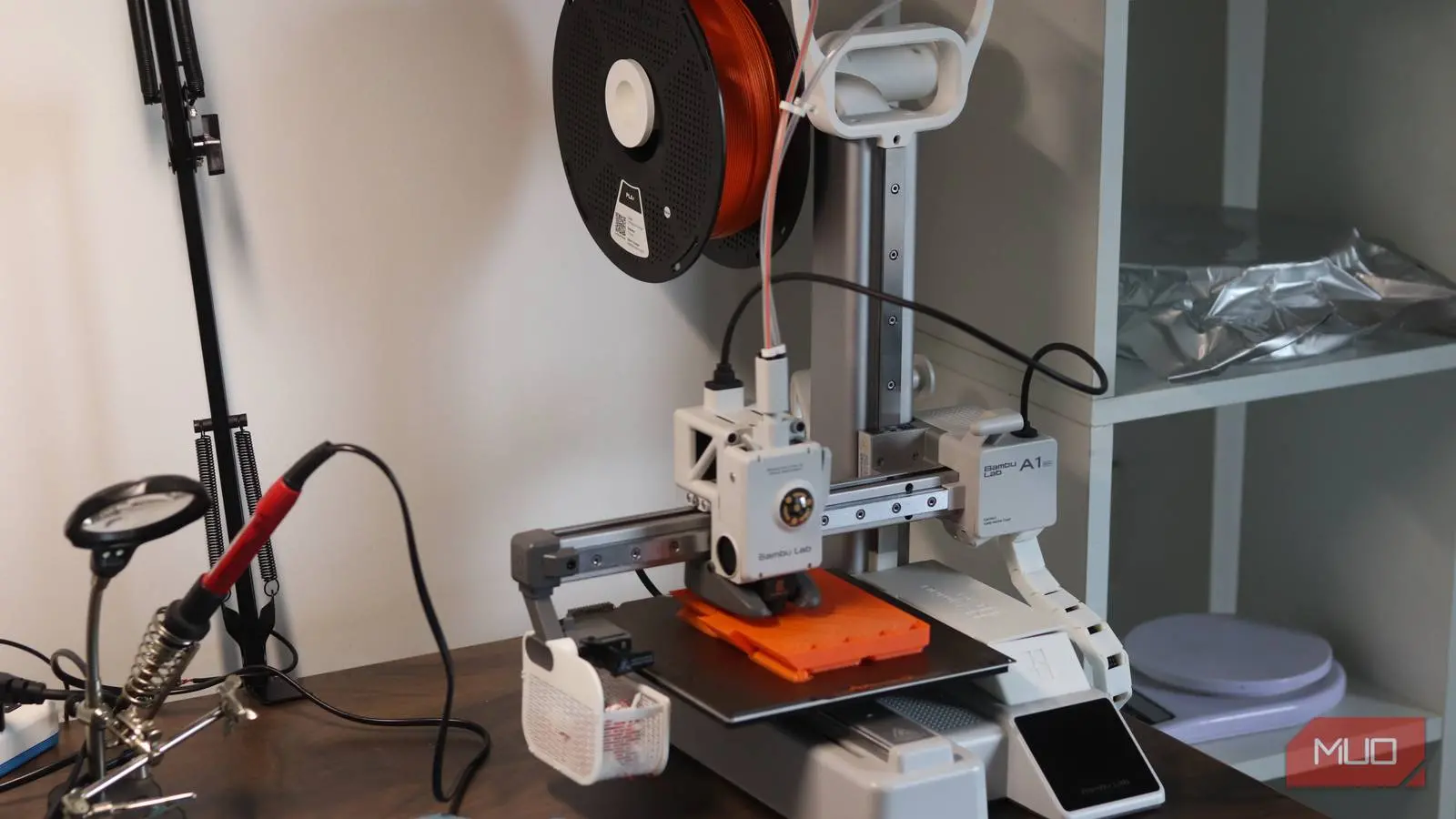
For nearly a decade, I convinced myself that 3D printing was too noisy, too slow, and too demanding for a home setup. My first experience with the technology, back in 2017 while working a high school job maintaining two 3D printers, left me with a deep appreciation for the concept but also a deep skepticism about its practicality. I spent years watching the market evolve from the sidelines, always finding a reason not to buy. When I finally took the plunge in 2026, I discovered that almost everything I thought I knew about 3D printing was outdated.
The printer was never the problem
I overestimated the noise, space, and disruption a 3D printer would bring
My early experience revolved around a massive, heavy industrial-grade printer with a small build volume and a temperamental setup. I remembered spending hours calibrating the bed with a sheet of paper, tolerating loud motors and fans, and constantly fighting with nozzle clogs. I assumed any 3D printer would be similarly intrusive, especially given my plan to place it on my electronics workbench next to my desk. But the moment I unboxed the Bambu Lab A1 Mini, my concerns dissolved. The printer's footprint is barely larger than a shoe box, it features a sleek aesthetic that blends into my workspace, and the noise level is negligible. The only audible component is the cooling fan, and even that is quieter than many desktop computers. I now run print jobs continuously while working a meter away, and the background hum is entirely ignorable. Modern 3D printers, particularly those released after 2020, have embraced silent stepper drivers, improved motor insulation, and efficient cooling designs that make them suitable for any room.
Speed mattered less than I expected
Long print times stopped feeling important once the printer could work unattended
My fear of slow printing had two layers. First, I assumed every print would take several hours or even a full day, as it did with older machines. The A1 Mini dismantled that assumption: it prints a standard Benchy test boat in about 20 minutes at default speeds, and most practical items like brackets, enclosures, and organizers finish in a fraction of the time old printers needed. The second layer was the attention required. I expected to babysit every print, constantly checking for failures. Today's printers feature automatic bed leveling before each job, filament runout detection that pauses and resumes, and built-in cameras for remote monitoring via smartphone apps or smart home dashboards. I have started prints while hundreds of kilometers away from home and returned to flawless finished objects. With proper maintenance and calibrated filament, 3D printing has become a background process, not a time-consuming hobby.
The historical context is revealing. The early RepRap movement and the first consumer printers like the MakerBot Replicator required constant tinkering. Even the popular Creality Ender 3 required manual bed leveling and often needed upgrades to be reliable. But the industry has matured. Auto-leveling sensors, direct-drive extruders, and enclosed build volumes have become standard. Manufacturers now prioritize out-of-box usability, and the result is a new generation of machines that behave more like appliances than kits.
Maintenance turned out to be mostly a myth
Modern printers require far less tinkering than their reputation suggests
Beyond print time, I expected ongoing maintenance to eat into my schedule. In the past, nozzle clogs, belt tension checks, and bed leveling were weekly chores. The A1 Mini, after 134 hours of total printing, has required only a single filament calibration—and even that wasn't strictly necessary, as generic PLA profiles worked well with various brands. The one area where I temper expectations is multi-color printing using add-on units like the AMS or AMS Lite. While they introduce more complexity and waste, for single-color prints using standard materials (PLA, PETG, TPU), modern printers are remarkably low friction. Basic housekeeping like cleaning the build plate occasionally and lubing the rails once a month keeps them running smoothly. This contrasts sharply with the reputation 3D printing still carries among those who haven't tried it recently. Online forums often still discuss issues from earlier days, but the hardware has evolved. Most printers now come with self-diagnostic routines, and many can sense and report issues before they cause print failures.
The broader industry has shifted too. Companies like Prusa, Creality, Elegoo, and Bambu Lab offer printers that include features once exclusive to high-end models: touchscreens, Wi-Fi connectivity, and built-in storage. The learning curve has flattened dramatically. Even a complete novice can achieve good results within the first few hours, and the abundance of online profiles and communities means troubleshooting is easier than ever.
The biggest mistake was waiting so long
I should have bought a 3D printer years earlier instead of overthinking it
My hesitation was rooted in a mental image of 3D printing from nearly a decade ago. I had not updated my assumptions despite obvious advances in the field. While Bambu Lab recently drew criticism for controversially restricting third-party filament, their hardware remains exemplary. But the point is not specific to any brand: modern printers from multiple manufacturers now deliver an experience that is fast, reliable, and user-friendly. They do not demand entire days of maintenance; they do not fail unpredictably if basic care is observed. The gap between hobbyist printers and home appliances has narrowed to the point where anyone with a need for custom plastic parts can justify the purchase. My regret is not the wait itself, but the missed opportunity to learn, create, and prototype ideas years earlier. If your hesitation mirrors mine—worried about noise, speed, and maintenance—the 2026 landscape offers a clear answer: 3D printing has solved all three. The time to reconsider was yesterday.
Source:MakeUseOf News