

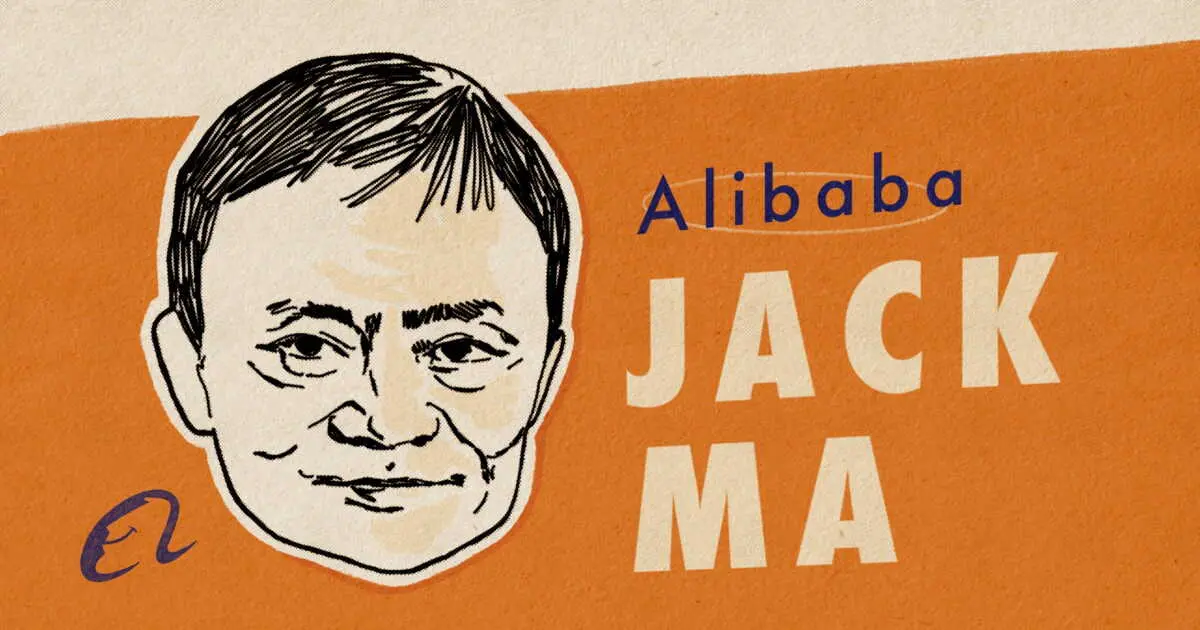
Jack Ma, the charismatic founder of Alibaba, once epitomized the entrepreneurial spirit of modern China. Rising from humble beginnings as an English teacher, he built the country's largest e-commerce empire, amassed a fortune of over $60 billion, and became a global icon. Yet in a single 21-minute speech in October 2020, he triggered a chain of events that cost him billions, saw his companies fined billions of dollars, and forced him into a shadowy retreat from the public eye. Today, Ma is a cautionary tale for any Chinese billionaire who dares to challenge the government's economic policies.
The Early Years: From English Teacher to Tech Visionary
Born in 1964 in Hangzhou, China, Ma Yun—better known as Jack Ma—was not an obvious candidate for business success. He failed the national college entrance exam twice before finally earning a place at the Hangzhou Teachers College. After graduation, he became an English teacher, earning a modest salary. His first encounter with the internet during a 1995 trip to the United States changed everything. He searched for "beer" and found no Chinese results, sparking the idea for a Chinese internet company.
Returning home, Ma founded China Pages, one of the country's first web design companies. The venture struggled, but Ma's persistence paid off. In 1999, he gathered 18 friends in his apartment and launched Alibaba.com, a business-to-business e-commerce platform designed to connect Chinese manufacturers with overseas buyers. The company grew rapidly, attracting investment from Goldman Sachs and SoftBank. By 2003, Ma had launched Taobao, a consumer marketplace that would eventually crush eBay in China. The following year, Alipay was introduced, creating a trusted payment system that became the backbone of Chinese e-commerce.
The Rise of an Empire
Alibaba's success was staggering. In 2014, the company staged the largest IPO in history on the New York Stock Exchange, raising $25 billion. Ma became a household name, known for his flamboyant speeches and business acumen. He mingled with world leaders, debated Elon Musk on artificial intelligence, and even appeared as a character in a martial arts film. By 2020, Alibaba had diversified into cloud computing, digital media, artificial intelligence, and logistics, employing over 200,000 people. Its affiliate, Ant Group, operated Alipay with over one billion users and was preparing for a record-breaking dual IPO in Shanghai and Hong Kong, expected to raise more than $30 billion.
Ma personally owned 11% of Ant Group, a stake valued at around $26 billion. Combined with his Alibaba shares, his net worth peaked at $61 billion in late 2020, making him the richest man in Asia and one of the wealthiest in the world. But Ma was not content to quietly manage his empire. He had opinions—strong ones—about China's financial system, and he was not afraid to voice them.
The Speech That Changed Everything
On October 24, 2020, Jack Ma was invited to speak at the Bund Summit in Shanghai, a prestigious financial conference. Dressed in a blue suit, he took the podium and launched into a scathing critique of China's banking regulators. He accused banks of being "pawnbrokers" that only lend to large, low-risk companies, neglecting the small enterprises that needed credit most. He defended Ant Group's innovative business model, arguing that regulation was stifling financial innovation. "The world, and especially China, needs more policy experts and fewer bureaucratic experts," he declared.
His words were broadcast live, and they were heard by the very people he criticized—including Yi Gang, governor of the People's Bank of China, and other senior officials. Within days, Beijing responded. On November 3, just two days before Ant Group's planned IPO, regulators suspended the listing indefinitely. The official reason was "significant changes in the regulatory environment." Alibaba's stock plunged, and Ma's fortune began to evaporate.
The crackdown did not stop there. In December 2020, China's antitrust authorities launched an investigation into Alibaba for "suspected monopolistic practices." The following April, Alibaba was fined a record $2.8 billion (18.2 billion yuan). Ant Group was ordered to restructure, splitting off its payment, credit, and insurance businesses under tighter regulation. Ma's personal wealth fell by more than half, to around $25 billion.
Disappearance and Return
After his speech, Jack Ma vanished from public view for nearly three months. His private jet stopped flying, and he was not seen at any events. Speculation swirled: he was under house arrest, he had been forced to surrender his assets, or he was simply lying low. The Financial Times tracked his Gulfstream G650 and found that flights dropped from one every three days to one per week after October 24. Most tellingly, Ma flew to Beijing the day after his speech and stayed for four days—likely to face authorities.
Ma finally reappeared in January 2021, addressing a hundred rural teachers via video conference—an activity consistent with his earlier philanthropic focus on education. Over the following months, he traveled to universities in Hong Kong, Japan, Rwanda, and Israel, studying agricultural technology. He also spent time at his vineyard in Bordeaux, France, where he had established a permaculture farm.
In March 2023, Ma returned to mainland China for the first time in over a year, visiting his hometown of Hangzhou. However, the government's attitude toward him had hardened. He was no longer the favored entrepreneur who had once dined with President Xi Jinping. Instead, he seemed to have been relegated to the role of a retired academic, quietly pursuing sustainable farming.
Further Penalties and a New Reality
On July 7, 2023, China's central bank fined Ant Group an additional 7.12 billion yuan ($984 million) for violations in payment, settlement, anti-money laundering, and fund sales. Other financial institutions tied to Ant were also penalized. In January 2023, Ma had stepped down as chairman of Ant Group and transferred his controlling stake, reportedly as part of a deal to end the company's restructuring. He now holds no official positions in any of his former companies.
The timing of these events is significant. They coincide with Xi Jinping's broader campaign to curb the power of big tech and promote "common prosperity." Alibaba, Tencent, Meituan, and other giants have all faced increased regulation, including limits on data collection, antitrust actions, and caps on lending through their financial arms. Ma, once seen as a symbol of Chinese capitalism, became a high-profile victim of this policy shift.
Key Milestones in Jack Ma's Career
1978: During China's opening under Deng Xiaoping, 14-year-old Ma practices English with tourists in Hangzhou.
1984: After failing the gaokao twice, he is admitted to Hangzhou Teachers College.
1988: Graduates and becomes an English teacher at the Hangzhou Institute of Electronic Engineering.
1994: Founds Haibo Translation Agency to help local companies with international business.
1995: Travels to the US, discovers the internet, and creates China Pages.
1997: Joins the Ministry of Foreign Trade and Economic Cooperation, helping to build official websites.
1999: Founds Alibaba with 18 friends in his apartment.
2003: Launches Taobao to compete with eBay; eBay exits China in 2006.
2004: Alipay is launched.
2007: Alibaba IPO on the Hong Kong Stock Exchange.
2009: Singles' Day (November 11) becomes a global shopping festival.
2014: Alibaba lists on the New York Stock Exchange, raising $25 billion.
2019: Ma steps down as executive chairman, shifting to philanthropy.
October 24, 2020: Gives critical speech at Bund Summit.
November 3, 2020: Ant Group IPO suspended.
April 2021: Alibaba fined $2.8 billion for antitrust violations.
July 2023: Ant Group fined $984 million.
2023: Ma returns to China after overseas travels, focuses on agriculture.
Jack Ma's trajectory reflects the immense opportunities and strict limits of doing business in China. He built a company that reshaped global commerce, but when he stepped beyond the bounds of acceptable criticism, the state demonstrated its ultimate authority. Today, Ma's public appearances are rare, and his business interests have been systematically separated from his control. He serves as a reminder that in China, even the most powerful entrepreneur is ultimately subject to the will of the party.
Source:Capital.fr News