

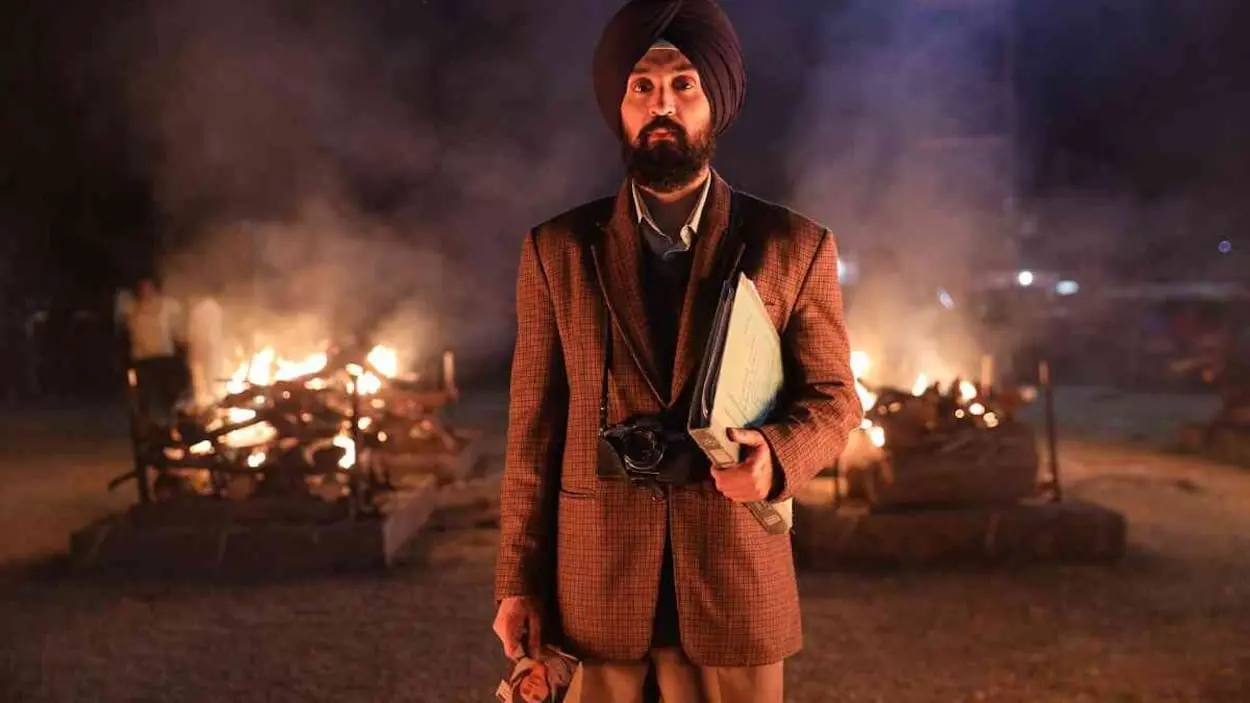
An Indian feature film that has been banned by the Indian government is now drawing large audiences in Canada. Satluj, starring Punjabi superstar Diljit Dosanjh, explores the life and death of human rights activist Jaswant Singh Khalra, a former bank manager who uncovered mass graves and extrajudicial killings by Indian police in the 1990s. The film was originally scheduled for release in India but was pulled from streaming platforms after just 48 hours following government intervention.
A Story of Resistance and Repression
Jaswant Singh Khalra began his investigation in the early 1990s, documenting the forced disappearances of Sikh civilians in the Indian state of Punjab. His research revealed that approximately 25,000 unidentified bodies had been cremated secretly by law enforcement agencies. In 1995, Khalra himself was abducted and murdered. Five police officers were later convicted in connection with his death. The film Satluj aims to bring this dark chapter of Indian history to a wider audience.
Mathieu Boisvert, director of the Centre for Studies and Research on India, South Asia and its Diaspora at the University of Quebec in Montreal, compared the film's controversial nature to a hypothetical movie about the October Crisis in Quebec. He noted that the Indian government does not recognize any separatist or independence movements within its territory and therefore views the film as a threat to national unity.
Government Censorship and Digital Evasion
Initially titled Punjab '95, the film was selected for the 2023 Toronto International Film Festival (TIFF) but was later removed from the lineup. Indian media outlet Variety described the film as potentially incendiary. After failing to obtain approval from the Central Board of Film Certification (CBFC), the producers bypassed traditional censorship by releasing the film directly on the streaming platform ZEE5 on July 3. Less than two days later, the Indian government ordered its immediate removal, citing security concerns and the risk of reigniting regional tensions and pro-Khalistan sentiments.
However, copies of the film quickly leaked online and began circulating within the global Sikh diaspora. In Canada, which is home to the largest Sikh population outside India, community organizers mobilized to arrange independent screenings. Events have been scheduled in Surrey, British Columbia, at the Khalsa Secondary School and the Gurdwara Nanaksar, where up to 400 people are expected to attend. Screenings are also planned in Edmonton and other cities.
Community Response and Historical Echoes
Amrinder Singh, a representative of the temple committee in Surrey, explained that the screenings are motivated by a duty to remember. He stated that the film touches on human rights issues and connects deeply with the Sikh community's roots in Punjab. Similarly, Edmonton organizer Amandeep Ahluwalia emphasized the community's responsibility to bring the truth forward and let people decide for themselves whether the film constitutes propaganda.
Gurpreet Singh, an independent journalist based in British Columbia, dismissed the Indian government's security rationale as a disinformation campaign. He argued that the government is trying to mislead the public to hide uncomfortable truths about its institutions. The story of Khalra carries extra weight in Canada due to his family's historical ties to the country. Khalra's grandfather was aboard the Komagata Maru, a ship that was denied entry to Canada in 1914 despite its passengers being British subjects. Khalra himself visited Canada to speak out against police violence before his abduction and murder.
Freedom of Expression Versus National Security
Federal MP Randeep Sarai, who serves as parliamentary secretary to the Minister of International Development, commented on the Canadian screenings. He noted that censorship often backfires, making banned works even more popular. Sarai underscored that Canada is a place of free expression and does not censor films. The screening of Satluj in Canada thus becomes a test case for the limits of artistic freedom when national security narratives clash with human rights advocacy.
The film has also reignited discussions about the Khalistan movement, which seeks an independent Sikh state in the Punjab region. While India views the movement as a terrorist insurgency, many Sikhs in the diaspora see it as a legitimate struggle for self-determination. The Canadian government has faced increasing pressure from India to curb pro-Khalistan activities, especially after the 2023 assassination of Hardeep Singh Nijjar, a Sikh activist, on Canadian soil. The subsequent diplomatic tensions have added another layer of complexity to the reception of Satluj.
Artistic and Political Dimensions
Diljit Dosanjh, who plays Khalra, is one of the most recognizable figures in Punjabi cinema and music. His involvement has drawn widespread attention to the film, both because of his star power and his outspoken views on Sikh rights. Dosanjh has previously faced backlash for his political commentary, and the release of Satluj has amplified scrutiny on his work.
The film's narrative is based on documented historical events, including court records and testimonies from survivors. However, the Indian government's refusal to certify the film has led to accusations that the state is trying to suppress uncomfortable histories. Critics argue that the ban undermines democratic principles and the right to artistic expression. Supporters of the ban maintain that the film could incite violence and destabilize the region, which has already seen decades of conflict.
In the context of ongoing tensions between India and Canada over Sikh activism, Satluj serves as a cultural flashpoint. Canadian audiences have the opportunity to view the film and form their own opinions, while Indian citizens remain deprived of legal access due to censorship. The situation highlights the disparities in media freedom between the two countries and the power of diaspora communities to circumvent state control.
As the screenings continue, more Sikh Canadians are expected to attend, some out of curiosity and others out of a desire to honor Khalra's legacy. The film's existence and its reception in Canada signal that, even when a government attempts to bury a story, it can resurface in unexpected places. Whether Satluj will eventually receive a proper release in India remains uncertain, but for now, the discussions it has sparked are far from over.
Source:Radio-Canada News