

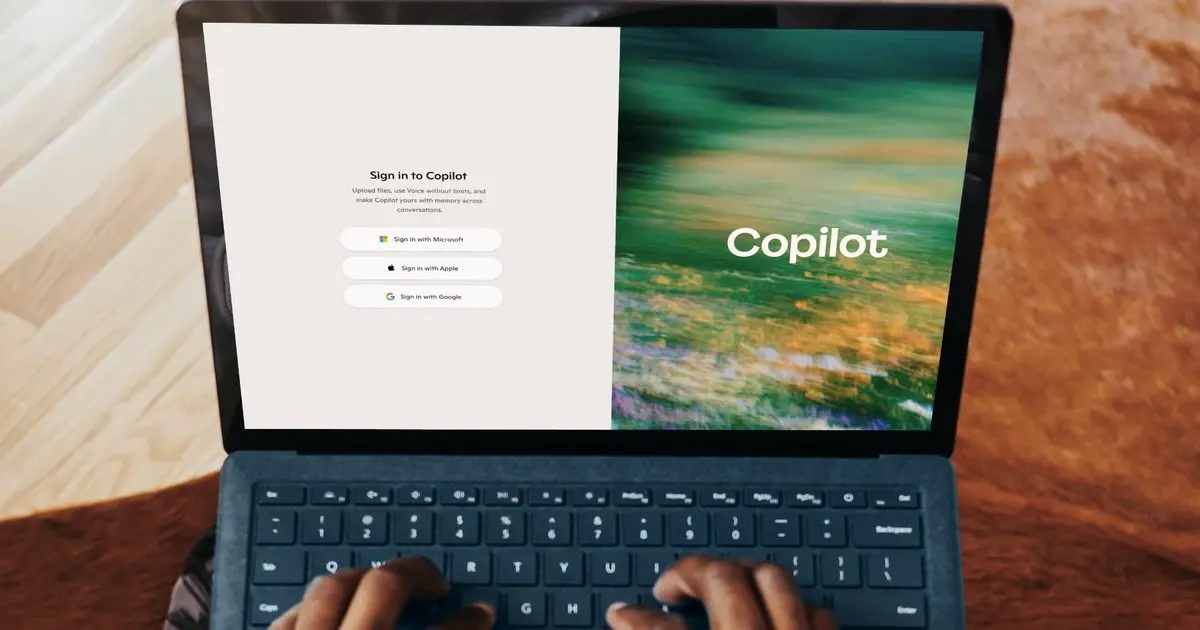
Microsoft is consolidating its sprawling artificial intelligence offerings into a single “super app,” according to CEO Satya Nadella. Speaking during the company’s latest earnings call, Nadella confirmed that the tech giant is building an all-in-one Copilot experience that will bring together its chat assistant, workplace collaboration tool, coding companion, and autonomous agents under one roof.
What exactly is Microsoft building?
Nadella explained that Copilot has evolved rapidly from a simple chat interface into a broader ecosystem. The journey began with the original Copilot chatbot, which was designed to answer questions and assist with everyday tasks. That tool then expanded into what Microsoft calls “Cowork,” a collaborative workspace where users can work alongside AI in shared projects and documents. Now, Microsoft is pushing into “Autopilots,” a term the company uses for autonomous agents that can execute long-running tasks with minimal human oversight. These agents can handle complex workflows, automate repetitive processes, and operate independently over extended periods.
The super app is intended to unify all of these capabilities into a single platform. “We plan to combine all the tools into what I called a super app that works for both regular consumers and business customers,” Nadella said during the call. He expressed confidence in the project, calling it a “major step forward,” but did not provide a specific launch date, only saying that it would arrive “this year.”
Confirmed after months of speculation
This news did not emerge out of thin air. Earlier in the year, reports surfaced that Microsoft had been quietly developing a super app behind the scenes. Nadella’s remarks essentially confirm those earlier reports and give them official weight. He later referred to the super app as the “flagship app” that employees in different roles across a company could use every day, suggesting that it will become a central hub for both individual productivity and enterprise collaboration.
For a company like Microsoft, which has spent years building both consumer and enterprise products, the idea of a single application that ties everything together is both ambitious and logical. Microsoft already has a massive footprint with Windows, Office, Azure, GitHub, LinkedIn, and Teams. A Copilot super app could serve as the unifying layer across these products, making it easier for users to access AI tools wherever they happen to be working.
Why should you care about another AI app?
If you already use Copilot for writing, GitHub Copilot for coding, and a separate agent tool for administrative work, the appeal of a super app is obvious. Instead of switching between three or four different applications, you would have a single destination for all of Microsoft’s AI capabilities. This would save time, reduce context switching, and hopefully provide a more consistent user experience.
Microsoft has a significant user base to build on. The company already counts more than 30 million paid Copilot seats, which means a large number of people and organizations are relying on these AI tools today. If Microsoft can successfully bring them all under one roof, the impact could be substantial, not just for existing users but for the broader AI software market.
The super app concept explained
The term “super app” is not new. It has been popularized in Asia by platforms like WeChat, which started as a messaging app and grew into an ecosystem for payments, shopping, social networking, and government services. In the West, many technology companies have tried to create similar super apps with varying degrees of success. Google, Facebook, and Amazon have all attempted to combine multiple services into a single app experience. Microsoft’s Copilot super app would be the first major effort to apply this concept specifically to artificial intelligence.
The idea is that instead of opening a chatbot for quick questions, a coding assistant for programming, an autonomous agent for task automation, and a collaboration tool for team projects, each with its own interface and settings, a user would open one app and access all of these capabilities seamlessly. This is particularly relevant for businesses, where employees often juggle multiple software licenses and tools throughout the day.
The evolution of Copilot
Copilot’s journey started in 2021 with the introduction of GitHub Copilot, an AI pair programmer that helps developers write code. It was followed by Microsoft 365 Copilot, which brought generative AI to Office applications like Word, Excel, PowerPoint, and Outlook. Then came Windows Copilot, integrating AI directly into the operating system, and later Copilot Pro, a subscription tier for power users.
The progression from a coding assistant to a suite of AI products reflects Microsoft’s broader strategy of embedding AI into every layer of its ecosystem. Nadella has repeatedly emphasized that AI is the next major computing platform, and the company has invested billions of dollars in OpenAI and built its own AI infrastructure. The new Cowork and Autopilots features represent an additional step forward, moving from reactive chatbots to proactive agents that can do more than just answer questions.
What are Cowork and Autopilots?
While Microsoft has not yet provided detailed documentation on Cowork, the name suggests a shared space where humans and AI work side by side. Unlike a traditional chatbot that operates in a separate window, Cowork could allow AI to participate in the creation and editing of documents, spreadsheets, presentations, and even complex data visualizations in real time. This would align with the growing trend of collaborative AI, where artificial intelligence is not just a tool you issue commands to but a teammate that helps you complete work.
Autopilots, on the other hand, are Microsoft’s term for autonomous agents. These are AI systems that can be given a goal, break it down into a series of steps, and execute those steps by interacting with other software, websites, and databases. For example, an Autopilot might be tasked with preparing a monthly report by gathering data from multiple sources, performing analysis, generating charts, and drafting a summary, all without needing step-by-step instructions from a human. This is part of a broader industry shift toward agentic AI, where models are not just generating text but taking actions.
The competitive landscape
Microsoft is not alone in pursuing this strategy. Anthropic, the company behind the Claude AI assistant, already offers an app that combines multiple tools and capabilities. OpenAI, which Microsoft has heavily invested in, recently unveiled ChatGPT Work, an application that merges the conversational power of ChatGPT with Codex, its coding assistant. This app is designed to be a one-stop shop for both writing and programming tasks.
These companies are all racing to become the first platform people open when they want to get work done with AI. The stakes are high because the winner of this race could lock in billions of users and set the standard for how AI is used in everyday life and in the workplace.
Microsoft’s advantage lies in its enormous ecosystem. The company has access to more than 1.4 billion Windows users, hundreds of millions of Office subscribers, millions of GitHub developers, and a vast enterprise customer base through Azure. A Copilot super app can leverage all of these existing relationships. It can be pre-installed on Windows devices, deeply integrated into Office, and connected to GitHub repositories and Azure cloud services. This creates a level of distribution that smaller competitors cannot easily replicate.
Potential implications for users and businesses
For individual users, the arrival of a Copilot super app could mean fewer subscriptions and less complexity. Instead of paying separately for Copilot Pro, GitHub Copilot, and other AI add-ons, a single app might offer a unified subscription plan. It could also bring a more uniform user interface, with the same design language and settings across all AI functions. For businesses, the benefits include simplified procurement, centralized administration, and improved security, as IT departments would only need to manage one AI platform rather than several.
However, there are also potential drawbacks. Relying on one app for everything could create vendor lock-in, making it harder for users to switch to a competitor’s AI tool. There are also privacy concerns, because consolidating all AI activity in one place gives Microsoft a comprehensive picture of an individual’s or organization’s work patterns. This data could be used to improve AI models, but it also raises questions about data governance and compliance.
Another issue is the challenge of integrating products that were originally designed as standalone apps. Microsoft has a history of struggling with integration. For example, Teams was built to be the central collaboration hub in Windows, but it often felt separate from the rest of the ecosystem. The company will need to ensure that the Copilot super app feels like a native experience rather than a collection of bolted-on features.
What comes next?
Neither Nadella nor other Microsoft executives provided a detailed product roadmap for the super app. It remains unclear how pricing will work, whether the app will be available for free or as part of a subscription, and what will happen to existing standalone Copilot applications once the super app is released. It is also uncertain whether the super app will be rolled out to consumers first or prioritize enterprise customers.
Despite these unknowns, the direction is clear. Microsoft is betting that the future of AI is not a collection of separate tools but a unified platform that can handle everything from a quick email draft to a complex, multi-step business operation. With the rise of autonomous agents and the growing popularity of AI assistants, the demand for a single app that can accomplish all of these tasks is likely to increase. As Nadella said, this is a major step forward, and the tech world will be watching closely to see how Microsoft executes on its vision.
Source:Digital Trends News