

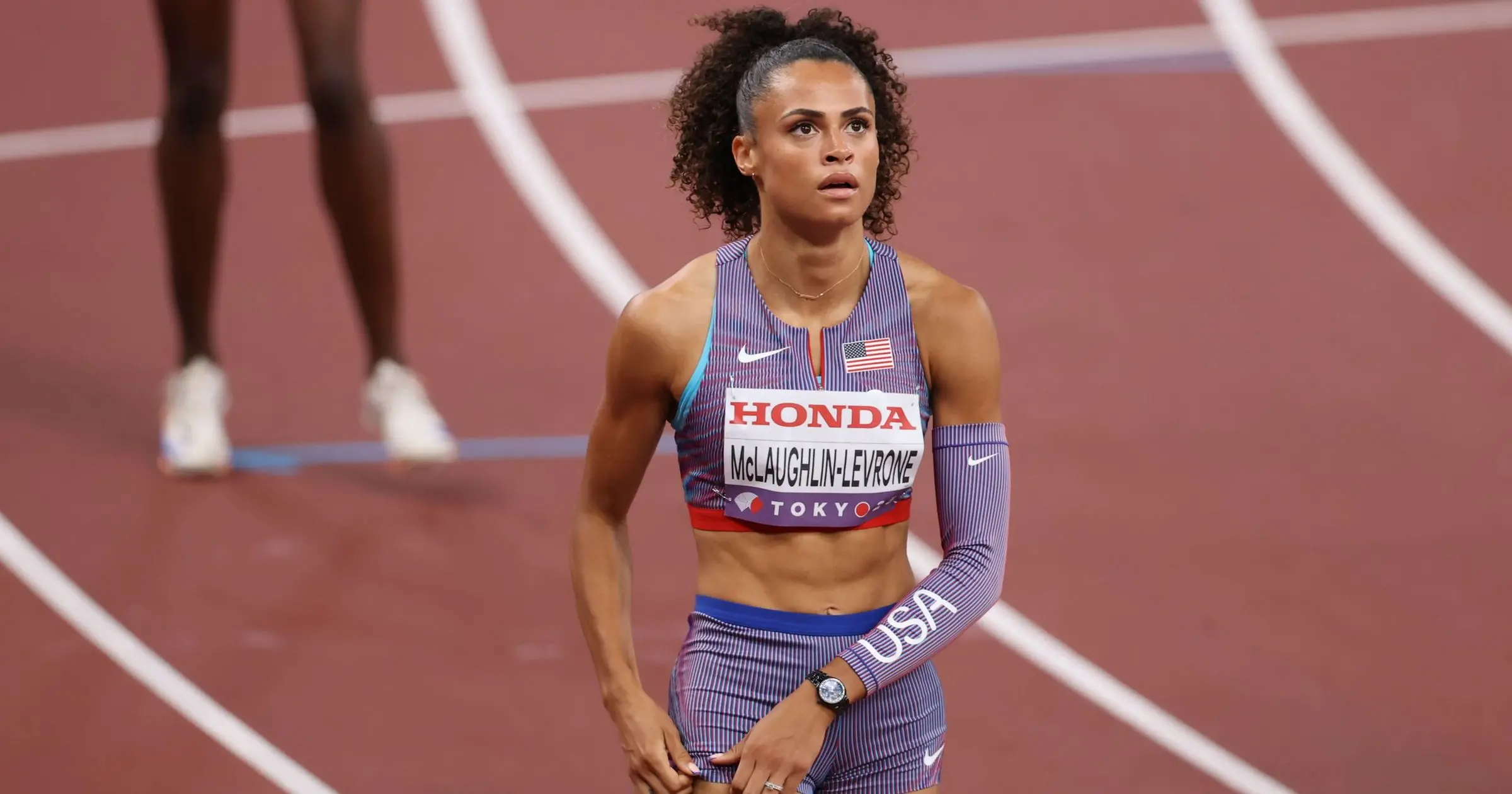
Sydney McLaughlin-Levrone Targets 400m Gold and World Record at Tokyo 2025 World Championships
Key Facts
- Sydney McLaughlin-Levrone advanced to the women's 400m final at the Tokyo 2025 World Athletics Championships.
- She won her semifinal in 48.29 seconds, the seventh-fastest performance in history.
- McLaughlin-Levrone is the reigning Olympic champion and world record holder in the 400m hurdles.
- She is coached by Bob Kersee, who has said she has the speed and endurance to break the flat 400m world record.
- The world record is Marita Koch's 47.60 seconds, set in 1985.
- Her main rivals include Salwa Eid Naser of Bahrain, who ran 48.14 in 2019, and Marileidy Paulino of the Dominican Republic, the reigning Olympic 400m champion, who ran 48.17 in Paris.
- The final is scheduled for Thursday at 15:10 local time in Tokyo.
- A knee injury prevented McLaughlin-Levrone from competing in the 2023 World Championships in Budapest.
Sydney McLaughlin-Levrone has spent years making the extraordinary look routine. She has broken world records, won Olympic gold medals, and turned the 400m hurdles into a personal laboratory where the limits of speed and endurance are constantly renegotiated. But even by her standards, what happened in the semifinals of the women's 400m at the Tokyo 2025 World Athletics Championships felt different. On a warm evening in the Japanese capital, McLaughlin-Levrone ran 48.29 seconds, the seventh-fastest time in history, and did so without appearing to empty the tank. The performance immediately transformed the flat 400m final from an intriguing side project into one of the most anticipated races of the championships.
The number itself demands context. Only a handful of women have ever run faster over one lap of the track. The list is led by Marita Koch, whose 47.60 from 1985 has stood for four decades and survived countless challenges. Behind her are names like Jarmila Kratochvilova, Salwa Eid Naser, and Marileidy Paulino. McLaughlin-Levrone's 48.29 places her among them after just a handful of serious flat 400m races at the global level. More importantly, it suggests that the 400m hurdles world record holder may be on the verge of something even larger.
The Semifinal That Changed the Conversation
McLaughlin-Levrone entered the semifinal as the favorite, but favorites in championship racing are often expected to control rather than demolish. She did more than control. From the gun, her stride was fluid and powerful, her posture relaxed, her cadence metronomic. By the time she entered the final straight, the race was already decided. She crossed the line in 48.29, a personal best and a statement that echoed around the stadium. The time was not just a qualifying mark; it was a warning to the rest of the field and a revelation about how much room remains for improvement.
Afterward, McLaughlin-Levrone admitted that she had surprised herself. She said the race gave her confidence for the final and that she still had things to show. That phrase, delivered with the calm assurance of an athlete who has learned to expect the impossible from her own body, captures why the final has become the centerpiece of the meet. She is not merely chasing a gold medal. She is chasing a version of herself that has not yet been fully revealed.
From 400m Hurdles Queen to Flat 400m Contender
For years, McLaughlin-Levrone's identity has been tied to the 400m hurdles. She won Olympic gold in Tokyo and Paris, and she has lowered the world record five times, most recently to 50.37 at the Paris Olympics. That performance confirmed what many already believed: she is the greatest 400m hurdler in history, and she may be without a true rival in the discipline. When an athlete reaches that point, the question shifts from who can beat her to what else can she do.
The flat 400m became the natural answer. It offers a different challenge. There are no barriers to break the rhythm, no technical adjustments between strides. The race is a pure test of speed endurance, tactical positioning, and the ability to distribute effort across 400 meters. For a hurdler, the flat race can feel both freer and more demanding. The speed is continuous, and the margins are brutally small. McLaughlin-Levrone had already shown promise in the event. In 2023, she won the U.S. selections for the 400m, but a knee injury prevented her from competing at the World Championships in Budapest. That absence delayed the experiment but did not end it.
Why the World Record Is in Play
Koch's 47.60 has long been considered one of the most untouchable records in track and field. It was set in a different era, under circumstances that have fueled debate for decades. Yet the record remains official, and every generation of 400m runners has been measured against it. Few have been considered genuine threats. McLaughlin-Levrone may be one of them.
Her coach, Bob Kersee, has never hidden his belief in her potential. He has said that McLaughlin-Levrone possesses the power and speed needed to break Koch's record. He has compared her talents to those of Jackie Joyner-Kersee, the legendary heptathlete, and Florence Griffith-Joyner, who still holds the world records at 100m and 200m. According to Kersee, her 50-second 400m hurdles ability proves she has the speed, endurance, and aerobic base to run under 48 seconds. The semifinal in Tokyo gave that argument new weight.
To break 47.60, McLaughlin-Levrone would need to run more than half a second faster than she did in the semifinal. That is a significant gap in an event where tenths of a second are precious. But championship finals often produce faster times. The presence of Naser and Paulino could push her to a higher pace. If the race unfolds perfectly, with even splits and a strong finish, the record may not be as distant as it once seemed.
The Rivals Standing in Her Way
The final is not a coronation. It is a race, and the field includes two of the best 400m runners in history. Salwa Eid Naser, running out of lane seven, owns the third-fastest performance of all time, a 48.14 from 2019. She has the speed and experience to challenge anyone. Marileidy Paulino, in lane nine, is the reigning Olympic champion and ran 48.17 to win in Paris. She has proven her ability to deliver on the biggest stage. After the semifinals, Paulino said that she and God would write history in Tokyo. It was a confident declaration, and it underlined the quality of the opposition.
Still, neither Naser nor Paulino has faced McLaughlin-Levrone in this kind of form over the flat 400m. Their best times are faster than McLaughlin-Levrone's personal best before Tokyo, but her trajectory is different. She is still learning the event, still finding the right race pattern, and still improving at a rate that is rare among established champions. The final will test whether her semifinal was a peak or a preview.
Coach Kersee's Vision and the Injury That Delayed It
Kersee's confidence in McLaughlin-Levrone's flat 400m potential is not new. Two years ago, he spoke openly about her ability to break Koch's record. He described her as having the talent of Joyner-Kersee and the velocity of Griffith-Joyner. That combination, he argued, gave her the tools to run under 48 seconds. At the time, the idea seemed bold. Now it looks prophetic.
The knee injury in 2023 interrupted the plan. McLaughlin-Levrone had qualified for the World Championships in Budapest, but she could not compete. It was a frustrating setback for an athlete who had already shown she could handle the transition from hurdles to flat sprinting. The delay may ultimately have helped. It gave her more time to build strength, refine her race tactics, and arrive in Tokyo with a clearer sense of what the event requires.
A Final Loaded With History
The Tokyo final brings together the present and the past of women's 400m running. Koch's record is the historical marker. Naser's 48.14 is the modern standard. Paulino's Olympic title is the current proof of excellence. And McLaughlin-Levrone is the disruptor, an athlete from another event who has entered their territory and immediately become the favorite. The clash of styles and resumes makes the race more than a medal contest. It is a measuring stick for an entire era.
For McLaughlin-Levrone, the final is also a chance to complete a rare double. She is already the queen of the 400m hurdles. Adding a world title in the flat 400m would place her in a category occupied by very few athletes. It would not diminish her hurdling legacy; it would expand it. It would show that her greatness is not confined to one discipline, and that her curiosity about her own limits is as powerful as her physical gifts.
The analysts who watched her semifinal struggled for superlatives. Former hurdler Stéphane Caristan joked that the fairy who visited her cradle must have fallen and scattered every gift. He called her performance exceptional. Arnaud Assoumani described it as stratospheric and extraordinary, comparing her level to that of Armand Duplantis, the pole vault world record holder. Such comparisons can be overstated, but they reflect the awe that McLaughlin-Levrone inspires when she runs.
What makes the final so compelling is that the outcome is not predetermined. McLaughlin-Levrone is the favorite, but she is not invincible. A perfect race from Naser or Paulino could change everything. A tactical mistake could cost her. The 400m is unforgiving. It rewards patience, strength, and intelligence. McLaughlin-Levrone has shown all three, but she has not yet shown them in a global flat 400m final.
The race is scheduled for Thursday at 15:10 local time in Tokyo. Eight lanes, one lap, and a set of records waiting to be challenged. McLaughlin-Levrone has spent her career turning pressure into performance. In Tokyo, she will attempt to do it again, this time without hurdles, and with history watching every stride.
Source:Eurosport News