

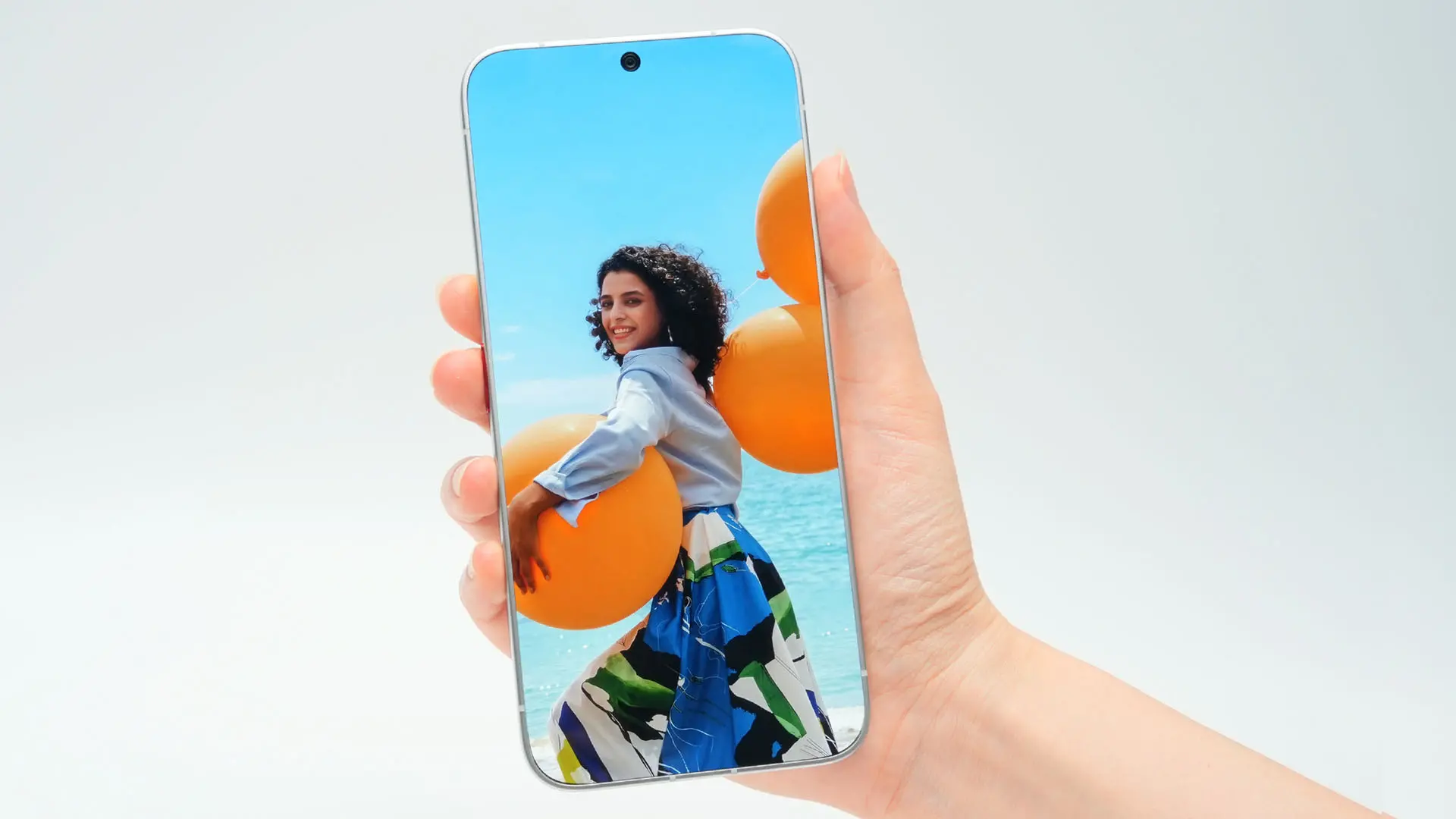
The quest for the perfect smartphone display has been a relentless journey. From the thick, clunky bezels of early touchscreen devices to the razor-thin borders we see today, each generation has tried to push the screen closer to the edge. But what if that edge disappeared entirely? TECNO, a brand known for delivering innovative technology at accessible prices, has just taken a giant leap forward by unveiling a concept phone with a truly bezel-less display — achieving what the company calls a genuine 0mm border around the screen.
In an industry where even the most premium flagships still feature a slender but visible black line around the display, TECNO's announcement is a bold statement. The company has long been experimenting with futuristic concepts, from foldable devices to under-display cameras, but this latest creation might be its most visually striking yet. By completely eliminating the bezel, TECNO isn't just iterating on existing designs; it's redefining the very relationship between the display and the phone's chassis.
A History of Shrinking Bevels
To truly appreciate the significance of this achievement, it's worth looking back at how far smartphone displays have come. In the late 2000s, devices like the original iPhone featured substantial bezels that were necessary for structural integrity and to house antennas, receivers, and other components. As the market matured, manufacturers began to realize that consumers craved more screen real estate without the phone becoming physically larger. This led to the rise of the "bezel-less" trend around 2016, starting with designs like the Xiaomi Mi Mix and the Samsung Galaxy S8 series, which introduced curved edges and minimal top and bottom chins.
These designs were revolutionary in their time, but they still had compromises. Screens curved around the edges to hide the side bezels, and the top and bottom remained relatively pronounced to accommodate front-facing cameras and earpieces. Subsequent innovations like the notch, the punch-hole camera, and finally the under-display camera allowed manufacturers to shrink these remaining borders further. Yet, even the most advanced phones in 2026 still have a small, measurable frame around the display. TECNO's concept, however, promises to break this pattern entirely, achieving a true zero-millimeter bezel that has eluded even the largest smartphone manufacturers.
How TECNO Achieved the Impossible
Eliminating the bezel is far more complex than simply cutting off the edges of the screen. The display panel itself requires space for electrical connections, and the glass or plastic substrate needs to be sealed to protect it from moisture and physical damage. TECNO says it managed to overcome these hurdles through a combination of advanced internal stacking, structural engineering, and a brand-new screen packaging technique.
According to the company, the concept phone's internal components have been rearranged and miniaturized to an extraordinary degree. By stacking internal hardware in a more efficient manner, TECNO freed up the space traditionally reserved for the bezel. This allowed the display to extend all the way to the edges without interfering with the phone's essential electronics. The structural integrity of the device is maintained thanks to a unibody frame that wraps around the screen, providing strength without visible borders.
The screen packaging is perhaps the most critical innovation. In conventional displays, the panel is surrounded by a black mask that hides the wiring and seals the edges. TECNO's new technique apparently eliminates this mask, allowing the display to be bonded directly to the outer edge of the chassis. This creates an uninterrupted visual surface, akin to holding a pure sheet of glass. The company also claims that this design yields a slightly larger display in a chassis of the same size as before, meaning users can enjoy a bigger screen without increasing the physical footprint of the phone.
A Floating Screen Experience
The immediate visual effect of this 0mm bezel is striking. In the images and video released by TECNO, the screen appears to float in the user's hand, with no boundary between the display content and the outer edge of the device. This creates a much more immersive experience, especially when watching videos or playing games. Bright colors and dynamic content can now flow seamlessly to the very edge of the phone, making the display feel infinite.
TECNO also highlighted a side-by-side comparison photo with what appears to be the iPhone 17 Pro. The difference is immediately noticeable. While the iPhone 17 Pro's bezels are undeniably slim, they are still clearly visible as a dark frame around the screen. In contrast, TECNO's concept phone shows no such frame, making the display look like it extends all the way to the metal edges. This visual advantage could be a key differentiator in a market where incremental design changes are often the norm.
Beyond aesthetics, the bezel-less design has practical benefits. For daily tasks such as reading emails, browsing social media, or navigating with maps, the larger screen area makes content feel more expansive and less cramped. The lack of a border also allows for more symmetrical design, which some users find more visually pleasing than the slightly asymmetrical bezels found on many current phones.
Core Technologies and Future Innovations
Eliminating the bezel is not just about what you see; it also has implications for what you can't see. TECNO says that it has developed core technologies specifically for this concept phone, including custom camera solutions, touch sensitivity optimization, and improved sound and UI interactions. With no bezel to house a front-facing camera or earpiece, these components must be integrated directly into the display area. While the company hasn't provided detailed specifications, the fact that it has managed to incorporate these features without compromising the 0mm border suggests that its under-display technology has advanced significantly.
Touch sensitivity is another area where bezel-less designs traditionally struggle. On curved or edge-to-edge screens, accidental touches are common. TECNO claims to have developed optimized touch algorithms that anticipate palm rejection and edge-activation, ensuring that users don't accidentally invoke apps or gestures while simply holding the phone. The sound system has also been reengineered, likely using piezo-electric or display-based audio solutions to deliver clear sound without a traditional earpiece.
These innovations could have a ripple effect across the entire smartphone industry. If TECNO can successfully bring a truly bezel-less phone to market, it may force other major brands to rethink their own design philosophies. The technology could also find its way into foldables, tablets, and even laptops, where borderless displays are increasingly desired.
Brand Differentiation and Market Standpoint
TECNO has positioned itself as a brand that offers cutting-edge features at competitive prices, primarily in emerging markets. However, the company has been expanding its presence globally, and a high-profile concept phone like this could elevate its brand perception among tech enthusiasts and early adopters. By creating a distinct design language centered around the 0mm bezel, TECNO aims to stand out in a crowded field dominated by Samsung, Apple, and Xiaomi.
The company's decision to showcase the concept at IFA 2026 ShowStoppers in September is strategic. IFA is one of the largest consumer electronics trade shows in the world, and it attracts journalists, analysts, and industry insiders from across the globe. Demonstrating such a visually impressive concept in that setting ensures maximum media coverage. It also gives TECNO an opportunity to gauge consumer reaction before committing to a commercial release.
While concept phones don't always make it to the market, they serve an important purpose. They act as a testbed for new ideas, allowing companies to push the boundaries of what's technically possible. Even if this specific model never goes into mass production, the technologies and techniques developed for it — such as the advanced internal stacking and display packaging — could be adapted for future products. It also sends a clear message to competitors that TECNO is a serious innovator.
The Road Ahead
As exciting as a 0mm bezel sounds, there are still challenges to overcome. Durability is one of them. With no bezel to cushion the display, the screen may be more vulnerable to drops and impacts. TECNO would need to utilize ultra-strong glass and reinforced frames to ensure the device can withstand everyday wear and tear. Additionally, the manufacturing process for such a display is likely to be more expensive, which could translate to a higher retail price if the concept ever reaches production.
There are also potential usability concerns. Some users prefer a slight bezel to rest their thumbs or to avoid accidental touches when holding the phone. TECNO's optimized touch sensitivity may help, but it's a significant shift in ergonomics. The company will need to prove that a zero-bezel phone is not only beautiful but also practical to use in real-world scenarios.
Nevertheless, the announcement marks a major milestone in the evolution of smartphones. It shows that the dream of a completely borderless screen is not just a fantasy but a tangible possibility. As TECNO prepares to showcase the concept at IFA 2026, the smartphone world will be watching closely. If successful, this 0mm bezel technology could reshape the design language of an entire industry, bringing us closer than ever to the ultimate goal of a phone that is all screen — nothing more, nothing less.
Source:Android Authority News