

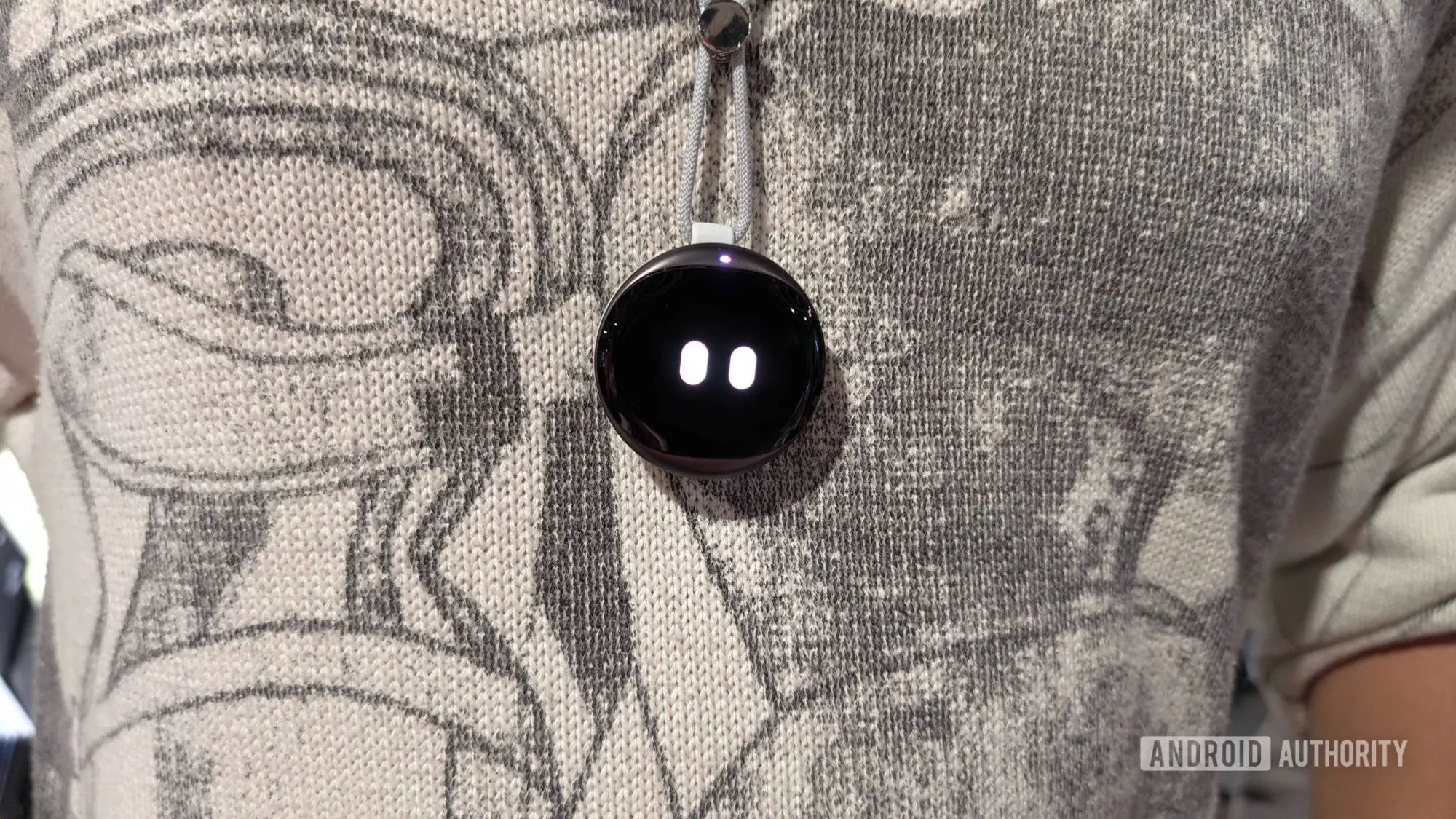
The world of personal AI is no longer confined to a single form factor. For years, we have seen AI-powered pendants, pins, and desktop companions, each attempting to integrate into our daily routines in different ways. At IFA 2026, Singapore-based Lingverse is showcasing iKairos, a modular AI wearable that attempts to do it all—by transforming between a desktop robot and a neck-worn pendant. This hybrid concept stands out because it combines the persistent presence of a desk companion with the mobility and contextual awareness of a wearable.
The iKairos is essentially a smart, modular device designed to learn about the user's life from multiple perspectives. When placed on its companion robot body, it acts as a desktop assistant, able to maintain eye contact, respond to voice commands, and observe its surroundings. When the user needs to leave, the core unit pops out of the robot body and clicks into a necklace mount, enabling continuous data capture and AI assistance on the go. This dual-mode approach addresses a common challenge: how to maintain a continuous, contextual understanding of a person's life, both at home and in the world.
According to Lingverse, the device's key purpose is to feed contextual information into a proprietary AI operating system called LifeOS. This system is designed to synthesize data from various interactions—conversations, habits, schedules, and environmental cues—to surface useful suggestions and reminders. In one example provided by the company, iKairos notices that the topic of sailing repeatedly comes up in the user's conversations, but the user never actually acts on it. The AI then proposes taking a sailing lesson over the weekend, turning a passive interest into an actionable plan.
The idea is not new—many AI assistants have tried to infer user intent from conversations. However, the continuous, multimodal aspect of iKairos, which can see, hear, and track changes in context across environments, sets it apart. As a wearable, it can pick up on patterns that a stationary smart speaker or smartphone cannot. As a desktop robot, it offers a more engaging, embodied interface that encourages interaction and trust.
The Rise of AI Wearables and Pendants
The AI wearable market has evolved rapidly in recent years. Early attempts like the AI Pin, which projected information onto the user's palm, and various smart pendants aimed to offer a screenless, phone-free assistant experience. Some succeeded in raising interest but struggled with battery, privacy, and practical usability. The iKairos takes a more restrained approach by making the device modular. Instead of being a single-purpose wearable, it can be a stationary device for most of the day and only become a pendant when needed.
This modular design is a clever solution to the battery limitations of small wearables. A desktop robot can have a larger battery or be powered via a cable, meaning the core unit is always fully charged when you leave. This eliminates a major pain point for pendants and pins that must be worn all day and recharged frequently. Additionally, the robot body can house better speakers, microphones, and sensors, giving the device more capabilities in a fixed environment.
Wearable AI devices are also being pushed by major tech companies as the next frontier after smartwatches and wireless earbuds. They are designed to provide quick access to AI assistants, often using a combination of voice, gesture, and context awareness. However, one of the biggest hurdles has been privacy. Wearing a device with a camera and microphone raises legitimate concerns about surveillance and data security. Lingverse claims to have addressed these issues with a physical camera shutter, a privacy indicator light, a manual mute button, and end-to-end encryption.
The company also emphasizes that user data will not be used to train its models, a claim that addresses a common complaint regarding many cloud-based AI services. Users will also be able to control how long their information is retained. While such promises are not always easy to verify, the inclusion of physical privacy controls is a tangible step toward reducing the creepy factor associated with always-on devices.
AI Companions and Contextual Understanding
Desk robots are another fast-growing category. From Amazon's Astro home robot to various JD and Xiaomi social robots, these devices try to serve as literal companions in the home. They often have expressive screens or eye animations and use microphones and cameras to interact with users. The iKairos fits into this tradition when docked, but its true value comes from its ability to follow the user after it is undocked.
The idea of an AI that accompanies you everywhere, understanding your habits, friends, work schedule, and ongoing conversations, is reminiscent of science fiction. Yet, the technology to make this possible is rapidly maturing. Large language models, computer vision, and sensors that can detect movement, voice, and even ambient light have become small and cheap enough to embed in a wearable pendant. iKairos is a reflection of this progress.
However, a continuous stream of conversational and visual data creates a complex data-storage and reasoning challenge. LifeOS must not only store this data safely but also interpret it in a way that respects privacy and produces meaningful output. Lingverse says that iKairos will develop an intricate and nuanced understanding of a user's habits, professional life, friendships, and conversations. This information can then be used to power future at-home robots or other accessories, effectively serving as a personal memory engine and cognitive layer for next-generation devices.
Imagine a robotic assistant in the future that already knows your tastes, upcoming appointments, and mood because it has access to the contextual history gathered by iKairos. That ecosystem vision is central to Lingverse's plan. By turning the iKairos into a universal trackable module, the company hopes to create a bridge between the wearables of today and the robots of tomorrow.
Privacy and Data Security Features
The privacy-first design of iKairos is a key marketing point. In an era where data breaches and misuse of personal information are widespread, a device that records audio and video must provide users with clear controls. The physical camera shutter is akin to the lens covers used on laptops and smartphones, giving users a simple way to block visual recording. The privacy indicator light, similar to those found on modern smartphones, signals when the camera or microphone is active. A manual mute button instantly cuts the microphone signal, preventing any sound from being captured or transmitted.
All data collected by iKairos is encrypted both in transit (while being transmitted) and at rest (while stored). This is standard best practice but crucial for a device that collects sensitive conversations. Lingverse also states that customer data is not used to train its AI models, which differentiates the company from many free services that rely on user data for model improvement. Managing data retention is another feature, allowing users to delete recordings after a certain time. These aspects are expected to be subject to third-party security reviews, though no such certification has been announced yet.
The market for contextual AI assistants is still in its infancy, and iKairos faces considerable challenges. The first challenge is accuracy: turning large amounts of unstructured conversational data into reliable suggestions is a technically challenging task that has tripped up even established companies with enormous AI teams. Second, the design must be lightweight and comfortable enough to wear for extended periods around the neck, which puts constraints on battery and heat. Third, the price must be right—AI hardware that does not deliver a clear, immediate benefit often ends up in a drawer after a few weeks.
Lingverse has not announced a price or a launch timeline. The waitlist is now open on the company's website. The first prototypes are being showcased at IFA 2026, where interested attendees can see the device in action. Given the history of similar devices, a successful launch will depend on whether iKairos can demonstrate a compelling use case beyond being a fascinating technology concept.
The Future of iKairos and Lingverse
Lingverse's broader vision is to create a seamless relationship between humans and AI. The company sees iKairos not as a standalone gadget but as an early example of a future ecosystem of intelligent devices. In that vision, the AI you carry with you today will stand atop your desk tomorrow, or perhaps control a mobile robot assistant. The modular dock and necklace are just the first two configurations.
With advances in large language models and real-time reasoning, AI wearables are becoming more useful. An AI that remembers your facial expressions, reacts to voice tone, and notices changes in your schedule could eventually act as a more proactive and helpful personal assistant. Some researchers have also suggested that such devices could serve as therapy aids, helping individuals track mood and social interactions, or as memory assistants for elderly users.
Yet, these possibilities also raise ethical questions. Devices that can overhear conversations and see what you do are powerful tools, capable of manipulation if placed in the wrong hands. Companies like Lingverse must take responsibility for enforcing strict data access limits and being transparent about where AI processing happens. The future of AI is not just about making machines more intelligent; it is also about making them more trustworthy.
The iKairos is an exciting step forward because it synthesizes two promising categories—desktop AI companions and AI wearables—into one product. It dares to imagine that an AI could be not only a tool you use intentionally but a continuous, unobtrusive presence that learns from your life to offer more meaningful suggestions. Whether it can overcome the practical issues of battery, processing, and privacy remains to be seen. However, the concept of a dual-mode companion robot that accompanies you through your day both on the desk and around your neck is a refreshing departure from the usual single-purpose gadgets.
As of now, visitors to IFA 2026 can see a live demo of the device and join the waitlist. There is no word yet on whether iKairos will be released this year or next, but the momentum behind AI wearables suggests that a product like this could find a niche among early adopters who want their AI to be more than just a voice in a smart speaker. The idea of giving AI a body—and letting that body follow you—may soon become a reality.
Source:Android Authority News