

According to a report from the Financial Times, Ukrainian President Volodymyr Zelenskyy is reportedly considering the dismissal of the country's top military commander, General Oleksandr Syrskyi. The news, which cites a senior official in the Ukrainian administration, suggests that Zelenskyy is prepared to remove Syrskyi if he can find a suitable replacement capable of ensuring a seamless transition while maintaining a robust defense along the 1,200-kilometer front line.
The Context of the Report
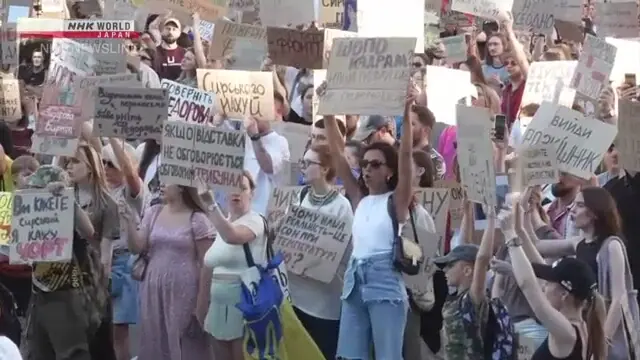
The report comes amid a period of significant turmoil within Ukraine's defense establishment. Just last week, the country witnessed public protests against the dismissal of Defense Minister Mykhailo Fedorov, who was removed from his post. Fedorov's departure was not without controversy, as he had been a key figure in Ukraine's drone warfare program and had overseen a significant expansion of the country's unmanned aerial vehicle capabilities. His removal was widely seen as a political move, and it triggered demonstrations from citizens who viewed him as an effective leader.
Fedorov himself had publicly criticized Syrskyi, accusing the commander of "seeking to divide the country" instead of focusing on defeating Russia. This internal conflict has laid bare the divisions within Ukraine's military and political leadership, raising questions about the stability of the country's command structure.
Who Is Oleksandr Syrskyi?
General Oleksandr Syrskyi is a seasoned military commander who has played a pivotal role in Ukraine's defense since the full-scale Russian invasion began in February 2022. He is best known for leading the successful defense of the capital, Kyiv, in the early weeks of the war, a campaign that thwarted Russian attempts to capture the city and forced Moscow to withdraw its forces from the north. Syrskyi's command during the Kyiv defense earned him widespread acclaim, both at home and internationally, and he was subsequently appointed as the commander of the Joint Forces in 2023.
In February 2024, Zelenskyy dismissed General Valerii Zaluzhnyi, the popular commander-in-chief who had been seen as a hero of the war, and replaced him with Syrskyi. The move was controversial, as Zaluzhnyi enjoyed very high approval ratings among the public and the military. Syrskyi, while respected for his tactical acumen, has a reputation for being a strict disciplinarian and has faced criticism for his handling of the defense of Bakhmut, a battle that resulted in heavy casualties.
Strategic Disagreements and the Way Forward
The potential dismissal of Syrskyi comes at a critical time in the war. Ukraine's counteroffensive in 2023 did not achieve its goal of breaking through Russian lines, and the front has since become a war of attrition. In recent months, Ukraine has increasingly relied on long-range drone strikes to target infrastructure and military assets inside Russia, a strategy that Fedorov championed. However, there have been internal disagreements over strategy, with some military leaders advocating for a more defensive posture while others push for further offensive operations.
Fedorov's criticism of Syrskyi suggests a fundamental disagreement over the direction of the war. By accusing Syrskyi of seeking to "divide the country," Fedorov implied that the general's actions were undermining national unity. This is a serious charge, as unity has been a cornerstone of Ukraine's resistance against Russian aggression.
Public Protests and Political Implications
Following the dismissal of Fedorov, protests broke out in cities across Ukraine, with demonstrators demanding the removal of Syrskyi as well. The protests indicate a growing frustration among citizens with the leadership changes at the top of the defense establishment. The ouster of both a defense minister and a commander-in-chief in quick succession would mark an unusual and potentially destabilizing shift in Ukraine's wartime governance.
Zelenskyy's decision to replace Syrskyi may also be influenced by political calculations. The president has been consolidating power, and his relationship with the military has at times been tense. The removal of Zaluzhnyi was widely interpreted as an attempt to assert civilian control over the armed forces, and the potential dismissal of Syrskyi could be seen as a continuation of that policy.
Potential Successors and the Challenges Ahead
Finding a suitable replacement for Syrskyi will not be easy. The ideal candidate must have the trust of both the political leadership and the troops on the front line, as well as the experience to manage a large-scale, multi-front war. Some possible successors include General Mykhailo Drapatyi, who led successful operations in the Kharkiv region, or Colonel General Oleksandr Pavlyuk, who currently serves as the commander of the Ground Forces. However, any new commander will face the same challenges: Russia's superior manpower, weaponry, and the exhaustion of Ukrainian forces after nearly two and a half years of war.
The front line, stretching over 1,200 kilometers, remains active, with Russian forces intensifying assaults in the east, particularly around Avdiivka and Chasiv Yar. A change in command could disrupt ongoing operations and possibly create vulnerabilities that Russia could exploit.
Historical Precedents and the Impact on Morale
Ukraine has a history of replacing its top military leaders during times of crisis. During World War II, the Soviet leadership frequently shuffled generals in response to battlefield defeats. However, in a modern context, frequent leadership changes can demoralize an army and undermine confidence in the chain of command. The Ukrainian military has demonstrated remarkable resilience, but the constant political maneuvering in Kyiv raises concerns about long-term stability.
International partners, particularly the United States and European nations, have provided massive military aid to Ukraine, but they have also expressed concerns about governance and transparency. If Zelenskyy proceeds with Syrskyi's dismissal without a clear rationale, it could strain relations with allies who value stability.
An Expanding Drone War and Internal Feuds
One of the key points of contention between Fedorov and Syrskyi was the role of drones in the war effort. Under Fedorov's leadership, Ukraine dramatically increased its domestic drone production and launched hundreds of long-range strikes into Russia. Syrskyi, by contrast, is reported to have favored a more conventional approach, emphasizing ground defenses and artillery. This philosophical divide may have contributed to the breakdown in their working relationship.
The internal feud highlights a broader debate within the Ukrainian military about how best to fight a resource-intensive war against a larger adversary. Some strategists argue for a focus on asymmetric warfare, including continued deep strikes on Russian infrastructure, while others call for a more conservative approach aimed at holding ground and preparing for a future offensive.
What Lies Ahead
As of now, the Ukrainian administration has not officially confirmed the report. However, the Financial Times article has already sparked widespread discussion among analysts and in Ukrainian media. The coming days will likely reveal whether Zelenskyy will indeed move to replace Syrskyi or whether the report was merely an attempt to pressure the general into aligning more closely with the president's vision.
Regardless of the outcome, the leadership tensions underscore the immense pressure that Ukraine is under as it continues to defend its sovereignty against Russian aggression. The challenges are multifaceted: maintaining troop morale, securing enough weapons, managing political rivalries, and planning for the long term. Any decision to change the top military command will have far-reaching consequences, not just for the war effort, but for the future of Ukrainian governance itself.
Background on the February 2024 Command Shift
The potential ouster of Syrskyi must be viewed in the context of the February 2024 replacement of Valerii Zaluzhnyi. At that time, Zelenskyy cited the need for a "new start" in military leadership, but rumors circulated of personal animosity between the president and the popular general. Zaluzhnyi's departure was a bombshell in Ukraine, as he was arguably the most respected figure in the country. His dismissal was met with widespread surprise and concern among Western allies. By replacing him with Syrskyi, Zelenskyy installed a commander who owed his position directly to the president, thus ensuring greater loyalty. However, Syrskyi has not enjoyed the same level of public adulation as Zaluzhnyi, and his tenure has been marked by mixed results on the battlefield.
The Role of Western Support
Ukraine's ability to wage war is heavily dependent on Western military aid. The United States has been the largest donor, but political gridlock in Congress has delayed key funding packages. European nations have stepped up, but there are concerns about long-term sustainability. In this context, any internal political turmoil in Kyiv risks complicating the international community's perception of Ukraine's stability. Allies prefer to work with a united and predictable leadership, and the revolving door of defense officials could undermine confidence.
Moreover, the Russian side is likely to exploit any signs of disunity. Russian propaganda has already seized on the dismissal of Fedorov as evidence of fractures within Ukraine's leadership. The potential removal of Syrskyi would provide further fodder for such narratives, even though Russia faces its own internal challenges, including the recent mutiny by the Wagner Group.
Analysis of the Front Line Situation
On the ground, the situation remains dire. Russian forces have maintained pressure along the entire front, with the heaviest fighting concentrated in the Donetsk region. The city of Avdiivka fell in February 2024, a significant defeat for Ukraine. Since then, Russian troops have been pushing westward, aiming to capture the town of Chasiv Yar, which would bring them closer to the strategic city of Kramatorsk. In the north, Ukraine has held a defensive stance, while in the south, Russian forces have been attempting to advance near the Zaporizhzhia direction. The Ukrainian military has been hampered by shortages of artillery shells and air defense systems, as well as the need to rotate exhausted troops. A change in command could slow decision-making precisely when rapid responses are needed.
The potential dismissal of Syrskyi thus comes at one of the most vulnerable moments for Ukrainian defenses. While the general may have his critics, his removal could create a vacuum that Russian forces could exploit. It is a high-stakes gamble for President Zelenskyy, who must weigh the benefits of a fresh command against the risks of disruption.
Public Mood and Civilian-Military Relations
Ukrainian society has shown remarkable unity in the face of war, but there are signs of weariness. The protests against Fedorov's dismissal indicate that the public is paying close attention to the leadership changes. Many Ukrainians fear that political infighting could distract from the war effort. The removal of a commander-in-chief, especially one who led the defense of Kyiv, could be seen as a betrayal of the military's sacrifice. Zelenskyy's approval ratings have declined from their peak in 2022, and he cannot afford to be seen as out of touch with the troops and the public.
On the other hand, the president has consistently argued that he will make whatever decisions are necessary to win the war, even if they are unpopular. He has already demonstrated a willingness to replace senior officials, including the head of the Security Service and various governors. The military command is not immune to this pattern.
International Reactions and the Path Ahead
International allies, especially the United States and the United Kingdom, have not yet commented publicly on the Financial Times report. However, they likely are monitoring the situation closely. Washington has emphasized the importance of Ukraine maintaining a unified command structure and avoiding distractions. The UK, which provides significant training and intelligence support, has also stressed the need for stability.
In the coming weeks, the situation will likely become clearer. If Zelenskyy proceeds with the dismissal, he will need to announce a successor quickly and convincingly. The new commander will have to demonstrate immediate leadership credibility both at home and abroad. If he decides to keep Syrskyi, he will need to mend the broken relationship between the presidency and the military command, which may require public statements of support and perhaps a reshuffle of other key positions.
Either way, the episode reveals the intense pressures on Ukraine as it fights a war for survival. The country must balance internal politics, external support, and battlefield operations, all while facing an adversary that seeks its destruction. The next few months will be critical in determining whether Ukraine can regain the initiative or whether it will settle into a protracted conflict of attrition.
Source:NHK WORLD News