

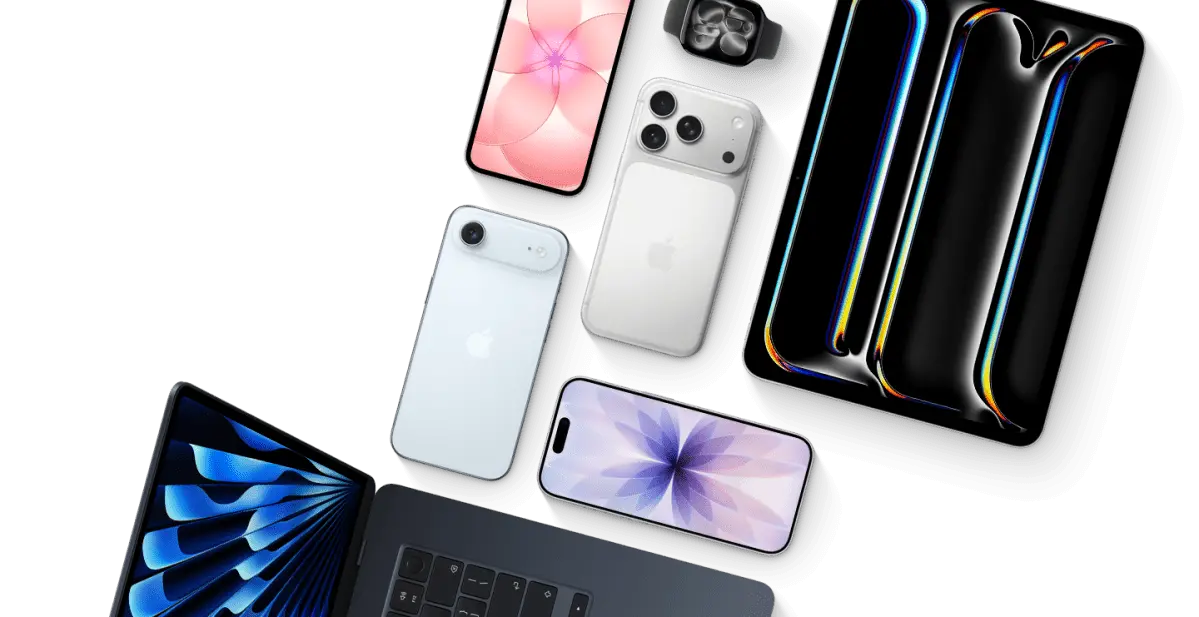
Apple has introduced a new Upgrade program that lets customers lease selected iPhones, iPads, Macs, and Watches with a relatively low monthly payment. The company says that you won't pay more than the full retail price over the course of the one- to three-year lease, and in some cases you might pay hundreds less. At first glance, this sounds like an incredible deal, but like many financing offers, there are important details hidden in the fine print.
The program essentially functions as a loan. You sign a contract with buy now, pay later service Klarna, which owns the device during the lease term. You make fixed monthly payments, and at the end of the lease you have three options: buy the device by paying the remaining balance, return it and walk away, or upgrade to a new model and start a new lease. Understanding how each option works is critical to deciding whether this program is right for you.
How the Apple Upgrade Program works
To qualify, you need to be at least 18 years old, have a valid U.S. address, and pass a credit check. The program is currently available in the United States, and Apple says it will expand to other countries in the future. You can sign up online or in an Apple Store, and your monthly payment will be automatically deducted from your bank account or card. The monthly payment depends on the device model and lease length. For example, leasing an iPhone Air for two years costs $695.76 in total, or $28.99 per month. At the end of the lease, you can purchase the phone for an additional $303.24, which brings the total to the $999 retail price. If you choose to return the phone, you simply give it back and end the agreement. If you upgrade, you start a new lease on a different device, and your old device is returned as part of the trade-in.
The program is open to customers who pass a credit check and who agree to automatic monthly payments. There is no interest and no late fees, which is a significant advantage over credit cards and traditional installment loans. But that doesn't mean the program is risk-free. If you miss three consecutive payments, Klarna can terminate the lease and demand the full outstanding balance immediately. If you don't pay, the debt may be sent to a collection agency, which could hurt your credit score.
What happens if you miss payments?
Klarna spokesperson Clare Nordstrom said that missing three payments in a row will result in termination of the lease agreement, and the customer will need to pay the full outstanding balance. The company does not specify what happens if the balance isn't paid, but a general support page about Klarna payments warns that unpaid debts are transferred to debt collection after the final reminder date. That could lead to negative marks on your credit report and legal action, although it's unclear whether this applies specifically to the Apple Upgrade program.
Some code discovered by tech bloggers suggested that Apple might remotely disable a device if you fall behind on payments, but Apple spokesperson Brian Bumbery confirmed that no limitations will be placed on device functionality due to missed payments or default. This means that even if you stop paying, your phone will continue to work normally, but you'll still owe the money and face the consequences of defaulting on the loan.
The cost of upgrading vs. buying outright
One of the most important factors to consider is whether leasing is actually cheaper than buying outright. Let's take the iPhone 17 as an example. The lease payment is $551.76 over two years. If you decide to buy the phone at the end, you pay an additional $247.24, bringing the total to $799, which is the full retail price. So, if you want to own the phone, you pay exactly the same amount as if you had bought it upfront, but you spread the cost over two years and don't pay any interest.
However, if you choose to upgrade to a new iPhone at the end of the lease, you don't get any cash back from your old device. You've paid $551.76 to use the phone for two years, and then you hand it back. In contrast, if you had bought the phone outright, you could sell it after two years or trade it in for credit. According to price comparison site SellUp, iPhones lose about 35 to 40 percent of their value after two years. That means a used iPhone 17 might sell for around $520. If you bought it for $799 and resold it for $520, your net cost would be only $279 for two years of use. Leasing and upgrading immediately would cost you $551.76, so you'd lose out on about $272 in potential resale value.
Of course, resale values are not guaranteed, and selling a phone takes time and effort. Trade-in programs from Apple or third-party services usually offer less than market resale value, but they are more convenient. If you prefer the convenience of simply returning your device and getting a new one every year or two, the Apple Upgrade program might be a good fit, but you should be aware that you're trading away the potential to recoup some of your investment.
Additional fees and caveats
The Apple Upgrade program has several fees that can add up. If you return the device early, you'll pay an early termination fee. If you decide to upgrade before the lease ends, you'll also face a fee. After the lease ends, you have six months to decide whether to purchase the device, return it, or upgrade. During those six months, you'll continue to make monthly payments, which means you'll pay more than the retail price if you wait too long. For example, if you leased an iPhone Air and take the full six months to decide, you'll pay an extra $173.94 in monthly payments before you make a final choice.
You're also responsible for any damage to the device while it's in your possession. If you return it in less than "good condition," you'll be charged a fee. That's why Apple encourages customers to add AppleCare coverage to their lease. AppleCare for iPhones costs $9.99 per month, iPad coverage starts at $5.49, Mac coverage at $3.99, and Watch coverage at $4.99. There's also a $19.99 per month plan that covers up to three devices. These additional costs can make leasing significantly more expensive, especially if you don't need the extra protection.
The bigger picture: BNPL and consumer debt
The Apple Upgrade program is part of a broader trend toward buy now, pay later services, which have grown rapidly in recent years. According to a LendingTree survey, nearly half of all BNPL users were late on at least one loan in 2025. This highlights the risks of taking on multiple payment obligations. A lease payment from Apple might seem small, but when combined with other subscriptions and loans, it can become a financial burden.
Klarna also uses customer data to deliver personalized
Source:The Verge News