

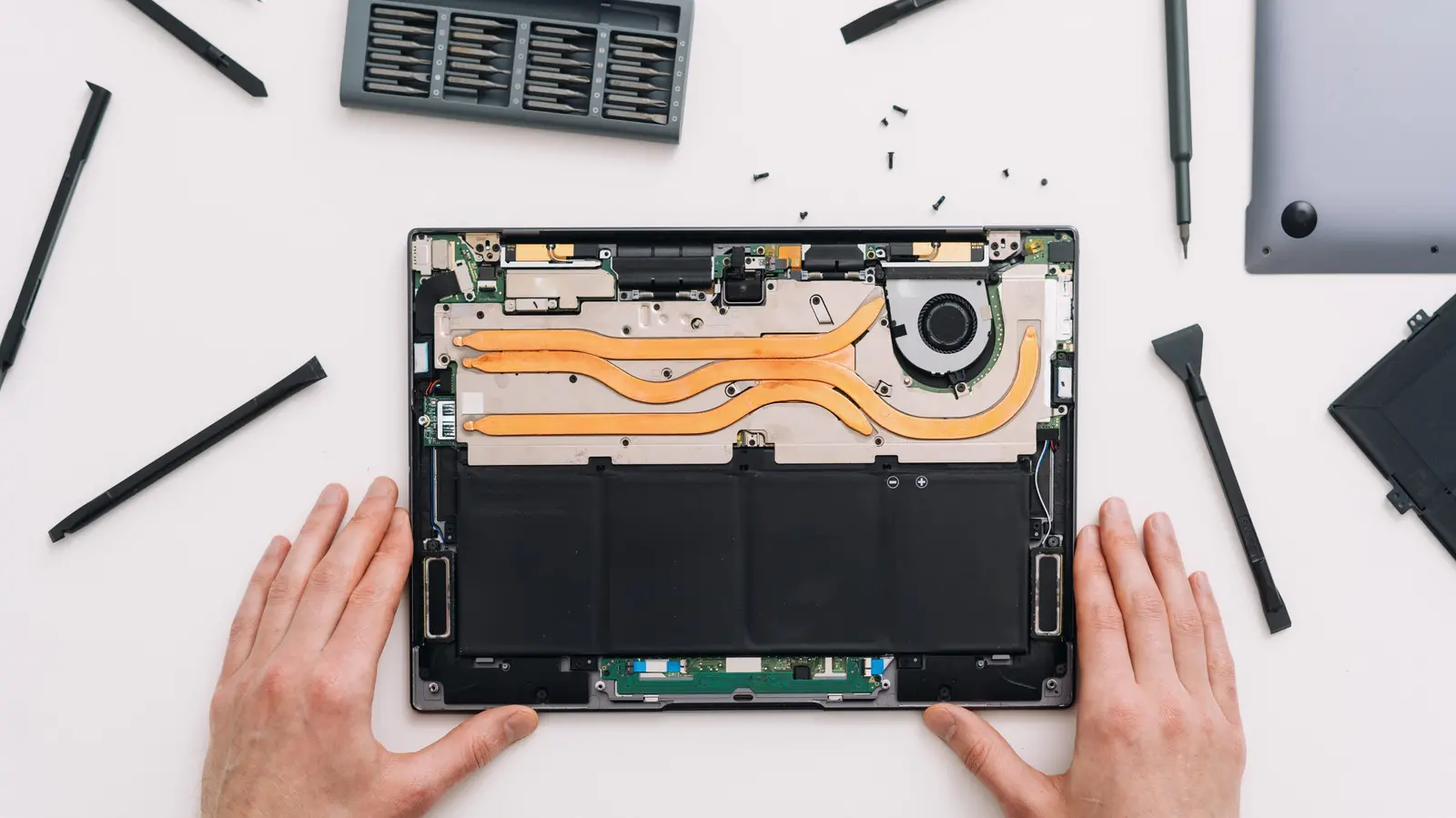
Removable batteries were once a familiar part of everyday consumer electronics. A phone died during a long trip? Swap in a spare battery and keep going. A laptop's battery faded after a few years? Replace it in seconds. That convenience has largely disappeared from modern gadgets. Today, most smartphones, ultrabooks, tablets, and handheld consoles feature sealed, non-removable batteries. The shift did not happen accidentally. It resulted from deliberate engineering decisions that prioritized thinness, durability, and internal space. In many ways, the decline of removable batteries mirrors the evolution of the entire consumer electronics industry.
Tech companies stopped using removable batteries to make devices thinner, stronger, and better optimized for other components. By integrating the battery into the chassis, manufacturers can use every available cubic millimeter. They can also design batteries in unusual shapes, enabling larger capacities without adding bulk. The trade-off, however, is that consumers lose the ability to swap a dead cell for a fresh one. That trade-off has been justified in different ways over the years, but it remains a source of frustration for many users who value long-term repairability.
The Apple argument: thinner laptops and bigger batteries
One of the clearest examples of this shift came in 2009, when Apple introduced a 17-inch MacBook Pro with a fixed battery. The decision drew criticism from users who had grown accustomed to replacing laptop batteries themselves. Apple defended the move by explaining that removable batteries require extra protective layers and a dedicated compartment. These features consume valuable space inside the device. By eliminating those layers and compartments, Apple claimed it could reclaim space and use it to increase battery capacity without making the laptop bigger or heavier.
That argument became central to the industry's broader move toward sealed batteries. Fixed batteries can be shaped to fit awkward spaces, wrapping around internal components or filling gaps that would otherwise go unused. This flexibility allows manufacturers to squeeze more watt-hours into a slim chassis. In contrast, a removable battery must be encased in a rigid shell, with connectors and locking mechanisms that take up room. For companies competing on thinness and weight, those constraints became unacceptable.
Sealed batteries also offer durability benefits. With no removable back panel, devices can be built with stronger frames and more effective water and dust resistance. This is especially important for smartphones, where IP68 ratings have become a selling point. While removable batteries have not always been incompatible with water resistance, they make it more expensive and complicated to achieve. As consumers began expecting devices that could survive splashes and drops, manufacturers found sealed designs easier to engineer.
Despite these design pressures, user-replaceable batteries have not disappeared entirely. Fairphone, a company known for sustainable electronics, still sells the Fairphone 6 with a swappable battery. Likewise, HMD's Skyline phone offers a removable battery as a differentiating feature. These devices show that the feature remains technically possible, but it tends to require sacrificing some of the extreme thinness and water resistance found in mainstream flagships.
Why removable batteries were common in the '90s and '00s
It was not always this way. In the 1990s, the 2000s, and even into the 2010s, removable batteries were standard across many product categories. Phones from Nokia, Motorola, and Samsung typically had back covers that slid or snapped off to reveal a replaceable battery. Laptops often had battery packs that clicked into place. Handheld game consoles such as the Nintendo 3DS, 3DS XL, and 2DS also relied on user-replaceable batteries. During that era, swappable batteries made sense for several reasons.
Charging speeds were much slower than they are today. Fast charging was either unavailable or limited, so topping up a phone or laptop from empty could take hours. Carrying a spare battery offered a practical alternative to carrying a charger and waiting for the device to recharge. If your gadget ran out of power, you could simply swap in a fresh cell and continue working or playing. That convenience was especially valuable for people who spent long hours away from wall outlets, such as business travelers, field workers, and students.
Battery chemistry also played a role. Early consumer devices often used nickel-metal hydride (NiMH) or nickel-cadmium (NiCd) batteries. These chemistries had a well-known drawback called the memory effect, which could reduce a battery's capacity if it was repeatedly recharged before being fully discharged. Removable batteries were useful because users could replace a battery that had lost capacity, and manufacturers could offer replacement cells for sale. The memory effect made it difficult for consumers to maintain battery health over time, so being able to swap the battery was seen as an essential feature.
Technological progress changed the equation
Modern lithium-ion batteries do not suffer from the same memory effect. They also have a lower self-discharge rate, meaning they hold their charge longer when not in use. These improvements made it less critical for users to carry spare batteries. At the same time, battery energy density has increased significantly. Newer chemistries, such as silicon-carbon, allow manufacturers to pack high capacities into very slim devices. A phone that is thinner than its predecessors can still offer all-day battery life, reducing the perceived need for user-replaceable cells.
Charging technology has made the fixed-battery trade-off even easier to accept. Many smartphones now support 65W, 100W, or even higher wired charging speeds. A dead phone can be restored to a meaningful charge level in 15 or 20 minutes, and wireless charging pads make top-ups effortless. Additionally, accessories like battery cases and power banks provide a portable source of power without requiring the user to open the device. For many consumers, the combination of fast charging and external battery packs has replaced the spare battery ritual of earlier decades.
These advances do not fully address the issue of battery aging. A lithium-ion battery loses capacity with every charge cycle, and a sealed battery eventually becomes weak. Without a user-replaceable battery, extending a device's lifespan becomes more difficult. Some manufacturers offer battery replacement services, but these are often expensive and inconvenient. This is why the repairability movement has gained momentum, and it is also why regulators in Europe have stepped in.
EU regulations could bring removable batteries back
In recent years, the European Union has introduced rules that could mark the beginning of a removable battery renaissance. As part of two new EU regulations, portable gadgets will need to have user-removable batteries, with a few planned exemptions for categories like smartwatches and fitness trackers. The EU's goal is to improve device longevity and reduce electronic waste. If a battery wears out, users should be able to replace it rather than discard the entire device.
The rules include a notable exemption for smartphones that meet strict durability and capacity criteria. Phones with an IP67 rating that can retain 83% of their battery capacity after 500 charge cycles and 80% after 1,000 charge cycles are exempt from the removable battery requirement. This gives manufacturers an alternative path to compliance: instead of making batteries easy to remove, they can engineer batteries that last significantly longer. Still, the broader regulation applies to many other product categories, including headphones, portable game consoles, and e-readers.
The EU's wider-reaching law on removable batteries kicks in on February 18, 2027. That date has already prompted companies to begin redesigning their products. Sennheiser, for example, has launched its new Momentum 5 wireless headphones with a swappable battery. Nintendo has announced that new Joy-Con 2 controllers will feature user-replaceable batteries this winter, and the company also plans to launch a new version of its Pro Controller with a swappable battery. These moves show that regulatory pressure can change product design even across global markets.
Because EU rules affect a market of nearly 450 million people, many companies find it simpler to design one version of a product that complies with the strictest regulations rather than create separate regional versions. This means that removable batteries could return to devices sold not only in Europe but also in other parts of the world. While it is unlikely that every smartphone or laptop will revert to the swappable battery designs of the past, the trend toward repairability is clearly influencing the industry. The development is a reminder that design choices are not irreversible; the same industry that abandoned removable batteries can also bring them back when the incentives change.
Source:SlashGear News