

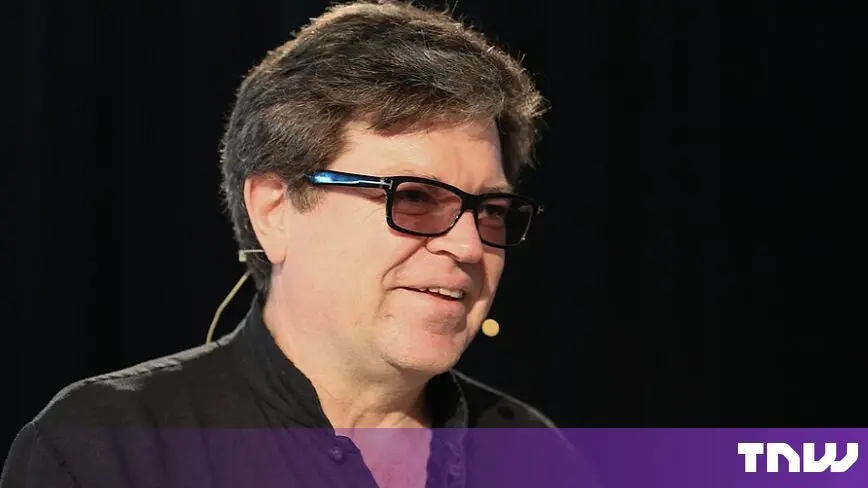
Yann LeCun, one of the most influential figures in artificial intelligence, has found a venture capital vehicle that will actually launch. The former Meta chief AI scientist is joining 224 Ventures, a new firm that announced Wednesday with more than $100 million in assets under management. His co-partner is Oriol Vinyals, who until today served as Gemini’s co-technical lead at Google DeepMind. Shaun Johnson, who co-founded AI-focused firm AIX Ventures, will run the firm.
The timing is hard to miss. Vinyals announced his departure from DeepMind today alongside Jeff Dean, Sanjay Ghemawat, and Quoc Le, all four leaving to co-found Discovery Loop, a startup aimed at automating science and engineering. He is now simultaneously launching a startup and joining a venture fund, with 224 Ventures serving as his formal investing vehicle.
The Fund at a Glance
The fund is targeting $81 million for its core early stage vehicle, with about $30 million raised so far. It has also invested more than $60 million in growth-stage AI companies through special-purpose vehicles. Once the early stage fund closes, total assets should reach at least $150 million, according to Johnson. The University of Illinois is the anchor investor.
224 Ventures will write checks between $1 million and $5 million, targeting startups valued under $100 million. It will not lead rounds. The focus is early stage AI applications, especially research talent building capital-efficient models. Robotics and AI infrastructure are also on the list. The firm has already made multiple undisclosed investments.
The choice of the University of Illinois as anchor investor is notable. Public research universities rarely anchor venture funds, but the University of Illinois has deepened its focus on AI research and commercialization in recent years. By aligning with 224 Ventures, the university gains exposure to cutting-edge startups and a channel for its faculty and students to engage with the startup ecosystem. For the fund, this relationship brings credibility and potential access to university research breakthroughs.
The People Behind 224 Ventures
LeCun is a computer scientist whose contributions to deep learning are foundational. He is best known for developing convolutional neural networks, which underpin much of modern computer vision. After a prolific academic career, he joined Facebook in 2013 to lead its AI research efforts, remaining with the company until it was rebranded to Meta and later transitioning to an advisory role. In March, he raised $1 billion for AMI Labs, a startup focused on world models—AI systems that can simulate the environment and predict outcomes, a step toward more sophisticated machine intelligence.
Vinyals, who has been a prominent figure in AI research for more than a decade, has worked on sequence-to-sequence models underpinning Google Translate and other products. He played a key role in the development of Gemini, Google DeepMind’s flagship large language model family, and his departure marks another major shift in the landscape of AI research leadership. He and LeCun have been angel investors for years, with a shared interest in backing ambitious startups.
Shaun Johnson, the third partner, brings operational and venture experience. He co-founded AIX Ventures, an early-stage firm that has backed companies such as Perplexity and Wispr AI. He left AIX Ventures in December to focus on 224 Ventures. Johnson will run the firm day-to-day, while LeCun and Vinyals contribute their technical expertise and industry connections.
An Unusual Limited Partner Base
The fund’s investor base is unusual. The majority of its limited partners are individuals working in AI, including researchers at frontier labs, startup founders, and Fortune 500 leaders. That network is the pitch: deal flow and portfolio support from people who build AI, not just fund it. By aligning the interests of technical insiders with a venture capital structure, 224 Ventures hopes to identify promising startups earlier and provide more informed guidance than a traditional fund.
This approach reflects a broader trend in which leading AI researchers are becoming influential investors. Many have made personal investments in successful startups, and some have launched or joined funds. LeCun and Vinyals were already active angel investors. Both backed Perplexity before it became one of the most talked-about AI startups. LeCun also invested in Groq, which Nvidia later acquired in a $20 billion licensing and talent deal. Johnson invested in Perplexity and voice tech maker Wispr AI through AIX Ventures before departing that firm in December.
The firm’s decision not to lead rounds is deliberate. It allows the partners to be selective and collaborative, avoiding the administrative burden of board seats and primary negotiations. By writing checks that are meaningful but not controlling, 224 Ventures can invest in a higher number of startups and maintain flexibility. The focus on capital-efficient models also suggests a belief that many founders can build substantial companies without raising massive round after massive round.
Learning From a False Start
LeCun’s first attempt at a venture fund, Extelligence Invest, collapsed within eight hours of its announcement in July. The abrupt shutdown was attributed to undisclosed “exclusive relationships” with other funds. LeCun called the episode a miscommunication at the time. The failure was widely noted in the AI community, raising questions about whether LeCun would pursue a fund again. With 224 Ventures, that question has been answered. The new firm appears to have resolved whatever conflict existed, and the formal announcement signals a more deliberate and structured effort.
The Broader AI Investment Landscape
The launch of 224 Ventures comes at a time of intense competition for AI investments. Large technology companies and traditional venture capital firms are pouring billions into AI infrastructure and applications. Yet many top researchers believe there is a growing opportunity for capital-efficient, research-led startups that can build specialized models and products without requiring enormous data center budgets. 224 Ventures is designed to support those kinds of companies, with relatively small checks and a hands-on approach from partners who understand the technical challenges.
The fund also highlights the ongoing reshuffling of AI talent. The departure of Vinyals, along with several senior colleagues from Google DeepMind, is part of a wave of senior researchers leaving big labs to start their own companies. These moves suggest that the center of gravity in AI innovation is shifting, with new ventures and funds emerging to channel talent and capital into emerging areas. LeCun’s decision to join a fund, while also leading AMI Labs, demonstrates how prominent researchers can wear multiple hats, contributing both to scientific advancement and commercial development.
For early-stage founders, having investors like LeCun and Vinyals is a significant advantage. Their reputations can open doors to customers, partners, and additional funding. Their technical knowledge allows them to evaluate models and architectures beyond the typical investor’s depth. And their networks, as evidenced by the fund’s LPs, provide a pipeline of insight into what frontier labs are working on. The fund’s focus on capital-efficient models aligns with a moment when many AI startups are seeking to do more with less, optimizing for performance rather than raw compute.
224 Ventures has already made multiple undisclosed investments, though the firm is not naming portfolio companies at this time. With the University of Illinois as anchor investor and a roster of AI insiders backing the fund, the firm is positioned as a niche but potentially influential player in the AI venture ecosystem. The key question is whether the thesis—that researchers make the best investors—will hold up in practice. If the experience and track record of LeCun, Vinyals, and Johnson are any indication, 224 Ventures could become a destination for founders looking for smart, technical capital.
LeCun will retain his role as executive chairman of AMI Labs, the world-models startup he raised $1 billion for in March. He described 224 Ventures as a way to pool resources with Vinyals and support founders while staying on top of new AI developments. All three partners will invest exclusively through the firm, vote on investments together, and split any profits equally.