

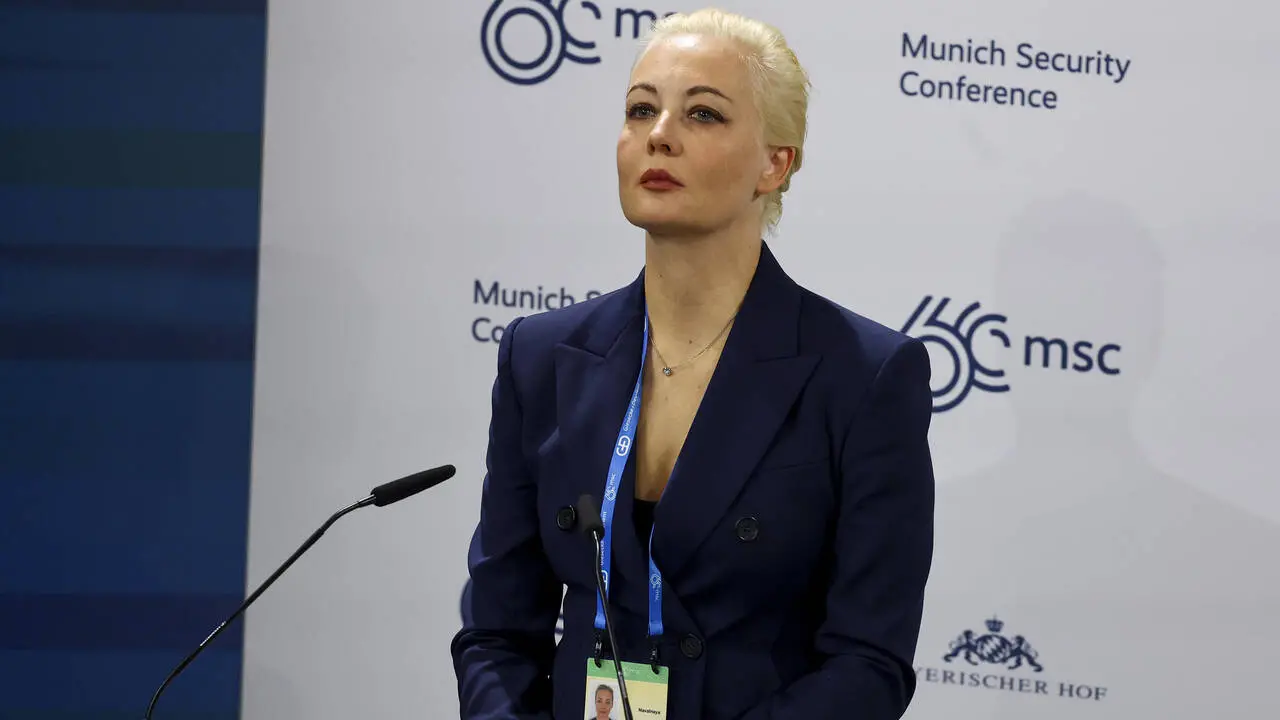
The 60th Munich Security Conference had barely begun when a hush fell over the packed Bayerischer Hof hall. Yulia Navalnaya, dressed in black, walked to the podium with measured steps. The applause was thunderous, but her face was etched with grief. She had just received confirmation of what the world had feared: her husband, Alexei Navalny, Russia's most prominent opposition leader, had died in a remote Arctic prison colony. The Kremlin's official statement cited a sudden medical event, but few believed it.
“You have all heard the terrible news,” she began in Russian, her voice steady. “I asked myself whether I should be here in front of you or return to my children. I thought about what Alexei would have done. And I am absolutely sure he would have told me to come onto this stage.” The room fell silent, then erupted in applause again. Yulia Navalnaya had transformed from a widow into a defiant symbol of resistance. Her presence was a direct challenge to Vladimir Putin, who had systematically dismantled Russia's opposition.
Moments earlier, U.S. Vice President Kamala Harris had concluded her remarks. She referred indirectly to the news, saying, “If confirmed, this would be yet another sign of Vladimir Putin's brutality.” The timing was chilling. Harris and other Western leaders had long warned that Navalny's imprisonment could result in his death. Now their warnings had materialized.
Who Was Alexei Navalny?
Alexei Navalny rose to prominence in the 2010s as a corruption-fighting blogger and lawyer. His investigations into the lavish lifestyles of Russian officials, often exposed via YouTube, garnered millions of views. He organized mass protests in 2011-2012 against election fraud, and later ran for mayor of Moscow in 2013, where he won over 27% of the vote. His political project, “Russia of the Future,” aimed to challenge Putin's United Russia party. But Navalny was repeatedly arrested, convicted on trumped-up charges, and designated a “foreign agent” by the Kremlin.
In August 2020, he was poisoned with the nerve agent Novichok during a flight in Siberia. After emergency treatment in Germany, he spent months recovering. Despite the assassination attempt, he returned to Russia in January 2021, knowing he would be arrested. He was immediately detained, and his prison sentence was later extended to 19 years. His supporters call him a political prisoner; the Kremlin labels him an extremist.
Yulia Navalnaya: From Supportive Spouse to Political Force
Yulia Navalnaya, an economist by training, had long stayed in the background. She raised their two children and provided emotional support during Alexei's numerous legal battles. But after the poisoning, she became more visible. She gave interviews, launched a foundation named after him, and criticized the Kremlin's human rights abuses. Her speech in Munich marked a turning point: she was no longer just a widow but a political activist in her own right.
“I am not afraid,” she said in Munich. “I know that Alexei would have wanted me to continue his work. There is no way back. The only way is forward.” Her courage resonated beyond the conference hall. Across Russia, small groups of mourners gathered outside parliament buildings, chanting “Navalny!” Many were quickly arrested by riot police. The crackdown was swift but could not erase the memory of his movement.
International Reactions and Geopolitical Implications
The death of Navalny reverberated through the Munich conference. European leaders called for new sanctions against Russia. French President Emmanuel Macron described it as an “assassination.” British Prime Minister Rishi Sunak called for an independent investigation. The U.S. State Department announced it would impose additional sanctions on individuals involved in Navalny's persecution. Meanwhile, Russia's foreign ministry dismissed the outcry as “interference in internal affairs.”
The timing was particularly sensitive. The war in Ukraine was entering its third year, and Western support for Kyiv was wavering. Navalny's death reminded the world of the authoritarian nature of Putin's regime—a regime that brooks no dissent, whether from political opponents, journalists, or ordinary citizens. It also highlighted the risks faced by Russian opposition figures who remain inside the country. Few are left: many have fled, been jailed, or killed.
The Legacy of Navalny's Anti-Corruption Campaign
Navalny's greatest achievement was exposing the scale of corruption within Putin's inner circle. His film “He Is Not Dimon to You” about Prime Minister Dmitry Medvedev's secret properties helped spark massive protests in 2017. His later investigation into Putin's alleged palace on the Black Sea coast went viral. These exposés were not only journalistic feats but also political weapons. They demonstrated that the system was rigged for the elite.
Even from prison, Navalny continued to influence Russian politics. His Anti-Corruption Foundation (FBK), although outlawed, operated clandestinely. His wife Yulia now faces the challenge of keeping that flame alive. She has already vowed to continue his work, calling for a “free Russia.” Whether she can unite the fragmented opposition remains unclear, but her moral authority is undeniable.
The Future of Russia's Opposition
With Navalny gone, the opposition loses its most charismatic leader. Other figures, such as jailed politician Vladimir Kara-Murza or exiled oligarch Mikhail Khodorkovsky, lack the same grassroots appeal. The Kremlin hopes the movement will wither. But history shows that martyrs can inspire revolutions. The question is whether Yulia Navalnaya can translate international sympathy into domestic support. She lacks political infrastructure inside Russia, but her speeches could galvanize the next generation.
Meanwhile, the war in Ukraine continues to drain Russia's resources and morale. Some analysts believe that Putin's regime will ultimately collapse under the weight of its own corruption and repression. Navalny's death may be the catalyst that accelerates that process. But for now, his legacy is in the hands of his widow and the millions who watched him fight. As she left the podium in Munich, the crowd gave a standing ovation. It was a small gesture, but it echoed around the world.
Source:Letemps News