

Key Facts
- Fujifilm was founded in 1934 as a film manufacturer and has expanded into instant photography, industrial inkjet printing, and medical ultrasound.
- Instax launched in 1998 and now covers analog instant cameras, hybrid digital instant cameras, a digital camera, and standalone printers.
- Fujifilm Dimatix began as Spectra in 1984, was renamed Dimatix in 2005, and joined Fujifilm in 2006; it makes piezoelectric drop-on-demand inkjet printheads.
- Fujifilm Sonosite started as a product line under ATL Ultrasound, became independent in 1998, and was acquired by Fujifilm in 2012; it focuses on portable point-of-care ultrasound.
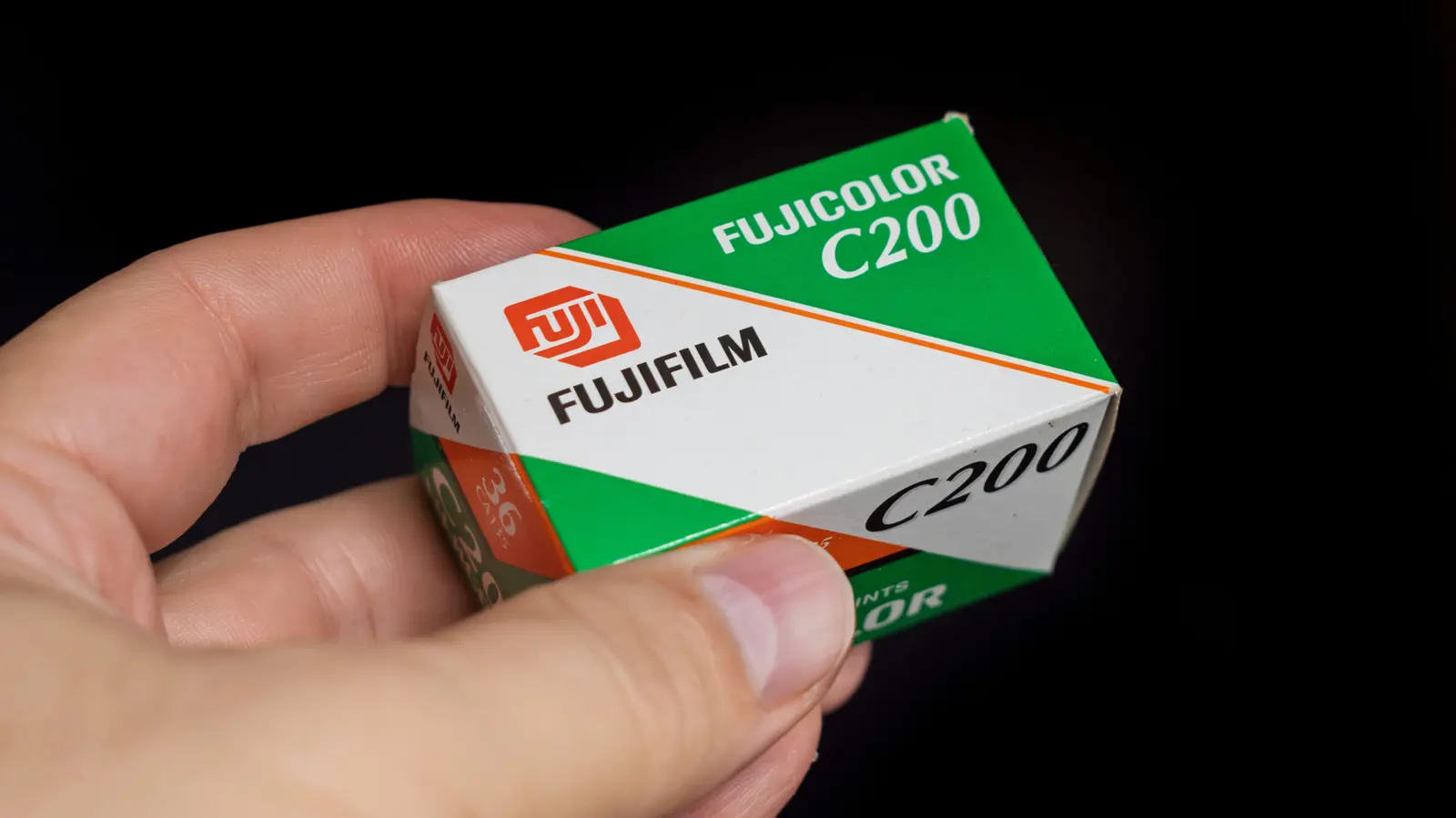
Fujifilm remains one of the most recognizable names in photography, but its current business reaches well beyond the film stocks that built its reputation. The company was founded in 1934 with a simple mission: produce photographic film. Over the decades, that mission expanded into cameras, digital imaging, printing systems, healthcare equipment, and specialty materials. The result is a business that still carries deep photographic DNA but now competes in several technology markets at once.
The shift is especially visible in the film market. Fujifilm once ranked as the second-largest film manufacturer in the world, yet its consumer film lineup has shrunk dramatically. Today it offers only a small number of consumer-friendly color negative stocks, while professional photographers have a slightly broader but still limited selection across 35mm and medium format. Those remaining products matter to film enthusiasts, but they are no longer the center of the company's strategy. Instead, Fujifilm has built and acquired brands that serve distinct, modern needs. Three stand out because they operate under their own identities while benefiting from Fujifilm's scale: Instax, Fujifilm Dimatix, and Fujifilm Sonosite.
Instax
Instax is the most consumer-facing of the three brands. Fujifilm established Instax in 1998 as a dedicated line for instant photography, a category in which a camera produces a physical print almost immediately after a picture is taken. Polaroid is often the first name people associate with instant photography, but Instax has become a major force in its own right. The brand has kept the appeal of analog prints while adding digital features that make the format easier to use in everyday life.
The core of Instax remains its analog instant cameras. The lineup includes four mini models designed for small prints, two square models that produce the more traditional instant-photo shape, and one wide camera for larger prints. Each format serves a different kind of user: mini cameras appeal to casual snapshooters and social users, square cameras lean into the classic instant aesthetic, and wide cameras offer more room for group shots or scenic images. The variety shows that Instax is not a single product but a platform built around different print sizes and shooting styles.
Instax has also moved into hybrid territory. Its hybrid cameras are digital devices with LCD viewfinders, but they can still print a copy of a photo directly from the camera. These models can connect to a smartphone through Bluetooth, allowing users to edit images, save them to a digital library, or send photos from a phone to the camera for printing. That combination of digital convenience and physical output gives Instax a bridge between smartphone photography and the tactile appeal of a print.
The brand goes further with a full digital camera that can connect to one of its designated printers. For people who prefer to shoot on a phone but still want a hard copy, Instax sells mini, square, and wide printers that produce prints on demand. The prints do not have to be instantaneous in the strictest sense; users can capture first and print later. That flexibility has helped Instax remain relevant in a market where most photos are viewed on screens. The brand's strength is not just nostalgia. It is the ability to turn digital moments into objects that people can hold, display, and share.
Fujifilm Dimatix
Fujifilm Dimatix operates in a very different world. The brand traces its origins to Spectra, a company founded in 1984 in Lebanon, New Hampshire. Spectra focused on piezoelectric drop-on-demand inkjet printheads, a technology that was still developing in the early 1980s. The basic idea was to control the ejection of tiny droplets of ink with precision, which would allow printers to place material exactly where it was needed. That capability became central to modern inkjet printing.
As the technology evolved, the company's mission expanded from printing documents to transferring digital designs into physical materials. In 2005, Spectra renamed itself Dimatix, a name intended to reflect digital materials transfer. A year later, Fujifilm acquired the company. Rather than folding it into a generic printing division, Fujifilm kept the Dimatix identity, and the business became Fujifilm Dimatix. The name preserves the specialized heritage while linking the operation to Fujifilm's broader materials and imaging expertise.
Today, Fujifilm Dimatix continues to develop and manufacture inkjet printheads, but its products are not limited to office printers. Its printheads are used in textile printing, industrial applications, and wide-format graphics. The Samba line covers commercial print, textiles, and UV labels. Skyfire printheads are designed to work with a wide variety of inks. Starfire printheads serve ceramics, textiles, and decorating applications. The Q-Class lines, which include Emerald, Sapphire, and Polaris, are primarily used for architectural and industrial purposes. The Galaxy and Nova lines are suited to wide-format graphics and packaging. The S-Class printheads are high-performance models capable of handling resolutions from 450 to 900 dpi.
Fujifilm Dimatix also offers the Dimatix Materials Printer, a device designed for testing fluids and finding new ways to print specialized materials. That product reflects the brand's role as more than a component supplier. It is a development partner for companies exploring new inks, coatings, and deposition methods. Fujifilm Dimatix has become one of the world's leading inkjet printhead companies, and its technology reaches industries that rarely think about photography. The brand illustrates how Fujifilm's expertise in imaging and materials can be redirected into industrial systems that operate far from the consumer camera market.
Fujifilm Sonosite
Fujifilm Sonosite brings the company into healthcare, specifically the field of portable ultrasound. The brand began as a product line in the 1980s under ATL Ultrasound. Its original mission was highly focused: develop a battlefield-ready ultrasound device that weighed fewer than 10 pounds. That goal addressed a clear problem. Medics and doctors working in combat or emergency settings cannot always bring a patient to a hospital or wait for bulky equipment. A portable ultrasound can support point-of-care ultrasounds, or POCUS, that help clinicians assess trauma and make faster decisions.
Sonosite became its own company in 1998 and continued to develop compact ultrasound systems. In 2012, Fujifilm formally acquired the business, which became Fujifilm Sonosite. The acquisition connected Fujifilm's imaging know-how with a company that had already established a strong position in portable ultrasound. While battlefield medicine was the initial focus, Sonosite expanded into hospitals, clinics, and other care settings where portability is valuable. A smaller device can be moved between rooms, used at the bedside, or deployed in emergency departments where speed matters. That flexibility helped Sonosite become a leader in point-of-care ultrasound.
Fujifilm Sonosite currently produces five different ultrasound systems, each aimed at different clinical needs. The Sonosite MT reflects the company's original emphasis on maximum portability. The Sonosite iLOOK is designed for vascular access with a wireless transducer. The Sonosite LX offers an exceptionally high frequency range for detailed imaging that may not be available on other systems. The Sonosite PX is a flexible option that can be used in many different settings. The Sonosite ST Pro includes a large, easy-to-read touch screen intended to provide clarity for the patient and clinician. Together, these systems show how the brand has moved from a narrow battlefield requirement to a broader portfolio of point-of-care tools.
The through line across Instax, Fujifilm Dimatix, and Fujifilm Sonosite is specialization. Each brand serves a distinct market, yet each depends on imaging, materials, or precision technologies that connect back to Fujifilm's core strengths. Instax turns photography into a tactile consumer experience. Dimatix applies droplet-control technology to industrial printing and manufacturing. Sonosite uses compact imaging to support care wherever it is needed. For a company that began by making film in 1934, that range is a notable evolution. Fujifilm's film heritage still matters, but its technology brands now carry the company into instant photography, industrial production, and medical imaging. The three brands also show why Fujifilm has remained relevant as the imaging market changed: it has not relied on a single product category. Instead, it has built and acquired businesses that apply related expertise in new ways. Instax keeps the physical photo alive, Dimatix turns printing into an industrial tool, and Sonosite puts ultrasound closer to the patient. That portfolio is the clearest sign that Fujifilm's identity is no longer limited to the film canister.
Source:SlashGear News