

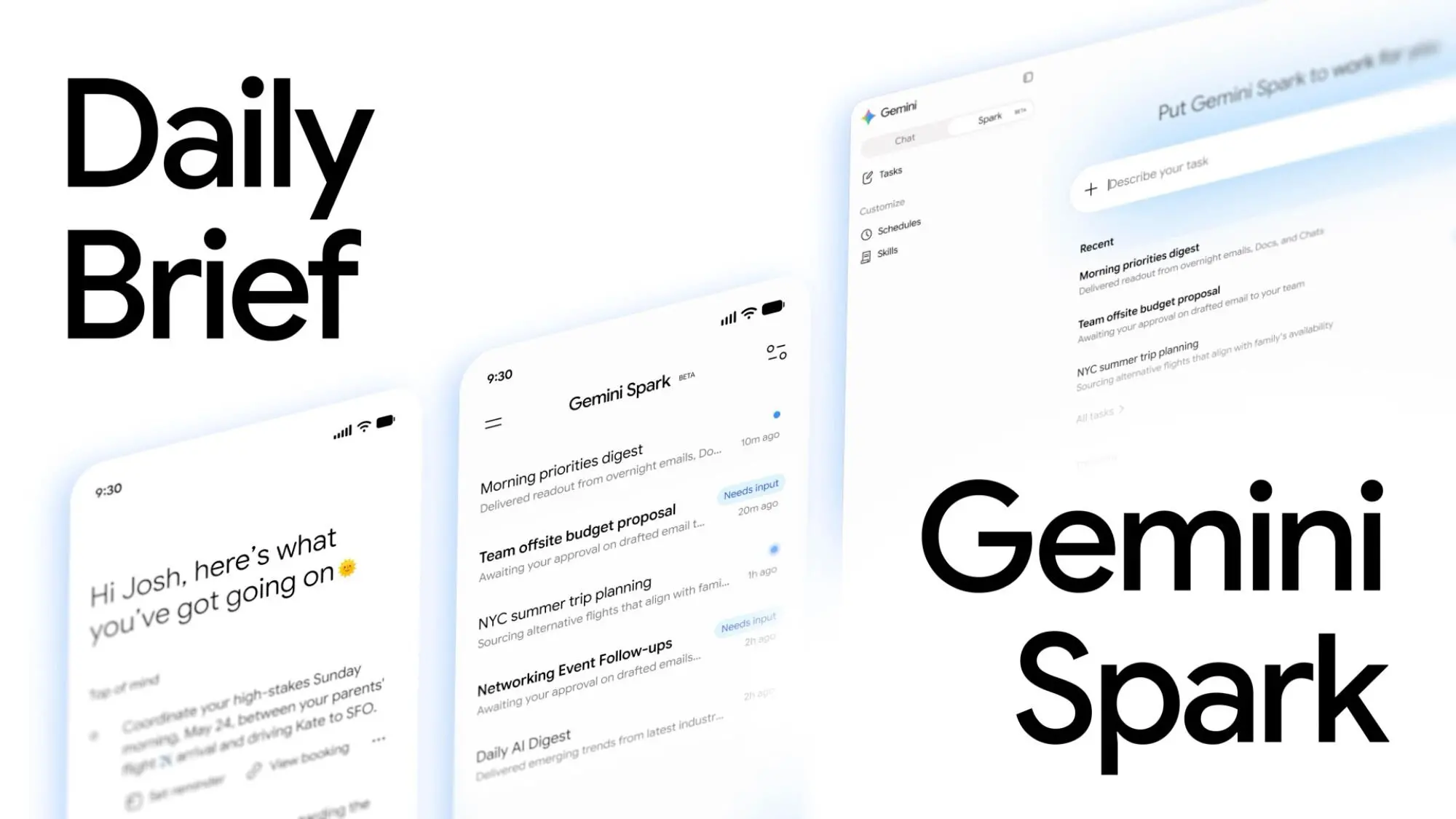
Google’s Gemini Spark is evolving from a chatbot into an agent that can act inside the browser. A new Chrome integration lets Spark use the accounts and credentials already saved in a user’s browser to complete multi-step web tasks, with permission. The move is part of Google’s broader push toward agentic AI, but it also raises important questions about convenience, privacy, and how much access users should give an assistant to their digital lives.
What Gemini Spark can do in Chrome
For many people, the ordinary online tasks that should take a few minutes often stretch into a long afternoon. A person might open several tabs to compare flights, check apartment listings across multiple websites, fill out the same contact form repeatedly, and then lose track of the original purpose. Google is positioning Gemini Spark as the tool that can take over such repetitive chores. With the new Chrome integration, Spark can tap into the browser the user already has and, with explicit permission, use logged-in accounts and saved credentials to automate tasks across the web.
That could include sending messages to landlords about apartments a user has bookmarked, sorting through flight options for an upcoming trip, or preparing the final steps of a booking before handing control back to the user for confirmation. Instead of simply generating text or answering questions, Spark is designed to perform actions. It marks a shift from a system that suggests what a person might do to one that can actually do it in a controlled environment.
This kind of web automation is often described as agentic. An AI agent is expected to break down a larger goal into smaller steps, decide which actions are required, and interact with websites or services on the user’s behalf. The Chrome integration gives Gemini Spark access to the context it needs to make that possible, including saved addresses, autofill data, and web history. In that sense, Chrome is not just a browser; it becomes the connective tissue for a more proactive assistant.
How Google is trying to keep it safe
The idea of an AI assistant wandering through the open web can sound risky. Google says it has added safeguards to make the process more controlled. If a task involves a sensitive action, such as completing a payment or submitting confidential information, Spark will pause and ask for confirmation. Users remain part of the loop at the moments that matter.
Google also says Spark includes protections against prompt injection attacks. Prompt injection happens when a website or piece of content contains hidden instructions designed to manipulate an AI system. For example, a malicious page might include text that tells an AI to ignore its instructions or send sensitive information somewhere it should not go. Because agentic AI systems read and act on web content, they are uniquely vulnerable to that kind of attack. Adding defenses at the browser level is critical to preventing a harmless-looking page from turning an assistant into an unwitting accomplice.
Those safeguards are not just technical details. They are the features that determine whether people are willing to let an assistant act on their behalf. An AI that can browse the web without any guardrails might be even more dangerous than helpful. By requiring approval for sensitive actions and trying to filter out malicious prompts, Google is attempting to draw a line between useful automation and reckless access.
Why Chrome changes the stakes
Chrome is not just another application for many users. It is where passwords are saved, payment methods are stored, browsing history accumulates, and countless accounts remain signed in. It can contain medical portals, bank pages, work applications, and social media profiles. Giving an AI assistant the ability to reach into that environment is very different from asking it to summarize an article or draft an email.
Traditionally, AI assistants have operated as isolated tools. A user might copy text into a chatbot, ask for a response, and paste the result elsewhere. With the Chrome integration, Spark is embedded in the place where the user’s digital identity lives. That creates a new kind of trust requirement. The assistant needs access to sensitive information to complete tasks, but it also has the potential to expose that information through any mistake or vulnerability.
Google’s approach is permission-based, meaning users must approve tasks before the assistant can use their accounts and credentials. Still, agreeing once may not cover every situation. A single permission could lead to actions with implications that are difficult to predict. Users need to consider not just what they are asking Spark to do today, but what kind of access they are granting to the underlying system over time.
Privacy versus convenience
The arrival of Spark in Chrome puts the privacy-versus-convenience tradeoff into sharp relief. On one side, the time savings can be significant. Automating routine chores like filling out forms, checking availability, or comparing options could save people hours each week. For users who already rely on autofill and password managers, having an AI handle the next steps might feel like a natural extension.
On the other side, there is the uneasiness that comes from handing over a large part of one’s digital life to an AI. Even with safeguards, it is reasonable to hesitate before letting an assistant log into personal accounts or use saved credentials. Many people may be comfortable having Spark perform low-risk tasks but uncomfortable with deeper access to email, payment methods, or other sensitive services.
This will likely split opinion. Some users will embrace the convenience and trust Google’s security measures. Others will see the integration as an erosion of privacy. The real challenge for Google is to offer a system that feels genuinely helpful without making users feel that they have surrendered too much control.
Rollout and availability
Google is starting the rollout of Gemini Spark web automation in the United States. Users in other regions will have to wait for a wider expansion. At the same time, Google is making Spark available to Google AI Pro subscribers in more than 160 additional countries. That broader rollout means many more users will soon have a chance to test the feature themselves and decide how they feel about it.
Bringing the feature to more users is a significant step. It indicates that Google believes the technology is ready for a wider audience, not just a small test group. But broader access also raises concerns about how different types of users will respond to the security prompts and whether less cautious users might grant permissions that put them at risk.
Google’s future plans for Spark likely include deeper integration with its other products. Assistant features already exist across Android, Gmail, Google Docs, and other services. Making Spark work inside Chrome could eventually allow it to cross from one service to another in ways that were previously impossible. The announcement in the US and the international expansion are probably just the first phase of a much larger rollout.
The agentic web is coming
The arrival of Gemini Spark in Chrome is not happening in a vacuum. The broader technology industry is moving toward agentic AI, with major companies exploring how to let language models perform tasks on their own. Different companies are taking different approaches, but the general direction is the same: AI systems will do more than answer questions; they will take responsible actions in digital environments.
Google’s advantage is its existing ecosystem. Chrome has a huge share of the browser market, and Google also controls many of the online services people use every day. That combination could help Gemini Spark become a primary interface for getting things done online. At the same time, it gives Google a responsibility to ensure that its agent is not abused by malicious websites or by the AI itself.
There is also a competitive angle. Rival AI systems are developing similar capabilities, whether through browser extensions, desktop assistants, or integration with office software. As these products compete for user trust, the success of any one system may depend on how well it balances capability with restraint. A feature that saves time is attractive, but a feature that feels invasive or unsafe will be rejected.
The arrival of these tools could change how people think about their online presence. Browsing, logging in, and filling out forms are deeply personal activities. Moving them into the hands of an AI requires a leap of faith. Google is trying to make that leap easier by being transparent about permissions and adding safeguards, but users will still have to weigh the benefits for themselves.
Whether the integration will be embraced or resisted is hard to predict. What is clear is that Gemini Spark’s new Chrome integration is a meaningful moment in the transformation of AI from a source of answers to a doer of tasks. The technology is no longer just suggesting what a person should do next; it is able to take the next step. The future of the web may depend less on how capable these AI agents become and more on how much access people are willing to grant them in exchange for convenience.
Source:Android Authority News