

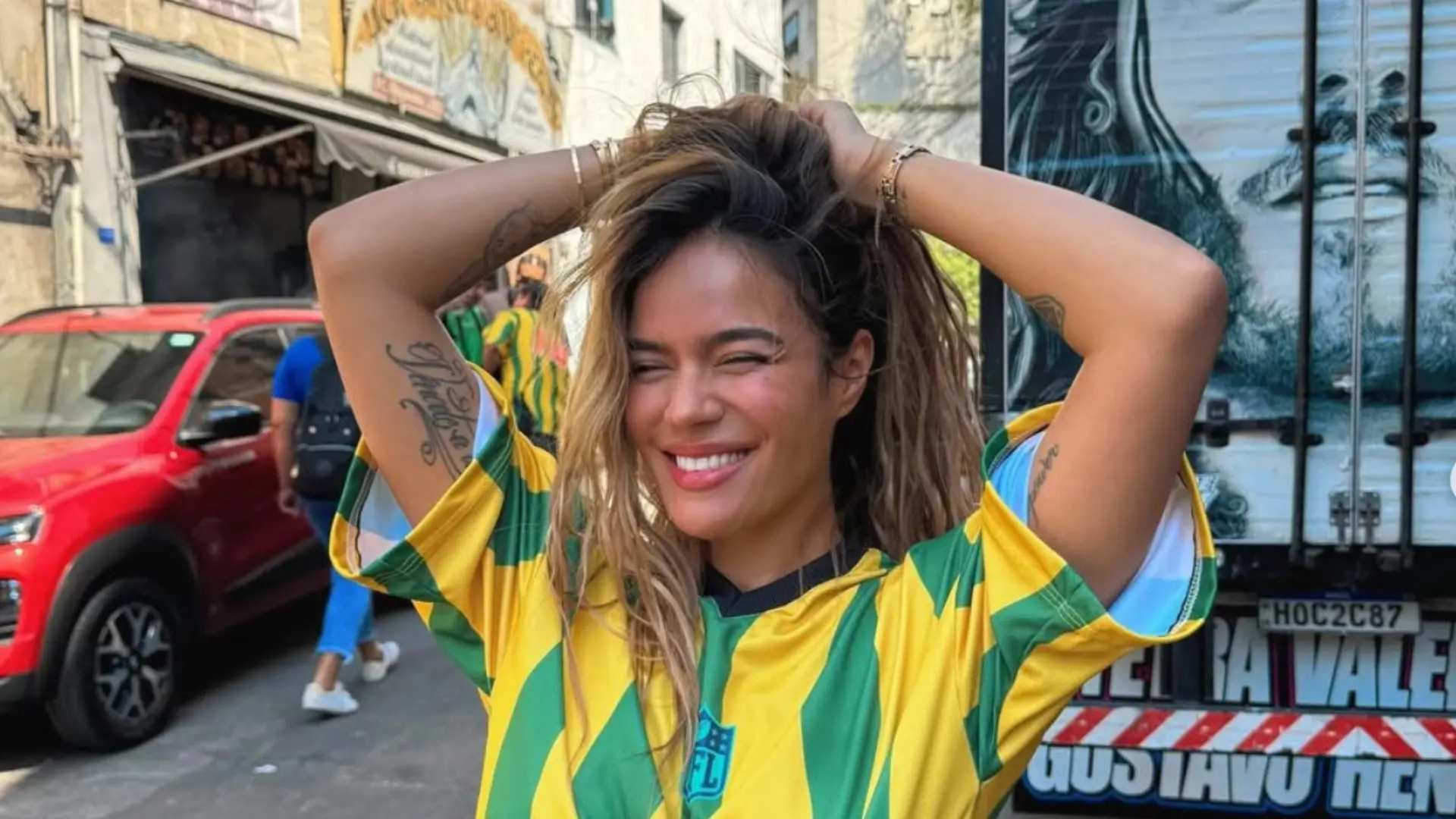
The name Karol G has become shorthand for something larger than a single career. Over the past decade, the Colombian singer born Carolina Giraldo Navarro has moved from local talent competitions in Medellín to headlining stadiums on three continents, and in doing so she has helped rewrite the commercial and cultural rules of Latin music.
Her trajectory is remarkable not only for its scale but for its timing. She arrived in the global spotlight at the exact moment Spanish-language pop stopped being treated as a regional curiosity and became one of the engines of the streaming economy. What she built on top of that wave, a deep catalog of hits, a touring machine and a brand built around female empowerment, is now studied across the industry as a template rather than an anomaly.
From Medellín to the world stage
Carolina Giraldo Navarro was born on 14 February 1991 in Medellín, Colombia, into a household where music was a constant presence. Her father was a musician, and the family's record collection ranged across Colombian popular music, salsa, merengue and the reggaeton that was beginning to reorganize the country's radio landscape. She has repeatedly described her younger self as a restless child who sang constantly and who understood early that performing was the one activity that made everything else make sense.
As a teenager she took her first steps in televised talent competitions, including a run on Colombia's edition of El Factor X. The experience was an early and unforgiving education in how the industry judged young women performers, and she has since spoken about the gap between the artist she wanted to be and the artist television executives were prepared to allow. She recorded her first material at sixteen and spent the following years releasing songs and building relationships across the Colombian urban circuit, including the single 301 with Reykon, a record that established her locally but did little to move the needle internationally.
Frustrated by the limits of the domestic market, she moved to New York in her late teens, studied music and English, and took whatever work she could find to stay afloat. The period is rarely treated as a key chapter of her story, but it shaped the business instincts that would later distinguish her: an understanding of contracts, of ownership, and of how much of an artist's career is decided offstage.
The breakthrough years
The turning point arrived in 2017 with Ahora Me Llama, a collaboration with Bad Bunny that became a fixture on Latin radio and streaming platforms and pushed her name into markets she had never toured. The song was not an accident. It was the result of years spent building a network of producers and writers, and of a deliberate decision to position herself at the intersection of reggaeton and pop rather than inside one lane.
Her debut album, Unstoppable, followed in 2018. Though she has since described it as a learning experience, the record contained the singles that established her commercial identity, including Mi Cama and Culpables, and demonstrated that she could carry a full-length project rather than simply appearing as a feature. The album also revealed a tension that would define her next few years: a singer with a strong pop sensibility working inside a genre that often rewarded a narrower, more percussive approach.
Her second album, Ocean, released in 2019, leaned into that tension rather than resolving it. Named for the title track and built around themes of devotion and vulnerability, it mixed reggaeton with ballads and mid-tempo pop, and included the collaboration Secreto. Commercially it broadened her audience. Critically it announced that she intended to be a songwriter with a point of view, not simply an interpreter of hooks written by someone else.
Tusa and the shift in scale
In late 2019, everything changed. Tusa, a bilingual collaboration with Nicki Minaj, became one of the defining Latin songs of the year. Built on a loop of heartbreak and defiance, it topped Billboard's Hot Latin Songs chart and crossed into pop playlists in markets with little history of embracing Spanish-language records. The significance went beyond the numbers: a Colombian artist was now trading verses with one of the most established names in Anglo pop on equal footing, and the record was unmistakably hers.
Tusa also introduced the register that would come to define her public persona, a mixture of hurt and swagger delivered without apology. It was the first clear signal that her music could carry a message aimed squarely at women listeners who had grown tired of being cast as the collateral damage in other people's songs.
KG0516 and the birth of the Bichota
Her third album, KG0516, arrived in 2021 and marked the moment she became a fully realized pop architect. The title referenced a flight number with personal meaning, and the record itself functioned as a kind of journey, moving through reggaeton, trap, ballads and Afro-Caribbean rhythms. It contained Bichota, a track that turned a slang term into a global descriptor for a woman in a position of power, and which gave her an identity that fans adopted as their own.
The album also produced Location, El Makinón and 200 Copas, each of which extended her range. More importantly, it cemented a working method: long writing camps, tight control of the visual language around each release, and an insistence that her albums be treated as bodies of work rather than collections of singles. In a streaming economy that rewards fragmentation, that insistence was a risk, and it paid off.
The following year brought a run of collaborations that kept her at the center of the conversation, including Mamiii with Becky G, a song that became a chart-topping anthem about walking away, and Provenza, a softer, more melodic record that demonstrated she could carry a hit without a featured artist at all.
Mañana Será Bonito and a historic chart milestone
In February 2023, she released Mañana Será Bonito, an album conceived as a document of healing after a difficult period in her personal life. Its title, drawn from a phrase she has said she used to repeat to herself, framed the record as a statement of recovery rather than heartbreak.
The commercial result was unprecedented. The album debuted at number one on the Billboard 200, making it the first all-Spanish-language album by a female artist to reach the top of that chart, and the first Latin album by a woman to do so. It was a milestone that had been predicted for years and never delivered, and its arrival in a single week reset expectations across the industry about the ceiling for Spanish-language music in the United States.
The record was also creatively ambitious. TQG, a collaboration with Shakira, became a global conversation piece, a post-breakup track in which two Colombian artists addressed their respective ex-partners with unusual directness. Other tracks, including Mientras Me Curo del Cora, Amargura and Ojos Ferrari, ranged across reggaeton, cumbia and acoustic balladry, and the album's sequencing gave it the shape of a narrative rather than a playlist.
The recognition followed. The album earned her the Grammy for Best Música Urbana Album, a validation that placed her work alongside the most celebrated records in the genre. Later that year she released Mañana Será Bonito (Bichota Season), a companion project whose standout track, Mi Ex Tenía Razón, paid explicit tribute to Selena with a cumbia arrangement that reintroduced a new generation of listeners to a foundational sound in Latin music.
The stadium era
If the album established her artistic authority, the tour that followed established her as a live phenomenon. The Mañana Será Bonito Tour, which ran through 2023 and into 2024, played stadiums rather than arenas across Latin America, the United States and Europe. She became one of the few Latin artists of any gender to headline multiple nights in the same stadium in major markets, including a run of shows in Madrid that drew enormous crowds and became a cultural event in Spain.
The production was built around a narrative arc about healing and self-recognition, with a stage designed to bring the audience close enough that the scale of the venue never overwhelmed the intimacy of the songs. The tour became the highest-grossing concert run by a Latin woman in history and ranked among the biggest tours in the world during its active period, a result that permanently altered how promoters assess the commercial potential of Spanish-language acts outside their home regions.
The merengue turn
In mid-2024, while still on the road, she released Si Antes Te Hubiera Conocido, a merengue record built on a simple, almost conversational melody. It became one of the most-streamed songs in the world within weeks, topping Latin charts and crossing into mainstream playlists in Europe and North America. The track was a reminder that her range extended well beyond reggaeton, and that she could pivot to a Caribbean genre with roots far from the urban chart without losing her audience.
The song's success also illustrated a structural advantage she had built over years: a catalog broad enough that a single release could sit alongside a stadium show and a documentary project without any of them cannibalizing the others.
Business, philanthropy and influence
Beyond the charts, she has built a reputation as one of the more disciplined operators in contemporary music. She has maintained close control over her recordings, her touring business and her brand partnerships, and she has been unusually candid about the importance of ownership in a genre where young artists are frequently signed into arrangements that age badly.
Her philanthropic work has run in parallel. Through her Con Cora Foundation, she has supported programs focused on women and girls in Colombia and across Latin America, with an emphasis on education, entrepreneurship and access to opportunities that are often restricted in the communities she grew up around. The foundation's framing reflects the same logic as her music: that empowerment is a practical project rather than a slogan.
Her cultural influence was formally recognized when she was named Billboard's Woman of the Year, an honor that placed her alongside pop figures from outside the Latin market and acknowledged her role in reshaping how the industry thinks about female headliners.
What her rise says about Latin music
Karol G's career is often described as a breakthrough, but it is more accurately a reclassification. For years, Latin artists were treated as specialists who could reach global audiences only through crossover records in English. Her catalog demonstrates the opposite: that Spanish-language music can top the charts in the United States, fill stadiums in Europe and sustain a multi-album narrative without translation.
She has also shifted the internal politics of reggaeton, a genre that spent two decades building its commercial power on a lyrical framework in which women were frequently decorative. Her response has not been to abandon the sound but to occupy it on her own terms, with songs about self-worth, recovery and ambition that sit comfortably on the same playlists as the records they answer.
The result is an artist whose influence now extends past her own releases. Younger performers entering the industry cite her as evidence that a Spanish-language career can be built without a crossover strategy, and executives who once dismissed stadium tours in Latin America as unviable now plan them as a matter of course. The next chapter of her career, whatever form it takes, will be measured against a standard she largely set herself, in a market she helped convince was larger than anyone had been willing to admit.
Source:The Body Optimist News