

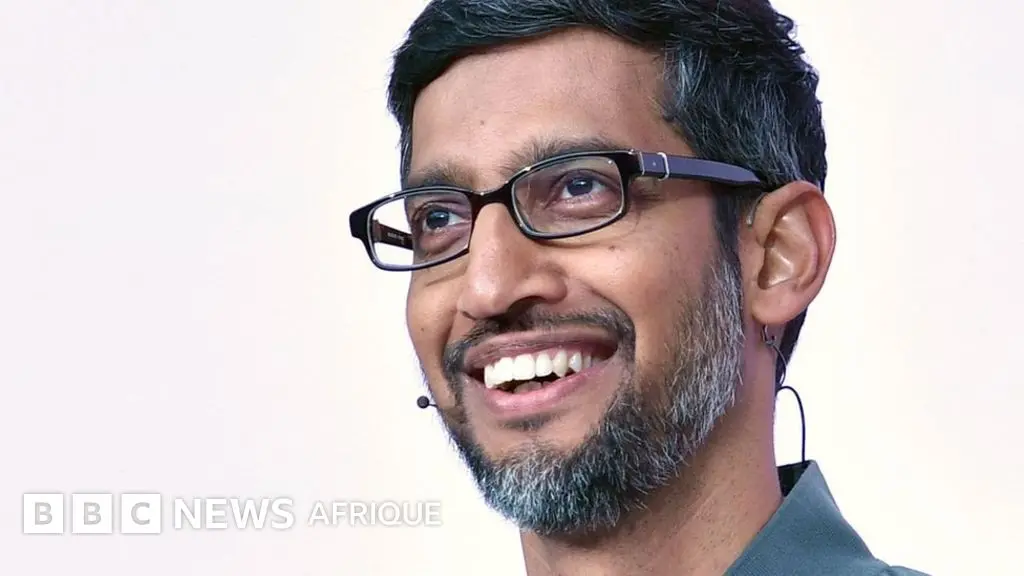
Sundar Pichai, the longtime chief executive of Google, has been appointed as the new CEO of Alphabet, the parent company of Google. This announcement came after co-founders Larry Page and Sergey Brin stepped down from their executive roles, marking the end of an era for the tech giant. Pichai, at 47 years old, now holds the top position at one of the most influential companies in the world, responsible for overseeing a vast portfolio of businesses ranging from search advertising to autonomous vehicles and life sciences.
Pichai's ascent is extraordinary. Born in Chennai, India, he grew up in a modest two-room apartment where he slept on the living room floor alongside his younger brother. His father worked as an electrical engineer for the British conglomerate General Electric Company, and his mother was a stenographer. Despite the financial constraints, Pichai displayed an early aptitude for technology and leadership, captaining his school's cricket team and winning regional competitions. He went on to study metallurgical engineering at the Indian Institute of Technology (IIT) Kharagpur, where his tutors described him as the brightest in his class.
Education and the American Dream
After graduating from IIT, Pichai earned a scholarship to Stanford University, one of the world's premier technology hubs. The flight to America cost more than his father's annual salary, a powerful symbol of the sacrifices his family made for his future. At Stanford, he earned a master's degree in materials science and engineering, and later an MBA from the Wharton School of the University of Pennsylvania. These academic achievements opened doors to Silicon Valley, where he joined Google in 2004 as a product manager for the company's search toolbar.
From the outset, Pichai demonstrated a knack for product development and execution. He quickly rose through the ranks, leading the launch of Google's own web browser, Chrome, which eventually became the most popular browser globally. He also oversaw the development and expansion of Android, the mobile operating system that now powers over 70% of the world's smartphones. Pichai's calm demeanor and collaborative style earned him respect across the company, and he was often described as a steady hand in a rapidly changing industry.
Key Contributions at Google
Under Pichai's guidance, Google introduced several transformative products. Chrome, launched in 2008, was designed to be fast, secure, and minimalist. It challenged Microsoft's Internet Explorer and Mozilla's Firefox, eventually capturing more than 60% of the browser market. The Chrome browser also became the foundation for Chrome OS, a lightweight operating system used in Chromebooks, which gained popularity in education and business markets.
Android, acquired by Google in 2005, became Pichai's most significant project. He took over the management of Android in 2013 and led its evolution into the dominant mobile platform. Under his watch, Android grew from a niche operating system to a global phenomenon, powering devices from Samsung, OnePlus, Xiaomi, and many others. Pichai also played a key role in integrating Google's services—Gmail, Maps, Drive, and Google Assistant—deeply into the Android experience, creating a seamless ecosystem.
In addition to these consumer products, Pichai was responsible for Google's core search and advertising business, which generates the vast majority of the company's revenue. His ability to balance innovation with profitability made him a natural successor to Larry Page, who had long praised Pichai's leadership and vision.
Alphabet: A New Structure
Alphabet Inc. was created in 2015 as part of a major corporate restructuring. Google itself became a subsidiary of Alphabet, focusing on products like Search, Maps, YouTube, Chrome, and Android. Other ventures that were once part of Google were spun off into independent subsidiaries, each operating under the Alphabet umbrella. This structure was intended to make the company 'cleaner and more accountable,' allowing investors to see the performance of different business lines more clearly.
As CEO of Alphabet, Pichai now oversees a diverse set of companies, including several that are pushing the boundaries of technology.
Waymo: Self-Driving Cars
Waymo began as a Google project in 2009 to build an autonomous vehicle. It is now a separate Alphabet subsidiary and a leader in self-driving technology. In December 2018, Waymo launched its first commercial service, Waymo One, in Phoenix, Arizona, offering driverless taxi rides to the public. The company claims to have more than 1,000 active users and its fleet has logged over 10 million miles on public roads. Waymo's cars use a combination of lidar, cameras, and radar to navigate streets and detect pedestrians, cyclists, and other vehicles.
Calico: Fighting Aging
Calico (short for California Life Company) was launched by Google in 2013, with a focus on health and longevity. The company's mission is to understand the biology of aging and develop interventions that extend human lifespan. Calico collaborates with pharmaceutical companies like AbbVie and research institutions, and its scientists work on areas such as epigenetics, cell reprogramming, and drug discovery. The company remains secretive about its progress, but its ultimate goal is to tackle one of the greatest mysteries of life: why we age and how to slow it down.
DeepMind: Artificial Intelligence
Acquired by Google in 2014 for about $500 million, DeepMind is a British AI research lab that has achieved several milestones. Its AlphaGo software defeated world champions at the ancient game of Go, a feat once thought to be decades away. Later, AlphaStar reached the top division of the esports game StarCraft II, demonstrating AI's ability to handle complex strategy games. DeepMind also made strides in healthcare, developing an AI that can detect eye diseases and predict acute kidney injury. However, the company has faced ethical questions about data privacy and the implications of advanced AI.
Wing: Drone Delivery
Wing is Alphabet's drone delivery service, which launched its first commercial operation in April 2019 in Canberra, Australia. The service delivers food, coffee, and medicine to homes using autonomous drones. Since then, Wing has expanded to other locations, including the United States and Finland. The drones are designed to fly at low altitudes and hover to drop packages via a tether. While the service has been praised for its innovation, some residents have complained about noise from the drones, leading Wing to refine its designs.
Loon: Balloon-Powered Internet
Loon originated from Google X, the company's secretive research lab, and became an Alphabet subsidiary in 2018. The goal of Loon is to provide internet connectivity to remote and underserved areas using high-altitude balloons. These super-pressure balloons float in the stratosphere, acting as floating cell towers that can beam internet signals to the ground. Loon provided emergency connectivity in Peru and Puerto Rico after natural disasters, and it has conducted trials in Kenya. However, the balloons have a limited lifespan of about five months, and aviation authorities have raised safety concerns.
Pichai's Leadership Style and Challenges
Those who have worked with Pichai describe him as soft-spoken, thoughtful, and deeply analytical. He is known for his ability to navigate internal politics and build consensus, traits that will be essential as he leads Alphabet's sprawling empire. Unlike the flamboyant co-founders, Pichai projects a calm, almost stoic presence, earning him the nickname 'the quiet stealer of the spotlight' in some circles. He is also popular among developers, often hosting Google's annual I/O conference.
Yet Pichai faces significant challenges. Alphabet is under regulatory scrutiny from antitrust authorities in the US and Europe, who argue that Google dominates search and advertising markets. The company has also faced employee protests over issues like gender inequality, military contracts, and sexual harassment. Additionally, the race to lead in artificial intelligence is intensifying, with competitors like Microsoft, Amazon, and Facebook investing heavily in AI research. Pichai must also ensure that Alphabet's 'moonshot' projects eventually become profitable, or at least justify their costs.
Pichai's personal story continues to inspire many. His parents, Regunatha and Lakshmi Pichai, emphasized the value of education and hard work. His father often discussed his engineering challenges at home, sparking Sundar's interest in technology. Anjali Pichai, Sundar's wife, has been a steadfast partner; they have two children together. Pichai's journey from a modest upbringing in Chennai to the helm of one of the world's most powerful corporations is a powerful narrative that resonates globally, particularly in India, where he is regarded as a national hero.
In his first memo to Alphabet employees, Pichai expressed gratitude for the foundations laid by Larry Page and Sergey Brin. He emphasized his commitment to building on their legacy by focusing on innovation, responsibility, and the long-term vision. The tech world watches closely to see how Pichai will steer Alphabet through a period of unprecedented growth, regulation, and competition, but if his track record is any guide, the new CEO is well-equipped for the journey ahead.
Source:BBC News Afrique News