

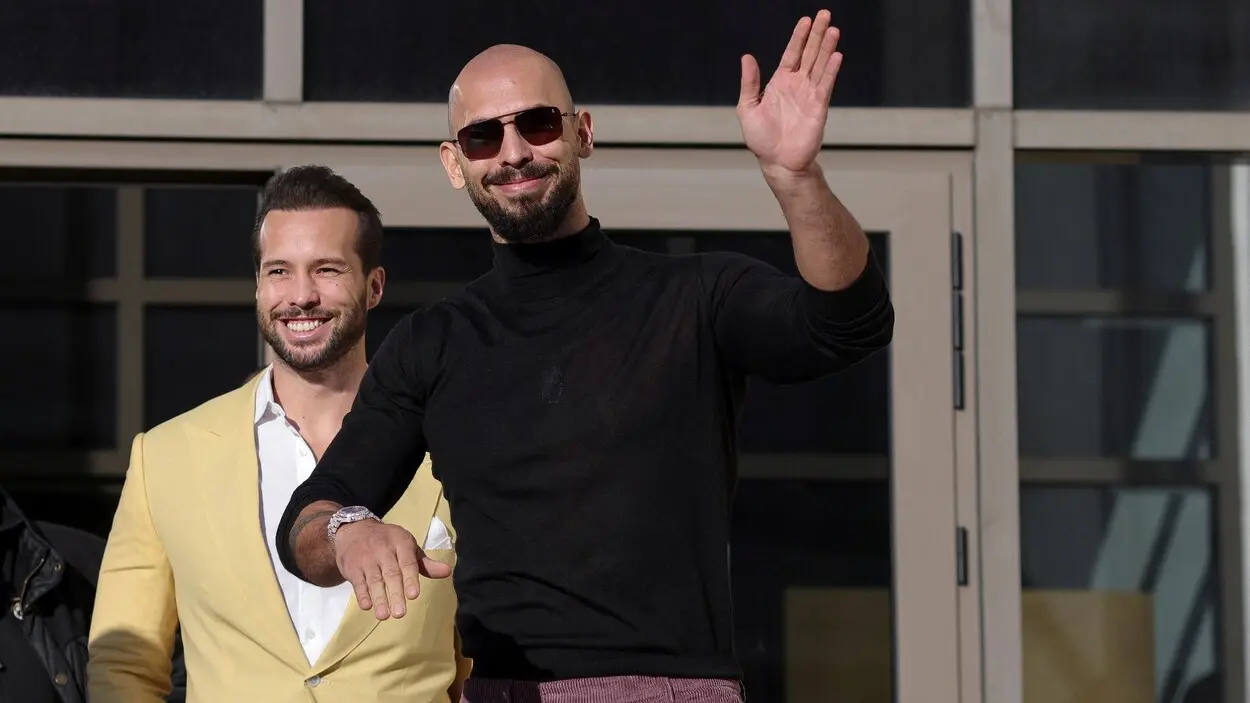
Andrew Tate, the controversial British-American influencer known for his misogynistic and masculinist rhetoric, arrived in Florida on Thursday alongside his brother Tristan, after Romanian authorities lifted travel restrictions that had kept them in the country since their arrest in 2022. The brothers landed at Fort Lauderdale airport, a city near Miami and a key stronghold of former President Donald Trump, aboard a private Gulfstream G550 jet after a 12-hour non-stop flight from Bucharest.
The move marks a dramatic twist in a legal saga that has drawn international attention. Andrew and Tristan Tate face charges of human trafficking, rape, and forming an organized crime group in Romania. They also face separate allegations of sexual offenses in the United Kingdom, where four women have filed complaints. Despite these ongoing proceedings, Romanian prosecutors confirmed that the brothers remain under judicial control — meaning they must appear in court whenever summoned — but the ban on leaving the country has been lifted.
Background and legal troubles
Andrew Tate, 38, first rose to prominence in 2016 after appearing on the reality TV show Big Brother UK. He later built a massive online following, particularly on X (formerly Twitter), where he has more than 10 million followers. His content promotes hyper-masculine ideals, advocates for male dominance, and often targets women with degrading statements. His rhetoric has been condemned by activists and governments, leading to bans from platforms like Instagram, TikTok, and YouTube.
In December 2022, Romanian authorities arrested Andrew and Tristan Tate on suspicion of human trafficking, rape, and forming an organized crime group. Prosecutors allege that the brothers lured women into relationships by feigning romantic interest, then forced them into producing pornography and subjected them to physical and psychological abuse. The Tates have consistently denied all accusations, claiming they are victims of a politically motivated witch hunt.
In 2023, a Romanian court ruled that the indictment against the brothers was procedurally flawed, delaying the trial. Separately, a UK court convicted them for tax evasion last year, though that case is under appeal. The ongoing Romanian investigation includes allegations of violence against women and exploitation.
Reaction from accusers and UK authorities
The decision to allow the Tates to travel to the U.S. has infuriated the four British women who have accused Andrew Tate of rape. Through their lawyer, Matthew Jury, they issued a statement saying they are "astounded that the Romanian authorities have caved in to pressure from the Trump administration." They expressed deep concern that the criminal cases against Tate may be dropped, given his high-profile connections and the apparent influence of U.S. officials.
Matthew Jury called the development "as disgusting as it is disheartening" and urged UK Prime Minister Keir Starmer — who was in Washington, D.C., on Thursday meeting with President Donald Trump — to raise the issue during their discussions. A Downing Street spokesperson declined to comment on the specifics of the case, emphasizing that the decision was made independently by Romanian justice. However, the spokesperson added that Starmer views human trafficking as a global security threat on par with terrorism.
The UK has not formally requested Tate's extradition, but his departure from Romania complicates any future attempts to bring him to British courts. Legal experts note that the U.S. and the UK have an extradition treaty, but the process can be lengthy and politically charged.
Trump administration involvement
Reports emerged earlier this week that Washington had pressed Bucharest to lift travel restrictions on the Tates and return their passports. Romanian Foreign Minister Emil Hurezeanu confirmed that he had discussed the matter with Richard Grenell, a Trump envoy, but denied feeling any pressure. Nevertheless, the timing of the decision — just days before a scheduled visit by the British prime minister to the White House — raised eyebrows among observers.
Andrew Tate has openly admired Donald Trump, and his brother Tristan has echoed similar sentiments. The Tates have also positioned themselves as victims of "woke" culture and government overreach, which resonates with some conservative circles in the U.S. Their arrival in Florida, a state with a large conservative base and a history of embracing controversial figures, may allow them to rebuild their public profile.
What lies ahead for the Tates
Although Andrew and Tristan Tate are now in the United States, they remain under judicial supervision in Romania. They must comply with all court orders and appear when summoned. Whether the Romanian authorities will continue to pursue the case vigorously remains uncertain. Critics argue that allowing high-profile suspects to leave the country undermines the rule of law and sends a dangerous signal to potential victims of trafficking and sexual violence.
The brothers have maintained their innocence throughout the legal proceedings. In recent months, they have ramped up their online presence, posting videos and messages that attack the legal system and claim persecution. Their legal team has indicated they will fight the charges in court and may seek to have the case dismissed entirely.
Impact on the masculinist movement
Andrew Tate's influence extends far beyond his immediate followers. He has become a symbol for a broader online movement often referred to as the "manosphere," which includes pickup artists, men's rights activists, and anti-feminist groups. His messaging appeals to young men who feel disenfranchised or alienated from mainstream society. Critics say his content encourages toxic masculinity and normalizes violence against women.
Despite being banned from major social media platforms, Tate has managed to maintain a significant audience through alternative channels, including his own website and X, where he is still active. His brother Tristan also contributes to the brand, often appearing in videos and livestreams. Together, they have built a business empire that includes subscription services, merchandise, and cryptocurrency promotions.
The Tates' ability to travel freely may now allow them to expand their operations in the U.S., where they have a sizable fan base. However, legal challenges remain. American authorities could potentially detain them if extradition requests are filed, though no such move has been announced. Privacy advocates and women's rights groups are closely monitoring the situation, urging the U.S. government to cooperate with international investigations rather than shield the brothers.
Broader context of the case
The Tate case has highlighted gaps in international cooperation on human trafficking and sexual exploitation. Victims often struggle to obtain justice when perpetrators move across borders. The case also underscores the influence of wealth and celebrity in the legal system. Andrew Tate's millions of followers and his alignment with populist political figures have given him a platform that ordinary defendants do not have.
Romanian authorities have faced criticism both for initially arresting the Tates and for now allowing them to leave. Some observers argue that the Romanian judiciary has been inconsistent in its handling of the case, while others point to external pressures as the main factor. The situation echoes other high-profile cases where suspects have evaded prosecution by leveraging connections or fleeing to jurisdictions with less stringent laws.
As the legal drama continues to unfold, the key questions remain: Will the Tates ever face trial in Romania or the UK? And what message does their journey to Florida send to victims of human trafficking and sexual violence around the world? For now, the brothers are free, but their legal troubles are far from over.
Source:Radio-Canada News