

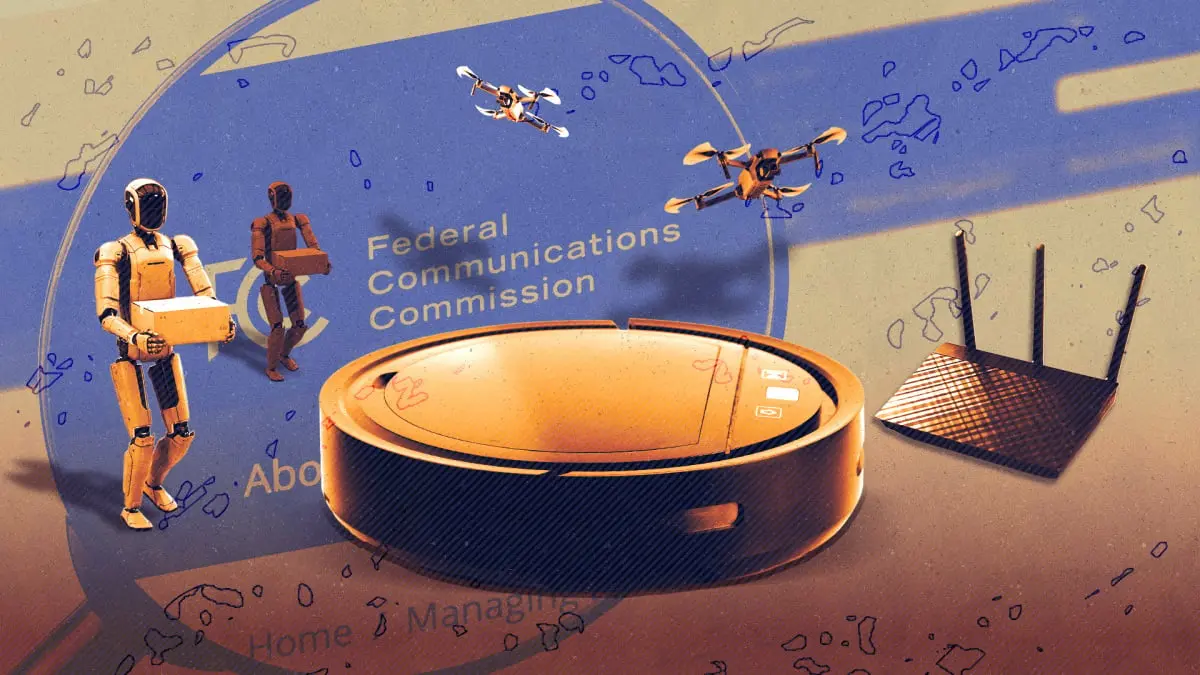
Do you know where the robots running your home come from? Your Google Nest devices, AI-powered smart assistants, and, especially, your robovacuums may be manufactured overseas. The U.S. government now wants you to pay attention to exactly where those devices are made and who controls their software.
In a sweeping order from the Federal Communications Commission (FCC) two weeks ago, the Trump administration effectively banned foreign-made "robotic devices" from the U.S. market, including many popular robot vacuums. The ruling expands the FCC's Covered List, a catalog of equipment that is presumed to pose an unacceptable national security risk. The agency blocked imports and domestic sales of internet-connected devices that navigate independently, such as humanoid robots or robot dogs, as well as devices with cameras and microphones. But those same technical traits also apply to many of today's AI-powered vacuum-mop hybrids, some of which can livestream camera feeds to their owners while rolling around the house.
The good news? The government won't be knocking down doors to confiscate Roombas. Devices already in circulation can remain in homes, and pre-approved robots can stay on the market. But the decision casts uncertainty over future models and the average consumer's access to them. Here's what you need to know if you're shopping for a high-tech cleaner or any other smart home gadget in the coming months.
Why the FCC made the move
The FCC's Covered List was established to identify communications equipment and services that pose a threat to U.S. national security. The list grew out of a 2019 executive order and subsequent legislative efforts aimed at securing the nation's communications supply chains. Initially, the list focused on equipment from companies tied to certain foreign adversaries. Over time, it expanded to include categories of hardware that the government believes could be used for espionage, data theft, or remote disruption.
Previous additions to the list include foreign-made routers and drones. The new ruling adds "robotic devices" that are internet-connected and can operate autonomously or capture audio and video. The FCC has chosen to ban entire categories of technology rather than name specific companies. That approach shifts the burden onto manufacturers. Each company must apply to the FCC for approval to sell a new product, and the agency can impose conditions, restrict software updates, or grant only time-limited approvals.
FCC Chairman Brendan Carr has taken a particularly hard line on Chinese imports as part of the Trump administration's broader foreign policy agenda. Industry observers say this helps explain why the commission is moving aggressively to ban products that have become common in American households, even when there is no direct evidence that a specific brand has done anything harmful.
What exactly is banned?
The FCC's new restrictions cover internet-connected robotic devices that meet two main criteria: they can physically navigate their environment without a human operator, and they are capable of collecting audio, video, or other sensitive data. This includes:
- Robot vacuums and floor-mopping robots that use sensors and cameras to map your home
- AI-powered smart speakers and display devices with microphones and cameras that can move or pan
- Humanoid robots and companion bots that can wander around a room
- Robotic lawn mowers, pool cleaners, and other outdoor devices with cameras and connectivity
- Robotic drones that operate on the ground or in the air, if they are internet-connected and can navigate automatically
Not all of these are new. Foreign-made drones and routers were already on the Covered List. The new order makes clear that robots with similar connectivity and sensing capabilities are also covered. For consumers, this means that a product as seemingly harmless as a $299 robot vacuum can fall under the restriction if its manufacturer is based in a country the U.S. government considers a risk.
What happens to robot vacuums already in your home?
If you already own a robot vacuum or smart security camera from a foreign manufacturer, nothing changes immediately. The FCC does not have the authority to force you to throw away a device that was legally purchased before the ban took effect. The ruling focuses on future imports and new product approvals. Existing inventory that has already passed through customs can still be sold, and products that were previously approved can remain on the market for the duration of their approval.
That said, there is a catch. The FCC has been granting time-limited extensions for previously approved products, especially in the case of routers. In May, the commission extended approval for companies to issue software updates to routers until 2029. That extension came not long after the FCC granted exemptions to two major router manufacturers. The precedent suggests that existing robot vacuums will not be rendered useless immediately, but their manufacturers may need to seek ongoing approval for firmware updates, security patches, and cloud service changes. If a company refuses or is unable to comply, the device could eventually lose support.
Consumer advocates say this is a meaningful difference from the ban on drones. When the FCC added drones to the Covered List, existing owners were allowed to keep flying their devices, but some new models from affected manufacturers disappeared from the U.S. market. The same pattern is likely to play out in the robot vacuum space. You may see fewer new models from certain brands on Amazon and in big-box stores, but the models already sitting on shelves can still be sold until their approval expires or inventory runs out.
What robot brands are saying
Companies are still evaluating the potential effect of the FCC's ruling on their manufacturing processes. Several major players in the robot vacuum industry are headquartered outside the U.S., including Chinese brands Eufy, Roborock, and Dreame. Meanwhile, U.S.-based iRobot, maker of the Roomba, primarily manufactures its products in China and Vietnam. Like many other consumer tech categories, most robot vacuum companies operate manufacturing lines on foreign soil.
A handful of brands have reassured American buyers that they will still be able to get their hands on the latest home cleaner tech under the new rules. In statements provided to the press, all but cash-strapped iRobot confirmed they would continue to sell currently available models in the U.S. as they review the new regulations. Shark, a vacuum leader that is also headquartered in the U.S., said it is confident that it can still launch new, competitively priced models in the future despite constraints on foreign manufacturing. "We believe we are well positioned to navigate the process," the company said.
Narwal, another robot vacuum brand, also said it expects to remain available to U.S. consumers. The company has not offered detailed public comments on how it will comply with the FCC's approval process, but industry insiders say it is likely working with legal teams and
Source:Mashable News