

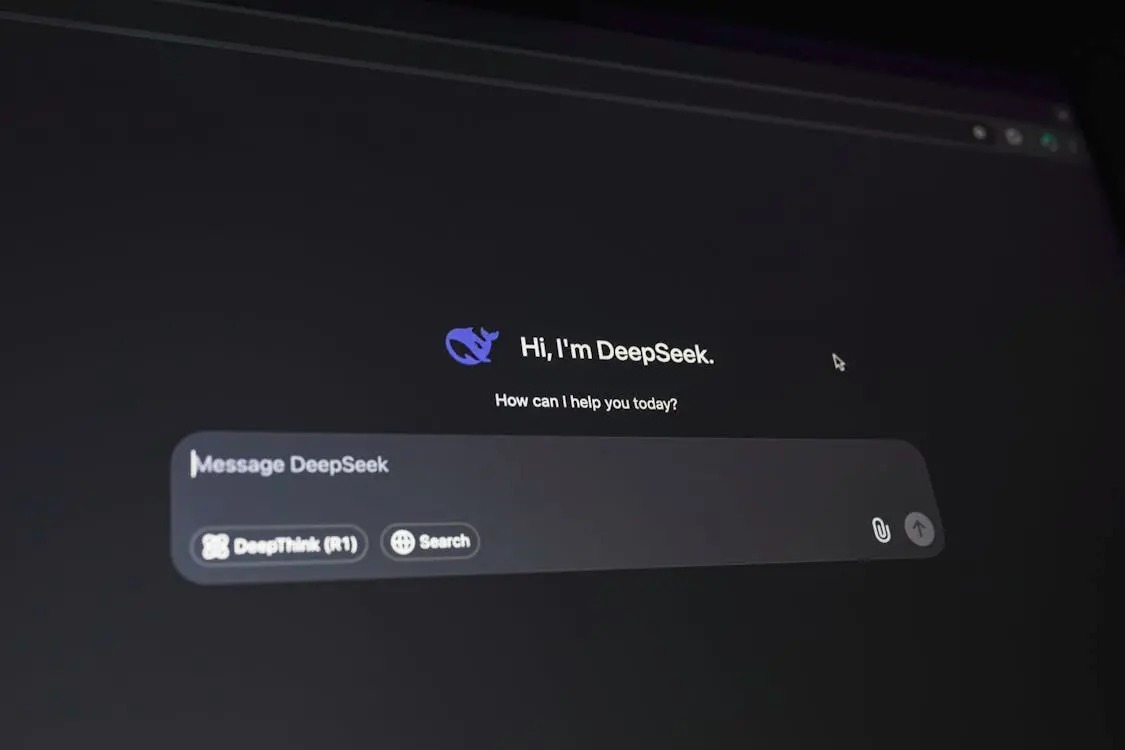
DeepSeek, one of China's most closely watched artificial intelligence start-ups, is in talks to secure external funding for the first time, with a valuation of $45 billion (£33 billion) reportedly on the table. The potential round has drawn interest from the country's largest state-backed semiconductor investment vehicle, known as the Big Fund, along with major technology companies such as Tencent Holdings and Alibaba Group, according to people familiar with the matter.
The development marks a significant milestone for DeepSeek, which has until now operated without outside capital, relying on the resources of its founder and a small team of researchers. The company first gained international attention after releasing a series of open-source AI models that rivalled the performance of Western counterparts at a fraction of the development cost. Its rapid rise has positioned it as a key player in China's efforts to build a homegrown AI ecosystem capable of competing with the United States.
State funding and valuation
The Big Fund, formally known as the China Integrated Circuit Industry Investment Fund, has been in discussions to lead the round, according to sources cited by international media. This fund has historically played a central role in financing China's semiconductor supply chain, with stakes in leading firms such as contract chipmaker SMIC and memory manufacturer YMTC. Its potential involvement in DeepSeek signals a strategic alignment between AI software development and the country's broader push for technological self-reliance.
Earlier reports indicated that Tencent Holdings and Alibaba Group were also considering taking part in the round. Both companies have been aggressively investing in AI infrastructure and applications, and their participation would bring not only capital but also distribution channels and cloud computing resources to DeepSeek. The combination of state-backed investment and private tech giants underscores the importance Beijing places on consolidating AI capabilities among domestic players.
DeepSeek's valuation for the round has grown rapidly since talks began just a few weeks ago. The company initially sought a minimum valuation of $10 billion, but as of late April that figure had reportedly risen to $20 billion, before settling at the current $45 billion level. This dramatic increase reflects intense investor demand for exposure to one of China's most advanced AI research teams, even though the start-up remains focused on developing frontier models rather than pursuing broad commercialisation.
Competitive landscape
Chinese AI rivals such as Moonshot AI and Hong Kong-listed Zhipu AI have taken different approaches, prioritising consumer-facing products and enterprise services. Zhipu, for instance, is currently valued at around $52 billion, higher than DeepSeek's proposed valuation, but it has built a more diversified revenue stream through its ChatGLM models and business partnerships. DeepSeek, by contrast, has gained acclaim primarily through its research breakthroughs and open-source releases, which have been widely adopted by developers and researchers worldwide.
This distinction matters for investors. While DeepSeek's models have demonstrated exceptional performance on reasoning tasks and multilingual benchmarks, the start-up has yet to reveal a clear monetisation strategy. Some analysts argue that its value lies in the foundational technology, which could be integrated into a wide array of applications in the future. Others point to the strategic advantage of owning a leading AI lab in a country where access to cutting-edge foreign models is increasingly restricted.
National strategy and ecosystem building
The potential investment in DeepSeek comes as the Chinese government is urging domestic technology firms to work together to create an integrated ecosystem around AI that can compete with US products. This effort includes not only model development but also chips, cloud infrastructure, data centres, and application software. By aligning DeepSeek with state-backed semiconductor funds, Beijing appears to be fostering a closer relationship between AI algorithm innovation and hardware manufacturing.
The Big Fund's track record in semiconductors makes its involvement particularly meaningful. The fund has helped accelerate the growth of SMIC, China's largest contract chipmaker, and YMTC, a leading memory producer. These companies have made strides in producing advanced chips despite US export controls. A similar model of state-supported development could now be applied to AI software, ensuring that China's algorithms are trained and deployed on domestic hardware rather than on Nvidia products that are largely unavailable due to regulatory restrictions.
Huawei optimisation and hardware independence
DeepSeek has already taken concrete steps toward hardware independence. At the launch of its latest V4 model, the company said the software was optimised to run inference on Huawei's Ascend 950PR chips. This is widely seen as a significant boost for China's tech autonomy efforts, as it demonstrates that leading AI models can operate effectively on domestically produced processors.
Huawei has overtaken Nvidia in terms of market share in China, largely because Nvidia's advanced products remain unavailable in the country due to US export controls and Chinese regulatory restrictions. Huawei's Ascend series has emerged as the primary alternative for Chinese AI companies seeking high-performance computing power. The optimisation of DeepSeek's flagship model for Ascend chips could encourage other developers to follow suit, further consolidating Huawei's position and reducing China's reliance on foreign semiconductors.
This synergy between AI software and domestic hardware is crucial for the country's long-term ambitions. While Chinese companies have made impressive progress in model development, the absence of cutting-edge GPUs has been a persistent bottleneck. DeepSeek's collaboration with Huawei suggests that the gap can be narrowed through careful co-engineering of software and chips, optimising performance within the constraints of available hardware.
Investor sentiment and future outlook
The rapid escalation of DeepSeek's valuation from $10 billion to $45 billion in a matter of weeks indicates how feverish the market for AI assets has become. Investors are betting not only on the start-up's technical capabilities but also on the possibility that it will become a pillar of China's national AI strategy. Government backing could provide access to funding, preferential policies, and public sector contracts, all of which would enhance the company's growth prospects.
At the same time, the absence of immediate commercial revenue poses risks. Unlike rivals that offer cloud services or chatbot subscriptions, DeepSeek has not yet articulated how it will generate income from its models. The company may choose to licence its technology, provide consulting services, or build its own applications in the future. Any of these paths would require significant investment in sales, marketing, and customer support.
Another potential challenge is the fierce competition within China. Alibaba and Tencent, both of which are reportedly considering investing in DeepSeek, also operate their own AI platforms. Tencent has developed the Hunyuan model, while Alibaba has its Tongyi Qianwen family. Their participation in DeepSeek's round could be seen as a defensive move to gain insight into rival technology or as part of a broader strategy to consolidate the market around a few key players.
Regulatory and geopolitical considerations
DeepSeek's rise also takes place against a backdrop of escalating US-China competition in artificial intelligence. The US government has imposed export controls on advanced semiconductors and has restricted American companies from selling certain AI technologies to China. In response, Beijing has accelerated its efforts to achieve self-reliance in both hardware and software. The Big Fund's potential investment in DeepSeek should be viewed in this context, as it aims to secure the technological foundations needed to compete at the highest level.
However, international expansion may prove difficult for DeepSeek. Many Western governments are scrutinising Chinese AI applications over data security and national security concerns. Even if DeepSeek's models are open-source, deployments in sensitive sectors such as healthcare, finance, and government could face restrictions. This could limit the company's addressable market and rely more heavily on domestic demand.
Despite these uncertainties, the proposed funding round represents a vote of confidence in DeepSeek's research capabilities. The company's ability to attract interest from the Big Fund, Tencent, and Alibaba suggests that its technology is regarded as critical to China's digital future. As the round progresses, observers will be watching closely to see whether the $45 billion valuation holds and whether other investors join the consortium.
For now, DeepSeek remains a research-focused outlier in a Chinese AI sector that is increasingly dominated by commercially aggressive players. Its decision to prioritise frontier model development over immediate monetisation has won it admiration among researchers but also raised questions about long-term sustainability. The influx of external capital, if completed, would provide the financial runway needed to continue pursuing ambitious research goals while also building the infrastructure required for eventual commercialisation.
The involvement of the Big Fund could also pave the way for deeper integration with China's semiconductor supply chain. By securing access to Huawei Ascend chips and optimising models for domestic hardware, DeepSeek is positioning itself as a bridge between AI software and China's efforts to build a robust chip ecosystem. This alignment may prove to be the start-up's greatest strategic asset, offering a path to growth that is insulated from external geopolitical shocks.
As talks are still ongoing, the final terms of the round could change. Valuation figures are often subject to negotiation, and the participation of multiple large investors may bring different expectations. What is clear is that DeepSeek has emerged as a central player in China's AI landscape, and its first external funding round will be a defining moment for both the company and the broader industry.
Source:Silicon UK News