

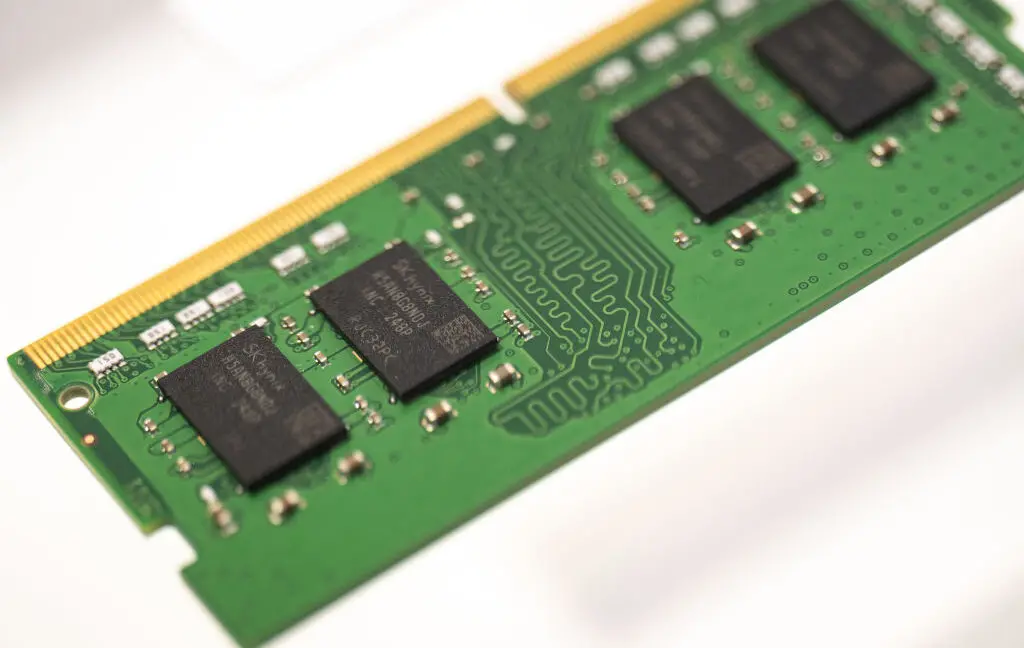
Memory executives are warning that the global RAM shortage will not ease anytime soon. This week, leaders at Micron and Samsung said supply is likely to remain tight for at least the next couple of years, with demand for advanced memory used in artificial intelligence and servers continuing to outpace manufacturing capacity. The comments focused on business-to-business memory, including high-bandwidth memory for AI accelerators and DRAM for servers, but they carry direct consequences for consumer devices. Because memory makers are prioritizing AI and server products, the supply of RAM available for PCs, phones, consoles, and other gadgets is being squeezed.
Micron CEO Sanjay Mehrotra told investors that demand for the company's memory will exceed its available supply over that period. He described an increasingly tight market and said the overall supply-demand environment is only getting tighter. Micron no longer sells consumer RAM, so Mehrotra's remarks primarily address its business-to-business sales of high-bandwidth memory for AI and DRAM for servers. Still, the same wafer capacity and packaging lines that produce those products also determine how much conventional memory can be made for consumer electronics.
New factories will not solve the problem quickly
Micron plans to open new clean rooms for memory manufacturing in 2028. Even so, Mehrotra expects supply to remain limited. He explained that after the clean rooms are built and the first wafers are produced, production ramps up only gradually. That slow ramp is part of the nature of bringing up memory production. The challenge is compounded by the shift in high-bandwidth memory from HBM3E to a greater mix of HBM4 and HBM4E. Those advanced products have a trade ratio that creates headwinds for supply growth. Future node transitions are also expected to deliver less productivity gain per wafer than earlier generations.
Seventy-five percent of Micron's memory output for 2027 is already accounted for, according to Mehrotra. Most of the company's current memory sales discussions are about 2028. Demand for high-bandwidth memory is surpassing demand for Micron's standard DRAM. For 2027, a large part of the HBM volume is already sold out, and prices are much higher than 2026 prices.
Mehrotra said Micron does not know when supply will catch up with demand. The reason is that demand trends continue to intensify. Larger AI models, growing context windows, more concurrency, and greater use of agents across enterprise and consumer applications are driving greater need for memory, greater need for memory content, and greater need for higher-performance memory. Each of those trends increases the amount of memory required per system, and each makes the shortage harder to resolve.
Samsung sees HBM taking a larger share of DRAM capacity
Mehrotra's statements align with comments from Kim Taewoo, an executive vice president at Samsung, a Micron competitor. Kim said high-bandwidth memory will account for almost 30 percent of DRAM manufacturers' wafer capacity in 2027, up from 20 percent this year. That shift would limit the amount of DRAM made for consumer devices. When a larger share of DRAM wafers is devoted to HBM, fewer wafers are available for the DDR5, LPDDR5X, and GDDR memory used in personal computers, smartphones, tablets, and gaming hardware.
HBM is more costly to produce per bit than conventional DRAM. It stacks multiple DRAM dies, uses advanced packaging, and requires complex testing and qualification. The trade ratio between HBM and standard DRAM means that every bit of HBM capacity displaces more than a bit of conventional memory output. As AI accelerators require more HBM per chip, memory manufacturers must allocate more wafers, more clean room space, and more engineering resources to HBM. That leaves less capacity for the broader memory market.
Consumers are already feeling the crunch
The memory crunch has already reached consumers. The shortage has raised costs for prebuilt PCs and pushed original equipment manufacturers to offer lower RAM configurations at higher prices. Some desktop and laptop buyers now face systems with 8GB or 16GB of memory where 16GB or 32GB was once standard. Prices for other types of gadgets, including smartphones, streaming sticks, and gaming consoles, are also up.
Micron's Crucial brand stopped selling RAM to consumers. The change was announced in December 2025. Sumit Sadana, an executive vice president and chief business officer, pointed to AI driving demand for data center memory and Micron's interest in improving supply and support for larger, strategic customers in faster-growing segments. The decision illustrates how memory makers are reallocating attention and capacity toward data center customers who buy in enormous volumes and pay premium prices.
For consumers, the effects appear in several ways. Prebuilt PC makers may reduce memory configurations to keep prices from rising even further. DIY builders face higher prices for DDR5 kits. Laptop manufacturers may use slower or less memory in entry-level models. Smartphone makers may raise prices or reduce memory in midrange devices. Streaming sticks and smart TVs may ship with less RAM, which can affect app performance and multitasking. Gaming consoles rely on GDDR memory, which is also subject to the same wafer capacity constraints.
Why AI is consuming so much memory
Artificial intelligence workloads are unusually memory-intensive. Training large models requires massive amounts of high-bandwidth memory attached to AI accelerators. Inference, the process of running a trained model, also demands memory bandwidth and capacity. As models grow larger and context windows expand, each query can require more memory. More concurrent users and more agent-based applications multiply the demand further. Data center operators are buying memory in quantities that were difficult to imagine only a few years ago.
High-bandwidth memory is especially capacity-hungry. A single HBM stack contains multiple DRAM dies connected through silicon vias and packaged with a logic die. Producing HBM requires advanced packaging capacity, which is also limited. The complexity means memory makers cannot simply flip a switch to increase output. New equipment must be installed, qualified, and ramped. Even when capacity comes online, it may be absorbed by AI demand before it reaches the consumer market.
Server DRAM is another pressure point. Cloud providers and enterprises are expanding their data center fleets to support AI, analytics, and general-purpose computing. Each server can use hundreds of gigabytes of DRAM. The demand for server memory competes directly with consumer memory for wafer starts. Because server customers are willing to pay more and commit to long-term contracts, memory makers prioritize them.
Memory market cycles and what is different this time
The memory industry is known for boom-and-bust cycles. In the past, shortages have been followed by periods of oversupply and sharp price declines. A shortage in 2017 and 2018 pushed DRAM prices higher, driven by mobile and cloud demand. That cycle later reversed as new capacity came online and demand cooled. Another wave of demand arrived during the pandemic, when remote work and online learning increased sales of PCs and cloud services. That boom was followed by an inventory correction in 2022 and 2023, when manufacturers cut production and prices fell.
The current shortage has a different character because of AI. High-bandwidth memory is not a commodity product that can be easily swapped between suppliers. It requires custom designs, long qualification cycles, and close collaboration with AI chipmakers. The capital intensity is high, and the technology road map is demanding. Node transitions are becoming more expensive and less productive. As a result, supply growth is slower than it was in previous cycles, even as demand accelerates.
Memory manufacturers are also more disciplined about capacity expansion. After years of volatile profits, they are cautious about adding too much capacity that could later become excess. They prefer to allocate wafers to high-margin products such as HBM and server DRAM. That discipline benefits their financial results, but it can prolong shortages for consumer markets.
What the 2028 timeline means
Micron's plan to open new clean rooms in 2028 is a long-term bet. Clean rooms are expensive and take years to design, build, and equip. Once a clean room is ready, the first wafer output is only the beginning. Production ramps gradually as equipment is tuned, yields improve, and processes stabilize. Mehrotra said this is simply the nature of bringing up production. The HBM transition from HBM3E to HBM4 and HBM4E adds further complexity. The trade ratio and future node transitions create additional headwinds for supply growth.
With 75 percent of Micron's 2027 memory output already accounted for and most sales discussions focused on 2028, the visibility into tight conditions is unusually clear. HBM demand is surpassing standard DRAM demand. For 2027, a large part of HBM volume is already sold out, and prices are much higher than 2026 prices. Samsung's forecast that HBM will reach almost 30 percent of DRAM wafer capacity in 2027 reinforces the view that conventional DRAM supply will remain constrained.
Micron does not know when supply will catch up. The demand drivers are still strengthening. Larger models, growing context, more concurrency, and greater use of agents across enterprise and consumer applications all point to higher memory requirements. Each new generation of AI hardware and software tends to consume more memory, not less. That makes it difficult to predict a return to balance, even with new capacity coming in 2028.
For device makers and consumers, the practical result is that memory will remain a costly and scarce component. Prebuilt PCs may continue to see lower RAM configurations at higher prices. Smartphones, streaming devices, and gaming consoles may face similar pressure. The memory crunch is no longer just a data center story; it is reshaping the economics of consumer electronics.
Source:Ars Technica News