

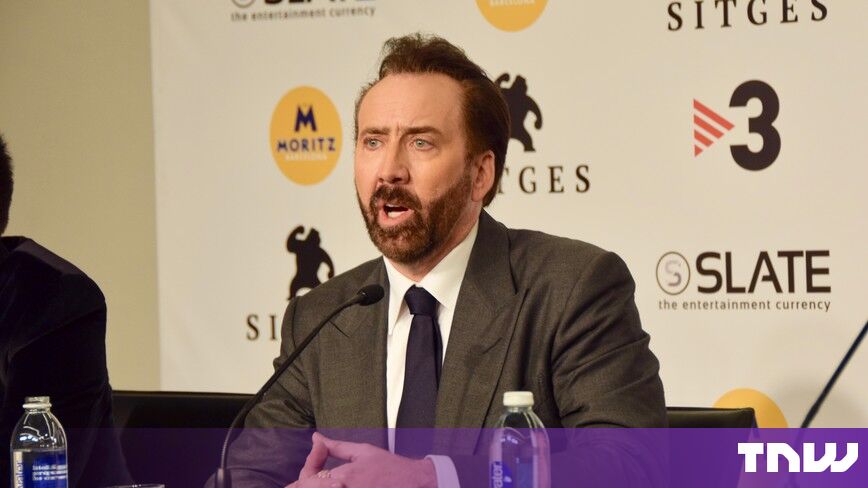
Nicolas Cage has said he refused to sign an artificial intelligence waiver from Amazon for “Spider-Noir,” the Prime Video series that the company cancelled after a single season. Speaking on a New York Comic Con panel on Saturday, Cage indicated that he probably will not work with the studio again. The actor has been one of Hollywood’s most distinctive performers for decades, and his remarks added a prominent voice to the growing debate over how generative AI should be used in film and television.
“Amazon is a very AI-friendly company, to the tune of $50 billion invested in OpenAI. I am not an AI-friendly actor, so it’s like, connect those dots!” Cage said on the Empire Stage. He confirmed that he did not sign the waiver that would have allowed the studio to use AI on the show. “I’m probably not going to be working with that studio again, but that’s okay,” he added.
The $50bn figure and Amazon’s AI ambitions
Cage’s number matches Amazon’s own disclosures. Amazon completed its $50bn investment in OpenAI by the end of July, according to a filing with the US Securities and Exchange Commission. The final payment was disclosed in that filing. The two companies collaborate on advertising inside ChatGPT, and OpenAI’s agents can operate within Amazon’s cloud infrastructure. For Amazon, the investment is part of a broader strategy to weave AI into its retail, cloud, advertising, and entertainment businesses.
That strategy has made Amazon one of the most AI-forward major studios. Prime Video, like other streaming platforms, has experimented with AI tools for localization, dubbing, visual effects, and recommendation systems. The company has also invested heavily in AWS, which provides the computing power behind many AI models. For actors and writers, however, those investments raise questions about consent, compensation, and the preservation of human craftsmanship.
Why the waiver matters
AI waivers in Hollywood are not merely paperwork. They can determine whether a studio may scan an actor’s likeness, clone a voice, or use generative tools to alter performances. During the 2023 strikes, AI became a central bargaining issue for both the Writers Guild of America and SAG-AFTRA. The eventual agreements established guardrails, including requirements for consent and compensation when digital replicas are used. But individual productions can still ask performers to agree to broader terms, and those requests can become flashpoints.
Cage’s refusal to sign such a waiver for “Spider-Noir” signals that some actors are willing to draw a hard line. His stance is not necessarily a rejection of all technology. Rather, it is a refusal to grant blanket permission for a studio to use AI on a project without his agreement. For Cage, the principle appears to be about control over his own performance and image.
“Spider-Noir” and its surprising cancellation
“Spider-Noir” was Cage’s first regular television role. The series was set in a stylized, black-and-white version of New York and drew on the Spider-Man Noir comics. Cage voiced the lead character, a grizzled private investigator who becomes entangled with superhero mythology. Prime Video cancelled the show after one season of eight episodes on 4 September. The decision surprised many observers because the series had received 11 Emmy nominations, the most of any Prime Video programme that year.
The show also performed well by streaming standards. It drew 2.6 billion viewing minutes in its first six weeks, according to Nielsen’s streaming ratings. It was the first series to emerge from Amazon’s deal with Sony Pictures Television to develop Spider-Man characters. That deal was intended to create a new corner of Marvel storytelling for Prime Video, separate from the theatrical Spider-Man films. The cancellation therefore represented both a creative disappointment and a strategic pivot.
Cage’s career and his relationship with studios
Nicolas Cage has built a career on risk-taking. He won an Academy Award for “Leaving Las Vegas” and became a blockbuster star with films such as “Face/Off,” “Con Air,” and “National Treasure.” In later years, he moved between independent thrillers, horror, and experimental roles, earning a reputation for fearless performances. His willingness to criticize a major studio publicly is consistent with that independent streak.
Cage still has work with Amazon. Prime Video is releasing his John Madden biopic, “Madden.” The film focuses on the legendary football coach and broadcaster, a role that allows Cage to disappear into another larger-than-life figure. The project suggests that the dispute over the AI waiver may not sever all ties between Cage and the company, even if he says he is unlikely to work with the studio again.
The wider AI divide in entertainment
The conflict over AI in Hollywood has been building for years. Studios see generative AI as a way to reduce costs, speed up post-production, and create new forms of interactive content. Some executives have argued that AI can enhance creativity rather than replace it. But actors, writers, and directors have warned about unauthorized digital replicas, voice cloning, and the devaluation of human labor.
Last month, a report noted that Hollywood studios want graduates who use AI. That trend reflects a broader shift in the entertainment workforce, where familiarity with AI tools is becoming a job requirement in some areas. For performers, however, the technology can feel like an existential threat. The ability to scan a face or synthesize a voice means that a single waiver could allow a studio to reuse a performance indefinitely.
Cage’s comments also come as public figures increasingly speak out about AI. Musicians have protested voice cloning. Visual artists have sued AI image generators. Authors have challenged the use of their books in training data. In each case, the core issues are consent, credit, and compensation. Hollywood’s guilds have attempted to address those issues through collective bargaining, but individual productions can still create pressure points.
What Cage wants next
Cage told the panel that he wants to work with Gen Z filmmakers who come from YouTube. He named “Backrooms” director Kane Parsons as an example. Parsons began as an online creator, building a following with eerie, liminal-space horror videos before expanding into filmmaking. Cage’s interest in that world suggests he is looking for collaborators who understand internet-native storytelling and low-budget innovation.
He also said he might do a season of HBO’s “True Detective.” The anthology series has attracted major actors over the years, and a Cage season would be a notable addition. HBO did not immediately respond to a request for comment. Whether that project moves forward remains uncertain, but it indicates that Cage is not retreating from television after the “Spider-Noir” experience.
AI, Amazon, and the future of production
Amazon’s $50bn investment in OpenAI makes it one of the largest corporate backers of the AI industry. The partnership links Amazon’s cloud computing business with OpenAI’s models, and it could influence how content is made, marketed, and distributed. For actors, the concern is not only about a single waiver but about the infrastructure being built around them. If AI tools become standard in production, the terms of consent will matter more than ever.
Cage’s refusal to sign the waiver is a small but symbolic act. It shows that a high-profile actor can say no, even to a powerful studio. It also highlights the uneven power dynamics in entertainment, where less famous performers may feel unable to refuse similar requests. The debate is likely to continue as unions, studios, and filmmakers negotiate the rules of the road.
For now, “Spider-Noir” remains cancelled after one season, while Cage’s John Madden biopic is still scheduled for release on Prime Video. The actor’s remarks at New York Comic Con have made the AI waiver a public issue, and they may encourage other performers to ask harder questions before signing away their digital rights.
Source:TNW | Amazon News