

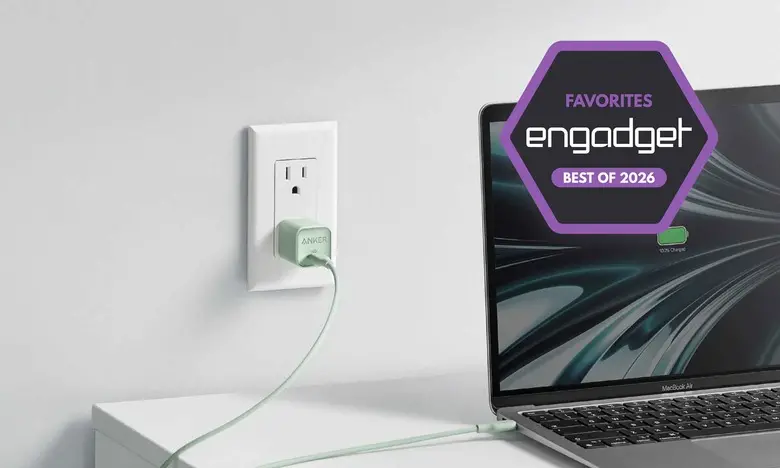
Fast chargers are no longer a nice-to-have item. With phones, tablets, laptops, earbuds and wearables all competing for outlets, the right charger can mean the difference between a quick top-up and a long wait. Many devices now ship without a power brick, so choosing a charger with the right compatibility, port layout and charging technology is just as important as raw speed. The fast-charging market has matured significantly, and 2026 offers more options than ever for anyone looking to power up a phone, tablet, laptop or a combination of devices at once.
Key facts to remember
- Most chargers rated above 15 to 18 watts are generally considered fast chargers, but many smartphones can accept 45W, 65W or even 100W.
- Gallium nitride (GaN) chargers are smaller, lighter and run cooler than older silicon-based adapters.
- USB Power Delivery is the most common fast charging standard for laptops, tablets and many phones, but some phones use proprietary standards for maximum speed.
- A charger’s total wattage is not always split evenly across ports; multi-port chargers often share power dynamically.
- Charging cables matter. A low-quality cable can bottleneck charging speed or generate excess heat.
- Fast charging can slightly affect battery health over time, but modern safeguards keep the impact small.
- Travelers should look for compact designs and, in some cases, optional international plug support.
What to consider before buying a fast charger
Before choosing, determine how many devices you need to charge, how much power they require, and whether you will travel with the charger. If you only need to charge one phone, a single-port adapter is cheaper and more space-efficient than a multi-port hub. But if you carry a phone, earbuds and a laptop, a 65W or 100W charger with two or three USB-C ports may be better.
Power requirement matters because a charger cannot force a device to accept more electricity than it is designed to use. An iPhone or flagship Android phone might top out at 20W to 45W, while an ultraportable laptop could need 60W or 65W. Large gaming laptops may draw more than 140W and often use barrel connectors, making them incompatible with universal USB-C chargers. Some can still charge over USB-C at lower speeds, but they will not reach full performance unless the charger meets the laptop’s full power requirement.
Port selection also matters. A multi-port charger needs to distribute power intelligently. Some older designs split wattage evenly, which can leave a laptop and phone both charging slowly. Better 2026 models use dynamic power allocation to give a laptop priority and send the remaining power to secondary devices. If you own devices with Lightning cables or older USB-A accessories, a charger with at least one USB-A port can save you from buying new cables.
Travel considerations
For frequent travelers, size and weight are important. A bulky 100W silicon charger can be annoying to carry, while a GaN charger with similar output can be 30 to 50 percent smaller and lighter. International compatibility is another factor. Some chargers include interchangeable plug heads or support wide input voltages, so they work in countries with different outlet types. A travel-friendly charger should also have foldable prongs or a compact body that does not block adjacent outlets.
What is GaN?
Gallium nitride, or GaN, has become a major selling point for fast chargers. Compared to older silicon-based chargers, GaN adapters operate more efficiently, generate less heat, and can deliver higher wattage from a smaller frame. That makes them ideal for travelers and anyone who wants to reduce clutter. GaN chargers are more common across all price ranges in 2026, and even budget models now use the technology.
Fast charging standards
The most widely used fast charging standard is USB Power Delivery, or USB PD. It is supported by most laptops, tablets, smartphones and accessories, and it is built into USB-C charging. USB PD can deliver power in either direction, which is why a phone charger can often charge a laptop at reduced speeds. However, some phone makers use proprietary standards. For example, OnePlus and Oppo use SuperVOOC, which can send up to 100W to a compatible phone. A generic USB-PD charger will still charge those phones, but often at much lower speeds. In the case of the OnePlus 13, a USB-PD charger tops out at around 45W compared to 100W with the included SuperVOOC brick.
If you buy a charger without checking your phone’s proprietary standard, you may be leaving charging speed on the table. It is also important to make sure your cable supports the wattage you need. USB-C cables have different power ratings, and a cable built for 60W may not handle a 100W charger safely. Higher-quality cables with thicker wires and proper E-marker chips can maintain consistent power delivery and prevent overheating.
Do fast chargers affect battery life?
Fast charging does have a slight impact on battery longevity because sending a large amount of power into a battery generates heat, and long-term heat exposure can degrade battery cells. That said, modern phones, tablets and laptops use charging management systems to limit current and temperature. Most devices slow down charging as they approach full capacity, and many have built-in safety limits. As long as you use a compatible charger and cable, the impact of fast charging is small compared with the natural degradation that happens over years of regular use. For people who want to be extra careful, using a lower-wattage charger overnight is a simple way to reduce heat, but it is not necessary for everyday charging.
Best fast chargers for 2026 by category
The best fast chargers for 2026 fall into a few broad categories. For single-device users, a compact 30W or 45W USB-C GaN charger is a great everyday option. It can fast-charge most phones and even some small tablets, and it fits easily in a pocket or bag. For phone-plus-accessory owners, a 65W dual-port charger is a sweet spot. It can power a laptop at full speed while still providing 20W or so for a phone, AirPods or a smartwatch. For travelers, a foldable GaN charger with two USB-C ports and one USB-A port covers almost everything, especially if it supports 100W via a single port. For desktop use, a 100W or 140W multi-port hub can handle a laptop, tablet, phone and earbuds simultaneously, with dynamic power distribution to keep the most important device charged first.
Before buying, check the maximum charging speed of each device and compare it with the charger’s port-specific output. If you have a phone that supports 65W charging, make sure the charger can deliver 65W through a single port when needed. If you often travel internationally, consider a charger with swappable plug heads or a built-in universal voltage range. And always pair your charger with a high-quality USB-C cable that is rated for the full wattage you plan to use. The right fast charger should match your devices, your daily routine and the standards they rely on, and the best 2026 options make that easier than ever.
Source:Engadget News