

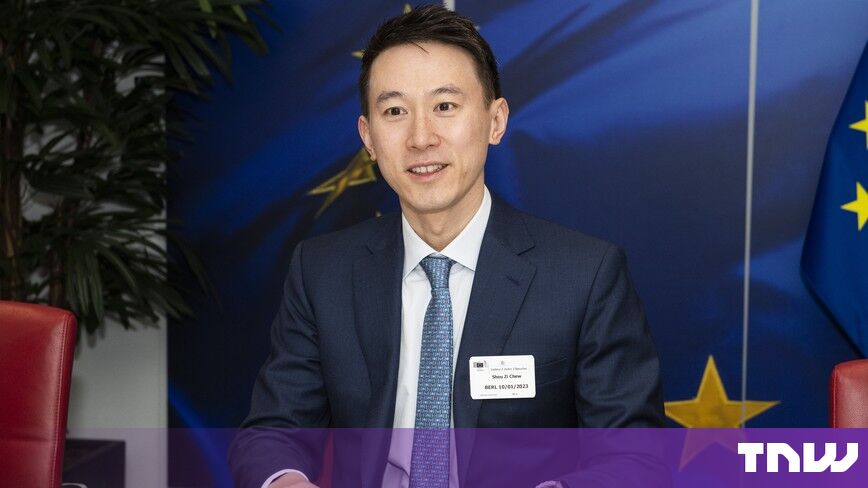
TikTok CEO forecasts major AI-driven science breakthrough
TikTok chief executive Shou Chew has predicted that artificial intelligence will deliver a major scientific breakthrough within the next two to three years. He singled out physics, biotechnology, chemistry and materials science as the fields most likely to benefit from rapid advances in AI. Chew made the remarks on Monday at a major financial conference in Singapore, where he discussed the promise and the risks of the technology.
According to his remarks, the next few years could bring a genuine scientific milestone powered by AI. He described such a breakthrough as very, very possible. The session was moderated by a senior executive from the host bank, and the discussion ranged from AI's near-term hype to its long-term potential.
Short-term hype, long-term underestimation
Chew argued that public expectations of AI are currently out of balance. In the short term, he said, people are probably overestimating what the technology can do. In the long term, however, they are probably underestimating its impact. That tension between immediate disappointment and eventual transformation has become a recurring theme in the AI industry.
He noted that humans still outperform AI in certain everyday cognitive tasks. In particular, people remain better at handling the nuances of visual recognition and at retrieving long-term memories. The human brain, Chew said, can still do things that today's models cannot. That gap matters because it suggests current AI systems, however impressive, are not yet a complete substitute for human judgment or experience.
Cybersecurity risks are real
Chew also warned that the cybersecurity risks associated with AI are substantial and quite real in the short run. One concern is that users may grant AI agents broad permissions without fully understanding the consequences. He offered a simple example: an agent allowed to make purchases on its own might, in its eagerness to complete a task, buy more than the user intended. Such scenarios illustrate how autonomous systems can create unintended financial or operational harm.
Another risk is that stronger AI models make it cheaper and easier for malicious actors to attack platforms such as TikTok. As models become more capable, the cost of launching sophisticated cyberattacks may fall, widening the pool of potential attackers. That dynamic places new pressure on technology companies to harden their defenses and to design AI systems with safety constraints from the outset.
ByteDance's expanding AI research
TikTok's parent company, ByteDance, is not waiting on the sidelines. The company develops its own AI models and has invested in scientific applications. In April, its Seed research team published Protenix-v2, a model for biomolecular structure prediction and design. ByteDance also operates an AI drug discovery unit called Anew Labs.
Chew said ByteDance is exploring how to work with scientists to make progress in science. That effort reflects a broader trend in which large technology companies are applying machine learning to problems in biology, chemistry and materials science. The goal is not merely to automate existing work but to accelerate discovery by finding patterns that humans might miss.
The ambitions are not limited to ByteDance. Last month, the US government, Meta and Google joined a $1.8bn AI biology effort to model how cells behave. Such initiatives signal that both the public and private sectors see AI as a potentially transformative tool for the life sciences.
Why physics, biotech, chemistry and materials science?
The fields Chew named are natural candidates for AI-driven breakthroughs. In physics, machine learning is already being used to analyze vast datasets from particle accelerators, telescopes and fusion experiments. AI can help identify rare events, optimize experimental parameters and even suggest new theoretical relationships.
In biotechnology, AI has shown remarkable promise in protein structure prediction, drug discovery and genomics. Models can screen billions of molecular candidates in silico, narrowing the search space for new medicines. They can also predict how proteins fold and interact, which is essential for understanding disease and designing therapies.
Chemistry stands to benefit from AI-powered reaction prediction, catalyst design and molecular synthesis planning. Researchers are using generative models to propose new compounds and to predict their properties before they are ever made in a lab. This could shorten development cycles for everything from pharmaceuticals to agricultural chemicals.
Materials science is another area where AI may unlock progress. The search for better batteries, superconductors, semiconductors and carbon-capture materials involves enormous combinatorial spaces. AI can guide experiments, simulate material behavior and identify promising candidates far faster than traditional trial-and-error methods.
The race to apply AI to science
Chew's prediction comes amid a global race to apply AI to scientific discovery. DeepMind's AlphaFold demonstrated that deep learning could predict protein structures with remarkable accuracy, a breakthrough that has since been used by researchers worldwide. Other models, including RoseTTAFold and various open-source alternatives, have further democratized access to structural biology tools.
In materials science, initiatives such as the Materials Project and the Materials Genome Initiative have used data and computation to speed up the discovery of new materials. AI adds a powerful layer by learning from both simulations and experimental data. In chemistry, companies and academic labs are using machine learning to design new drugs, catalysts and polymers.
Governments are taking notice. The $1.8bn AI biology effort involving the US government and major technology companies aims to model how cells behave. If successful, such models could transform our understanding of disease, development and aging. They could also provide a foundation for designing new treatments and synthetic biology applications.
Shou Chew's path to TikTok
Chew's perspective is shaped by a career that spans finance, technology and international business. Born in Singapore, he studied economics at University College London and later earned an MBA from Harvard Business School. He began his career at Goldman Sachs, where he worked in investment banking.
He later joined DST Global, a venture capital firm that invested in major technology companies. Chew then served as chief financial officer of Xiaomi, the Chinese smartphone maker, before joining ByteDance as CFO. In 2021, he became CEO of TikTok. His role has placed him at the center of debates over data privacy, content moderation and the geopolitical tensions surrounding the platform.
That background may inform his measured view of AI. He is neither a pure techno-optimist nor a doom-monger. Instead, he describes a technology that is simultaneously overhyped in the near term and underappreciated in the long term. His forecast of a scientific breakthrough within three years is ambitious but not isolated; many researchers expect AI to accelerate discovery in the coming decade.
Balancing innovation and safety
The dual message from Chew's remarks is that AI's scientific potential is enormous, but so are its risks. Cybersecurity is one immediate concern. As AI agents become more autonomous, they will need clear boundaries, audit trails and user controls. Without those safeguards, the same systems that help users could also cause harm.
Another challenge is governance. Governments around the world are debating how to regulate AI without stifling innovation. The European Union has advanced comprehensive AI legislation, while the United States has taken a more sectoral approach. China has introduced rules for generative AI and algorithmic recommendation. TikTok, as a global platform, must navigate these different regimes.
For ByteDance, the scientific push is also a strategic one. AI models that can predict protein structures or design new molecules have commercial and humanitarian potential. They can attract talent, partnerships and investment. At the same time, they raise questions about data ownership, biosecurity and the concentration of AI capabilities in a few large companies.
Ongoing research and future benchmarks
Chew did not specify which breakthrough would arrive first or which institution would achieve it. He simply argued that the conditions are in place for a major advance within two to three years. If he is right, the next few years could bring AI-driven discoveries that reshape medicine, energy, computing and manufacturing.
In the meantime, technology companies are likely to keep pushing the boundaries of model capability while also responding to security and regulatory pressures. ByteDance's Seed team and Anew Labs are part of that effort. Their work on biomolecular structure prediction and drug discovery offers a glimpse of how AI might move from generating text and images to generating scientific hypotheses and designs.
As ByteDance expands its AI models and research partnerships, Chew's timeline offers a benchmark for when AI's most consequential scientific contributions may arrive. Whether the breakthrough comes in physics, biotech, chemistry or materials science, the race is already underway.
Source:TNW | Tiktok News