

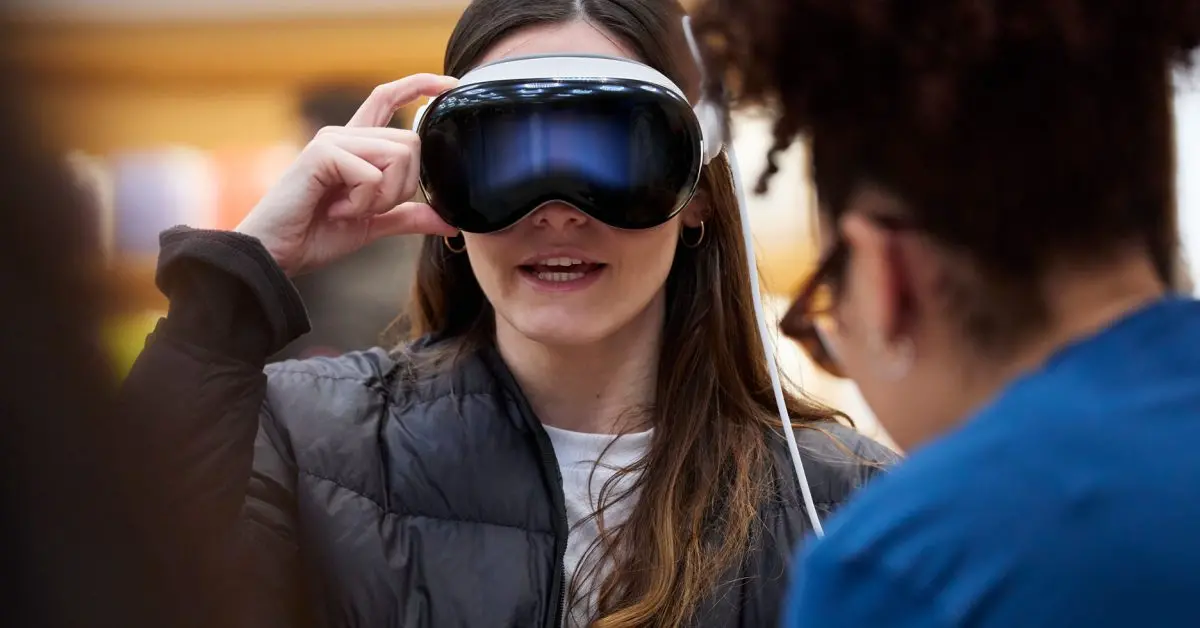
OpenAI has made another high-profile hire from Apple, poaching Paul Meade, the executive who oversaw the development of the Apple Vision Pro and the company's smart glasses initiative. According to a report from Bloomberg, Meade is set to leave Apple by next week and will join OpenAI's hardware unit, where he will work on the company's upcoming family of AI-powered devices. This move is part of OpenAI's broader strategy to establish itself as a major player in the hardware space, following its collaboration with legendary designer Jony Ive and the formation of the subsidiary io.
OpenAI’s hardware ambitions take shape
Last year, OpenAI announced it would join forces with Jony Ive and several designers from LoveFrom, the design firm Ive founded after leaving Apple, to form io. This subsidiary is dedicated to releasing AI-first hardware, aiming to integrate OpenAI's advanced language models into physical devices that can interact with users in new ways. The hiring of Paul Meade marks a significant step forward in this effort, as he brings decades of experience managing complex hardware projects at Apple, including the development of the Vision Pro headset and the early stages of Apple's smart glasses.
Meade's departure is part of a larger trend of Apple talent moving to OpenAI. Earlier this year, Evans Hankey, who led Apple's design team for three years after Ive's exit, and Tang Ten, a longtime Ive collaborator, also joined io. These hires underscore OpenAI's determination to build a world-class hardware team capable of competing with established players like Apple, Meta, and Google. The company has been poaching engineers and designers from Apple for the past year, focusing on those with experience in wearable technology, spatial computing, and consumer electronics.
Paul Meade’s career at Apple
Paul Meade has been a key figure at Apple for over a decade. He began his tenure at the company as a program manager for the iPad in 2010, when the device was still in its early stages of development. He then moved to iPhone program management in 2012, overseeing the production of some of Apple's most successful smartphones. In 2017, Meade joined the Vision Products Group (VPG), the division responsible for the Vision Pro and smart glasses initiatives. He took over all hardware engineering for the VPG in 2019, making him the top hardware executive for Apple's augmented and virtual reality efforts.
Under Meade's leadership, the VPG delivered the Vision Pro, which launched in 2024 to critical acclaim but faced challenges due to its high price point and limited adoption. The headset featured advanced technology such as micro-OLED displays, spatial audio, and hand-tracking capabilities, but its $3,499 price tag limited its market reach. Meade also led the development of Apple's first smart glasses, which are now expected to be released in late 2027. These glasses aim to offer a more accessible and lighter form factor compared to the Vision Pro, potentially competing with Meta's Ray-Ban Stories and Google's upcoming AR efforts.
Why Meade left Apple
Meade's decision to leave Apple was influenced by a recent reshuffling of the company's hardware engineering leadership. When John Ternus became Apple's new CEO, he appointed Johny Srouji, the longtime chip chief, as chief hardware officer. Srouji initiated a controversial shake-up of Apple's hardware engineering unit, which led to several vice presidents being given new roles or feeling demoted. Under the new structure, Meade and other hardware leaders now report to Tom Marieb, the new vice president of hardware engineering, rather than directly to Srouji. This effectively pushed many executives down a level in the organizational hierarchy, which some saw as a loss of influence.
Bloomberg reported that the reorganization caused frustration among senior hardware leaders, with Meade being among those who chose to pursue opportunities elsewhere. His departure is a blow to Apple's VPG, but the company has already designated his longtime deputy, Fletcher Rothkopf, to take over his responsibilities. Rothkopf has been in charge of product design for the Vision Pro and smart glasses efforts and is expected to continue the work Meade started.
What Meade will do at OpenAI
At OpenAI, Meade will join the io hardware unit, which is working on a family of AI-powered devices. These devices are expected to leverage OpenAI's language models, such as GPT-5 and beyond, to provide natural, context-aware interactions. While specific details about the devices remain scarce, they are likely to include a mix of wearables, handheld devices, and possibly smart home products. The goal is to create a new category of hardware that is defined by its AI capabilities rather than traditional computing specifications.
Meade's experience with the Vision Pro and smart glasses makes him especially valuable for OpenAI's projects. His expertise in spatial computing, display technology, and product design will help the company develop devices that can blend digital information with the physical world. This aligns with Jony Ive's vision of creating hardware that is intuitive, beautiful, and seamlessly integrated with AI.
Broader context: Apple’s hardware shakeup
The reshuffling at Apple's hardware division is part of a larger transition as the company navigates a changing leadership landscape. John Ternus, who took over as CEO from Tim Cook, has been restructuring the organization to streamline operations and focus on emerging technologies. Johny Srouji's promotion to chief hardware officer gives him control over not only chip design but also all hardware engineering, including the VPG, audio engineering, and camera modules. This consolidation of power has led to some departures, but it also signals a renewed emphasis on silicon integration and supply chain efficiency.
The loss of Paul Meade is significant for Apple, especially as the company pushes forward with its smart glasses project. However, Apple has a deep bench of talent, and Rothkopf is well-versed in the VPG's projects. The company is also investing heavily in micro-OLED technology and advanced LiDAR sensors, which will be crucial for future AR/VR products. Meanwhile, OpenAI is moving aggressively to claim its place in the hardware landscape, and the hiring of Meade shows that it is serious about competing with the likes of Apple and Meta.
The future of AI hardware
The race to build the next generation of AI-powered devices is heating up. OpenAI's io subsidiary represents a bold bet that hardware and AI can be combined in new ways to create products that are more than just smartphones or smart speakers. By recruiting top talent from Apple, OpenAI is signaling that it intends to create devices with the same level of polish and integration that Apple is known for, but with a focus on AI as the primary interface. The involvement of Jony Ive, who designed many of Apple's most iconic products, adds further credibility to this endeavor.
Paul Meade's arrival at OpenAI comes at a time when the company is also working on expanding its AI models beyond text and voice to include vision, spatial understanding, and gesture recognition. These capabilities will be essential for the hardware devices he will help develop. The combination of Ive's design sensibility, Meade's hardware engineering expertise, and OpenAI's cutting-edge AI creates the potential for products that could redefine how we interact with technology.
As for Apple, the company will need to regroup and continue its smart glasses development without Meade. The project is still years away, and the company has a strong history of overcoming executive departures. Meanwhile, the VPG will focus on iterating on the Vision Pro, possibly introducing a lower-cost version to broaden adoption. The tech industry will be watching closely to see whether OpenAI can deliver on its hardware promises and whether Apple can maintain its edge in spatial computing.
Source:9to5Mac News