

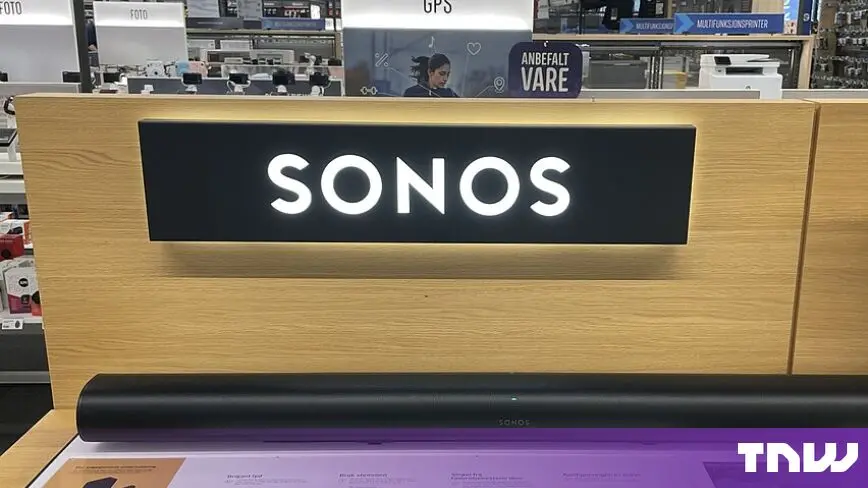
Sonos is making a decisive bet that the future of artificial intelligence in the home will be determined by hardware, not by the AI models themselves. Chief executive Tom Conrad has been explicit about this view, telling analysts that much of the industry conversation about AI in the home focuses on who has the best model—and that this is the wrong question. In his telling, access to strong models will soon be everywhere, and the differences between them will narrow. What will last is the hardware that can converse with quality across every room, the system that already knows the shape of a home and the way a family lives in it.
The company has some evidence to support that claim. Sonos counts 53 million connected devices across 17 million homes, and posted third-quarter revenue of $375 million, up 9% year over year. Conrad said Sonos has been “competing with the biggest of big tech for customers in the home for nearly a decade.” That history gives the company a unique vantage point, but it also means Sonos is constantly measured against giants like Amazon, Google, and Apple, all of which have their own voice assistants, smart speakers, and increasingly sophisticated AI efforts.
The Ace Ultra and the FCC filing
The first piece of hardware in Sonos's AI-focused push is expected to arrive next month. A Federal Communications Commission filing published Monday names the Sonos Ace Ultra, a sequel to the 2024 Ace headphones. The filing indicates the new headphones could be offered in as many as five colours, against the original's two. More importantly, technical details in the filing suggest the Ace Ultra will support voice commands, a feature the original Ace did not include.
That absence of voice commands was notable at the time, especially for a company that built its reputation on multi-room audio and seamless control. The original Ace headphones were Sonos's first foray into personal audio, and they were designed to fit into the company's existing ecosystem. But the launch was overshadowed by a much larger problem: the disastrous 2024 app rewrite.
A troubled launch and its aftermath
The original Ace shipped alongside a revamped Sonos app that broke many of the platform's core features. Users lost access to things like sleep timers, alarm systems, and the ability to edit playlists. The app was widely panned, and the backlash was severe enough that Sonos cut sales, paused new hardware releases, and saw its reputational damage extend well beyond the product itself. The decision to ship the Ace alongside that broken app turned what should have been a moment of expansion into a crisis.
Sonos has since acknowledged that the app rewrite was rushed. The headphones were built for the new software and were incompatible with the old, which meant Sonos could not delay the app without also delaying the headphones. That trade-off helped fuel the decision to release the app early, and it backfired. Reviewers appreciated the industrial design of the Ace but found little connection to the rest of the Sonos system beyond private TV listening through a soundbar. Buyers who expected to hand music off from their speakers to their headphones on the way out the door did not get that feature. Conrad has said publicly that shipping without that integration was a mistake.
Rebuilding with a smaller team
The do-over for Sonos now falls to a thinner team. In July, the company cut senior design and product staff, roughly 3% of its workforce, in a move that Conrad framed as buying speed rather than saving money. The restructuring suggests Sonos is trying to accelerate development cycles and avoid the kind of project fragmentation that led to the app debacle. With fewer layers and a sharper focus, the hope is that the Ace Ultra and the next generation of Sonos products can be delivered on time and with the integration polish that customers expect.
The Ace Ultra itself is also part of a broader strategy to embed AI more deeply into Sonos hardware. Voice commands on headphones would open the door to interacting with AI assistants, music services, and other smart home devices without reaching for a phone. That fits squarely with Conrad's vision of hardware that already understands the home. A pair of headphones, in that frame, is not just a listening device; it is a node in a system that knows when you are at home, what you are doing, and which room you are in.
Third-party AI and the Alexa question
Sonos has also pitched itself as a home for third-party AI models, rather than trying to build a single proprietary assistant. That strategy is meant to let customers choose the AI they prefer, whether it is Amazon's Alexa, something based on ChatGPT, or another service. But the execution has been slow. Amazon's Alexa+ is still absent from Sonos hardware nearly a year after the company appeared on a partner slide. Meanwhile, Amazon has moved on to putting Alexa in the search bar, raising questions about how much focus it will give to third-party speakers and headphones.
The uncertainty around Alexa shows the risks of Sonos's approach. Depending on external AI providers means waiting for them to prioritize Sonos as a platform. In the meantime, Google and Apple are integrating their AI assistants more deeply into their own hardware ecosystems, which makes it harder for a company like Sonos to argue that the hardware layer is where the real advantage lies. Yet Conrad remains confident that the opposite is true. The value of AI in the home, he argues, comes from being embedded in a system that already knows the physical space and the routines of the people living in it.
What makes Sonos singular
Sonos is also preparing its most significant marketing push in years. A campaign under Colleen DeCourcy, who joined as chief marketing officer in January, is set to land this autumn. Conrad has described it as “the clearest expression in a decade of what makes Sonos singular in the world.” The campaign will have to do double duty: it needs to reintroduce Sonos as a forward-thinking AI company, but it also needs to convince existing users that the company has moved past the mistakes of the app rewrite.
DeCourcy arrives with a strong track record in both technology and brand storytelling, and her appointment signals that Sonos understands the importance of communicating its strategy clearly. The September launch event for the Ace Ultra will be the first test of whether the company can execute on its vision and whether customers are ready to give it another chance.
With a $375 million quarter behind it, a new set of headphones on the way, and an AI message that challenges the industry's focus on models, Sonos is trying to turn the page on a difficult chapter. The company's biggest advantage may still be its installed base of 53 million devices and the trust it has built over decades. The challenge is to extend that trust into a new era where hardware, software, and AI have to work together seamlessly. The September event will show how far Sonos has come and how much further it needs to go.